
Healthy Holiday Food Swaps Without Losing the Fun
Healthy Holiday Food Swaps Without Losing the Fun
Navigating Buffets, Potlucks, and Holiday Gatherings in Real Life
The stretch between mid-December and the end of the year can feel strange. Some things slow down, like work schedules and routines. Other things ramp up fast. There are gatherings at all times of day. Brunches. Luncheons. Afternoon open houses. Evening parties. Sometimes more than one in the same day.
That is where stress around food often sneaks in. Not because people do not know what to eat. But because there are so many opportunities to eat and very little structure.
This is not about eating with restriction or focusing entirely on balance. It is not about avoiding favorite foods or turning celebrations into nutrition homework. It is about feeling steady. Enjoying the food. And not ending the day feeling uncomfortable, exhausted, or frustrated.
First, let’s reframe the idea of “healthy swaps.”
A swap is not a rule. It is an option.
You do not need to swap everything. You do not need to make the “healthiest” choice at every gathering. In fact, trying to do that usually backfires.
One or two intentional choices at each event can make a noticeable difference in how you feel. Energy levels. Digestion. Blood sugar stability. Even mood.
Eating for enjoyment and eating for nourishment can happen at the same time.
The buffet and potluck reality…
Buffets and potlucks show up everywhere this time of year. They are also where people feel the most out of control.
Here are a few things that help in real life:
Do a quick scan of the table before filling your plate. This takes about ten seconds and helps you avoid piling on things you did not actually want.
Start with foods that help with fullness or satiety. Protein and produce tend to do that best.
Add the foods you actually enjoy. Not the ones you feel obligated to eat because they are “special” or “only once a year,” or because that person made them and you feel pressure to have them.
Use your plate space intentionally. You do not need to try everything at once.
And yes, it is okay to go back for more if you are still hungry – but maybe wait about 20 minutes.
Protein is your go-to at any time of day.
Protein is often the missing piece at holiday gatherings, especially earlier in the day. Brunch spreads and afternoon snacks frequently lean heavily on baked goods and sweets.
Look for protein first when you can:
Eggs or egg-based casseroles
Yogurt, especially Greek style
Cottage cheese
Smoked salmon or other fish
Lean meats like turkey, chicken, or ham
Cheese paired with other foods rather than eaten alone
Nuts, seeds, or nut butters
This does not mean skipping pastries or desserts. It means pairing them. A muffin plus eggs will feel very different than a muffin by itself.
Protein helps with fullness and energy and helps stabilize blood sugar. That matters when gatherings stretch over several hours.
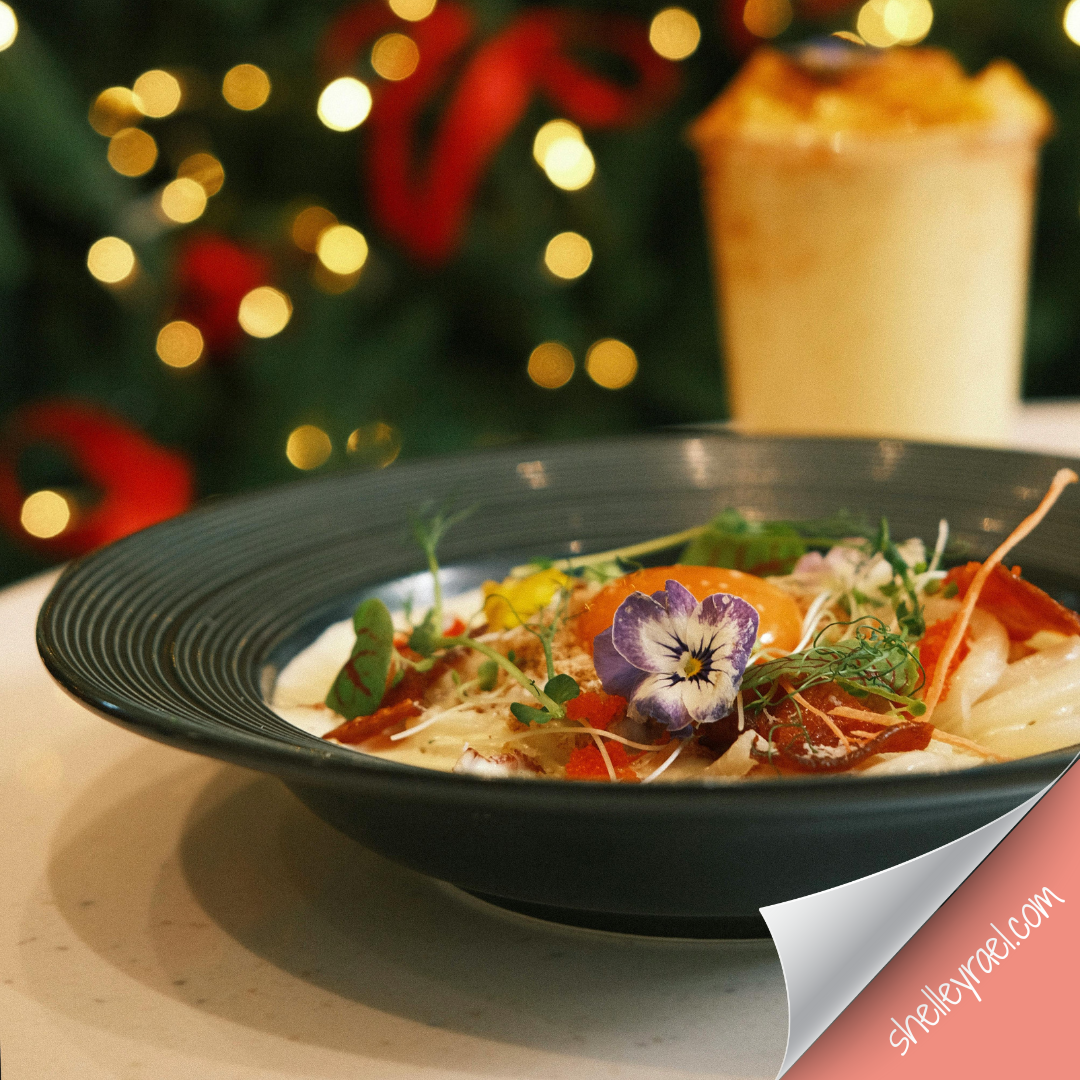
Carb choices that help with energy, but don’t feel restrictive.
Carbohydrates are not the problem. How they are combined and portioned often is.
Helpful swaps and pairings:
Choosing whole-grain bread or crackers when available
Pairing refined carbs with protein or healthy fat
Taking a smaller portion of rich items and enjoying them slowly
Choosing fruit topped dishes instead of syrup-soaked ones when possible
This is not about avoiding carbs. It is about preventing or minimizing the crash that often happens an hour later.
Fat choices matter, especially when they stack up.
Fats add flavor and satisfaction. They also add up at holiday gatherings.
A typical pattern is stacking multiple fat sources without realizing it. Butter plus cheese plus cream-based sauces plus pastries.
A simple approach is to choose one primary fat source you really enjoy rather than layering several. For example, enjoying a buttery roll but skipping the heavy cream sauce. Or choosing cheese and crackers and passing on the creamy dip.
Foods like avocado, nuts, seeds, and olive oil based dishes can also be helpful when they are available.
Drinks count more than people expect.
Beverages are often overlooked, especially during daytime gatherings.
Juice, sweet coffee drinks, punch, and cocktails can contribute a lot without providing much fullness.
A few realistic swaps:
Water alongside coffee rather than multiple sweetened drinks
Alternating alcoholic drinks with water
Choosing one festive drink instead of several
Eating before or during alcohol consumption
This is not about skipping drinks. It is about pacing and pairing.
Afternoon gatherings and snack heavy events.
Afternoon open houses and snack-style gatherings can be tricky because they rarely include complete meals.
Helpful strategies:
Look for protein-based snacks like cheese, nuts, or dips with structure
Pair sweets with something more filling
Eat a balanced meal earlier if you know snacks will be the main option
Avoid grazing nonstop simply because food is available
Structure helps even when the event does not provide it.
Evening events and dinner-style gatherings.
Evening events often include heavier foods and longer eating windows.
A few things to keep in mind:
You do not need to eat everything offered
Choosing one or two favorite dishes is usually more satisfying than small portions of everything
Listening to fullness cues matters more than cleaning the plate
Leftovers exist for a reason
Again, this is about enjoyment without discomfort.
If you are bringing a dish, bring one that works for you.
Potlucks are easier when you bring something you can rely on.
Ideas that tend to work well:
Egg based dishes
Yogurt parfait boards
Veggie trays with protein rich dips
Fruit paired with nuts or cheese
Grain salads with beans or lean protein
This is not about controlling the menu – or even announcing why it is “special.” Don’t do that. It is about supporting yourself and ensuring you have something you can and will eat.
Letting go of food guilt.
One gathering does not define health. One weekend does not undo progress.
You do not need to compensate. You do not need to restrict later. You do not need to earn or burn off food.
Satisfaction matters. Social connection matters. Enjoying food with other people is part of wellness.
The takeaway
Pick one or two ideas from this list. Not all of them.
Eat regularly throughout the day. Focus on how you want to feel. Remember that structure can also be flexible.
Health does not disappear during the holidays. It just looks a little different.