
Why Is It So Hard to Lose the Last 10 Pounds?
Why Is It So Hard to Lose the Last 10 Pounds?
The Magic of “Ten Pounds”
If you’ve followed my work for any length of time, you know I tend to lean on stories. It’s how I connect the dots between science and real life. Years ago, a former student recognized me in the grocery store and told me she remembered my stories from class. That stuck with me. Not because I think my stories are all that remarkable, but because they help make nutrition feel relevant.
And nutrition is relevant to everyone. We all eat. Over the course of more than two decades as a dietitian, I’ve worked with hundreds, maybe thousands of people. Different backgrounds, different goals, different health conditions. But there is one thing they all have in common. They need nutrients to live.
So today is less about teaching and more about thinking. A question I’ve seen come up over and over again.
What is it about ten pounds?
Weight Loss Isn’t the Whole Picture
A lot of people assume that what I do revolves around weight loss. It’s part of my work, but it is far from the whole story.
I work with people managing diabetes or trying to reduce their risk. I help clients improve cholesterol levels and blood pressure. I work with thyroid concerns, digestive issues, and recovery from surgery. I help athletes fuel better for performance. I teach, write, speak, and support programs in a variety of settings.
Weight is one piece of health. Sometimes an important piece. Sometimes not the most important one.
But when weight comes up, conversations can vary widely from person to person.
The “Ten Pounds” Pattern
There is a number that keeps showing up. Ten.
The first ten pounds.
The last ten pounds.
The next ten pounds.
It’s almost never five pounds. Rarely three. Almost always ten.
For someone looking to lose a significant amount of weight, the first ten pounds can feel like a big, encouraging step. For someone closer to their usual range, the last ten pounds can feel like the hardest part of the journey.
Same number. Completely different experience.
So why ten?
Why Does Ten Feel So Significant?
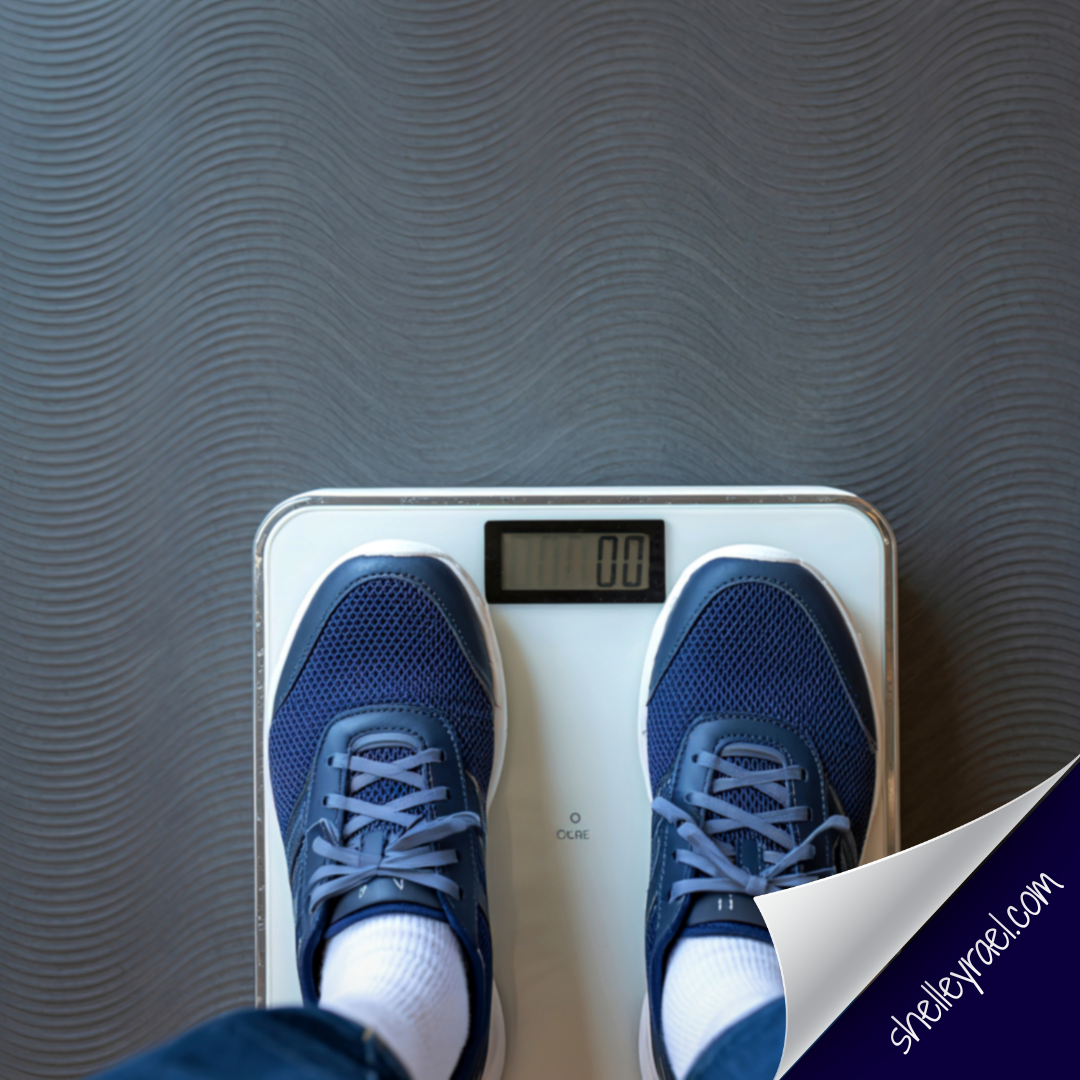
There isn’t a single answer, but there are a few patterns I’ve noticed.
Ten is a clean, round number. Even though we don’t use the metric system in everyday life, we still think in tens. It feels complete.
There is also a perception piece. Going from 163 to 153 is different from going from 163 to 158, even though both are changes on the scale. For some reason, one is better – more meaningful. But to reach 153, we must pass 158. It’s a process with progress. But for some, those five pounds don’t “count” until it’s ten.
Clothing sizes sometimes get tied into this, too, although sizing is anything but consistent. Most people have experienced wearing different sizes depending on the brand, style, or even the day. The number on the tag sometimes feels arbitrary. I have some clothes with a higher number that feel tight, while clothes with a lower number that fit loose – go figure.
And sometimes, those ten pounds are tied to a memory. A weight from years ago. A version of yourself that felt different for reasons that may or may not have had anything to do with the number itself.
What Changes When the Ten Pounds Are Gone?
This is the question I come back to often.
What will be different?
Will energy levels improve?
Will lab values change?
Will daily habits look different?
Will stress be lower?
Or will the number change while everything else stays the same?
There isn’t a right or wrong answer here. For some people, losing weight can improve health markers such as blood glucose, cholesterol, and blood pressure. That matters.
But if the focus is only on the number, it is easy to lose sight of the bigger picture.
A Shift in the Conversation
Over the past few years, the conversation around weight has shifted quite a bit.
There was a strong movement toward body acceptance and focusing less on weight. That message is still important and relevant for many people.
At the same time, we are now seeing increased use of medications such as GLP-1 receptor agonists for weight loss, even among individuals without diabetes who are trying to lose a relatively small amount of weight. Seriously, I know people who are truly using the GLP-1s for the ten pounds with no risk factors, no blood glucose concerns, and no medical or health need to lose weight.
This needs to be said:
These medications can be helpful tools in certain situations. They can support meaningful health improvements for some individuals. But they are not a quick fix, and they are not the right choice for everyone, especially when the goal is simply to lose a small amount of weight without considering the bigger picture of health, habits, and sustainability.
This is not about judgment. It is about asking better questions.
What is driving the goal?
What are the expectations?
What happens after the weight is lost?
People do need to obtain these medications through a prescription; however, if you know where to go and who to see, the “visit” may just be 30 seconds via video, and your prescription is on its way.
Do the Ten Pounds Need to Go?
Sometimes the answer is yes. Sometimes it is no.
That is something I work through individually when working with clients who want this. It is not based on a number alone but on health history, lab values, lifestyle, and goals.
For many people, focusing on consistent habits can lead to improvements in health regardless of what happens on the scale.
Eating patterns, movement, sleep, stress, and daily routines all play a role. When those areas improve, weight may change. Or it may not. Either way, health can still move in a positive direction.
What Works for Real Life?
One of the biggest challenges I see is the desire for a quick solution.
Lose ten pounds fast. Then go back to normal.
The problem is that “normal” is often what led to the weight gain in the first place. So the cycle repeats.
There are plenty of plans, products, and trends that promise quick results. Some are extreme. Some are expensive. Some are simply unrealistic for long-term living.
Instead of asking how to lose ten pounds as quickly as possible, a better question might be: What can I do consistently that supports my health?
Because whatever approach is used to lose weight usually needs to be maintained in some form to keep it off.
A Different Way to Look at It
The ten pounds might matter. Or they might not be the most important thing.
What matters more is how you live day to day. How you eat, how you move, how you manage stress, and how you take care of yourself overall.
If weight loss is part of the goal, it can be approached in a way that supports those areas rather than working against them.
And if you are thinking about those ten pounds, it is worth taking a step back and asking what you really want to gain in the process.
Because sometimes, what people are actually looking for has very little to do with the number on the scale.
If you’re thinking about those ten pounds or simply want to feel better in your day-to-day life, it can help to talk it through.
Everyone’s situation is different, and a more personalized approach can make things feel a lot more manageable.
Schedule an introductory call, and we can go over your goals, your habits, and what a realistic next step might look like for you.
Real World Nutrition Refreshed: I am revitalizing and updating my blog archive and re-publishing it. Stay tuned as I review, update, refresh, and re-share these posts to provide you with even more valuable information on nutrition, health, and overall wellness—and keep things timely. A portion of this blog was initially posted in May 2022 and has been updated here.