
Smart Grilling Tips: Cooking Almost Anything on the Grill
Smart Grilling Tips: Cooking Almost Anything on the Grill
Grilling season is officially here. Although for some of us, grilling isn’t just a summertime affair—it’s a year-round lifestyle. And no matter when you fire up the grill, it’s an excellent opportunity to prepare food in a healthier, more flavorful way while keeping the kitchen cool.
Now, let’s be real—when most people think of grilling, the usual suspects come to mind: burgers, hot dogs, brats, maybe a steak or salmon filet. But the grill can do so much more than that.
Let’s talk about what you can grill (it’s almost everything), how to do it smarter, and how grilled meals can fit into a balanced, health-focused way of eating.
What’s Traditionally Grilled?
Let’s start with the basics. Common grilling favorites include:
Burgers and hot dogs
Bratwursts and sausages
Steaks and ribs
Chicken thighs, breasts, and wings
Seafood like salmon, shrimp, and scallops
These are grilling classics for a reason—they cook quickly, get a great sear, and are delicious. However, the way we prepare and pair them can significantly impact their overall healthfulness.
Making Meat Healthier on the Grill
Grilling is already a leaner cooking method than frying since it doesn’t require added fats or oils. Here are a few ways to make grilled meats even more health-friendly:
Trim visible fat from steaks or ribs to reduce saturated fat content.
Choose leaner cuts like sirloin, pork tenderloin, or skinless chicken breast.
Limit processed meats like hot dogs and brats—enjoy occasionally, but focus on whole protein options more often.
Marinate meat with olive oil, lemon juice, herbs, and spices to add flavor and reduce the formation of potentially harmful compounds during high-heat cooking.
Grilling Chicken: Marinate for Moisture & Flavor
Chicken can be one of the healthiest proteins on the grill—if you keep it juicy.
Try these marinade ideas:
Greek-style: olive oil, lemon juice, garlic, oregano, and plain yogurt
Southwest: lime juice, cumin, smoked paprika, and a little chili powder
Honey-mustard: Dijon mustard, honey, olive oil, and rosemary
Marinate for at least 30 minutes (or up to overnight) and grill until internal temperature hits 165°F.
Seafood on the Grill: From Salmon to Shrimp
Fish grills quickly and takes on smoky flavors beautifully. Try:
Salmon fillets with a soy-ginger glaze
Shrimp skewers marinated in garlic, lemon, and olive oil
Foil packets with white fish, cherry tomatoes, and herbs
Seafood is a fantastic source of lean protein and omega-3 fats, especially when grilled without heavy sauces or breading.
Skewers = Built-In Balanced Meals
Skewers (or kebabs) make it easy to build a balanced plate—literally:
Alternate protein (chicken, beef, tofu) with veggies (onion, bell pepper, zucchini) and even fruit (pineapple, peach)
Brush with a light marinade or seasoning blend
Use metal or soaked wooden skewers to prevent burning
They’re fun, customizable, and cook fast.
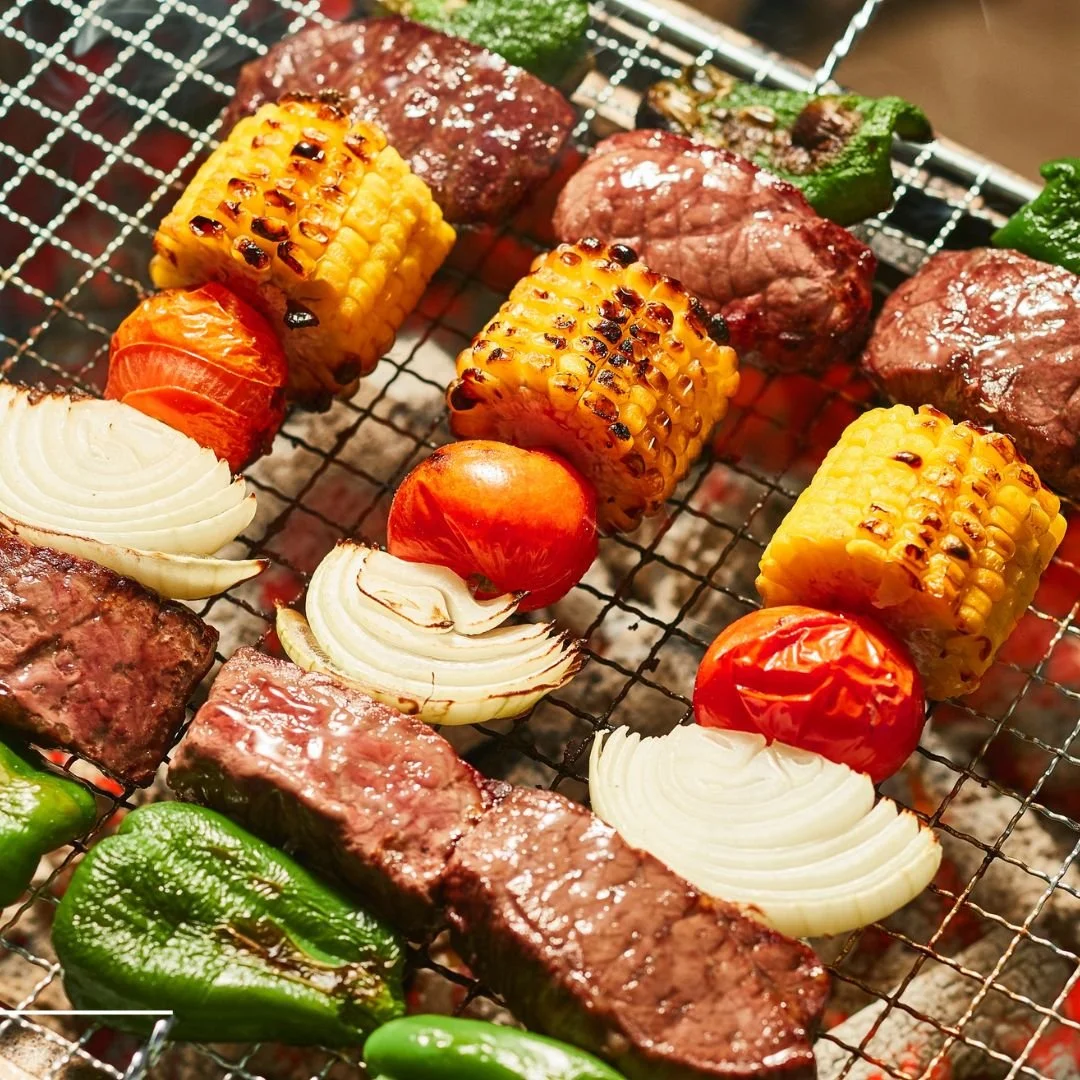
Grilled Veggies and Fruit: Not Just a Side
Grilling brings out natural sweetness and creates incredible texture. Try:
Zucchini, bell peppers, and mushrooms brushed with olive oil
Corn on the cob (grill in the husk or wrapped in foil)
Sweet potatoes or eggplant sliced and grilled until tender
Fruits like peaches, pineapple, or watermelon for a sweet, smoky treat
Grilled fruits and veggies can be served as a side or added to bowls, tacos, or salads.
Bread, Pizza, and More
Yes, you can even grill:
Whole grain bread slices for toasting (perfect with grilled peaches or tomatoes)
Homemade or store-bought pizza dough (I get mine from our local pizza shop), press thin, grill one side, then flip and add toppings before finishing. This takes less than 5 minutes, so have the toppings ready nearby. Once the crust is flipped, add it immediately and work quickly. Cover it, and in a few minutes, it’s all ready.
No pizza stone needed! Maintain a medium heat and watch closely.
What Can’t You Grill?
Very little! Avoid things that are:
Super delicate or fall through the grates (unless using foil or a grill basket)
Require long braising (like certain roasts)
Contain a lot of liquid (like soup… please don’t try)
Otherwise, the grill is incredibly versatile.
How Grilling Supports Healthier Eating
Grilling:
Uses less oil and fat than frying or sautéing
Encourages lean proteins and fresh produce
Promotes home-cooked meals with bold flavors
Makes it easier to prep balanced meals in bulk
It’s not just a summer activity, it’s a tool that supports real-world, balanced nutrition throughout the year.
Grilling doesn’t have to mean burgers and brats on repeat. With a few smart strategies, you can make just about anything on the grill while keeping it healthy, satisfying, and full of flavor.
Whether you’re cooking for one or feeding a crowd, don’t be afraid to explore beyond the usual. Fire it up, try something new, and enjoy the ease and fun of cooking outdoors.