
Continuous Glucose Monitors: What They Can Tell You, and What They Can't
Glucose monitoring has come a long way. For people living with diabetes, continuous glucose monitors (CGMs) have made managing blood sugar easier and, in many cases, have significantly reduced the need for repeated finger-stick testing.
That's a significant advancement. Being able to literally check glucose levels throughout the day without multiple finger sticks, see patterns on an app, and get alerts when glucose is too high or too low can make a real difference in diabetes management.
But CGMs have also moved beyond the population they were originally designed to help. Today, you can find plenty of marketing aimed at people without diabetes who are curious about how their bodies respond to food, exercise, sleep, and other lifestyle factors.
I've received plenty of those promotions myself. And while I think the technology is interesting, heck, pretty darn amazing, I haven't been interested in wearing one just to watch my numbers. I know that having constant access to those readings could make me pay more attention to every little fluctuation than is helpful.
So, are CGMs helpful? Absolutely, for the people who need them. But does everyone need to monitor their glucose throughout the day? That's a different question entirely.
Let's look at what these devices do, who benefits, and what to consider before deciding you need one.
First, What Is Blood Glucose?
Glucose is a type of sugar that circulates in your bloodstream and provides an important and essential energy source for your body's cells. Some glucose comes from the carbohydrates you eat, which your body breaks down during digestion. Your liver can also release glucose and produce it when needed.
Insulin, a hormone produced by the pancreas, helps move glucose from the bloodstream into cells where it can be used for energy or stored for later.
Blood glucose naturally changes throughout the day. It typically rises after eating, particularly after meals containing carbohydrates, and then gradually comes back down as insulin helps move glucose into cells over the next couple of hours. Physical activity, stress, illness, sleep, medications, and other factors can also affect glucose levels.
For most people without diabetes, the body regulates these changes without requiring any conscious effort. For someone with diabetes, that regulation doesn't work as it should, making glucose monitoring an important part of managing the condition.
What Is a Continuous Glucose Monitor?
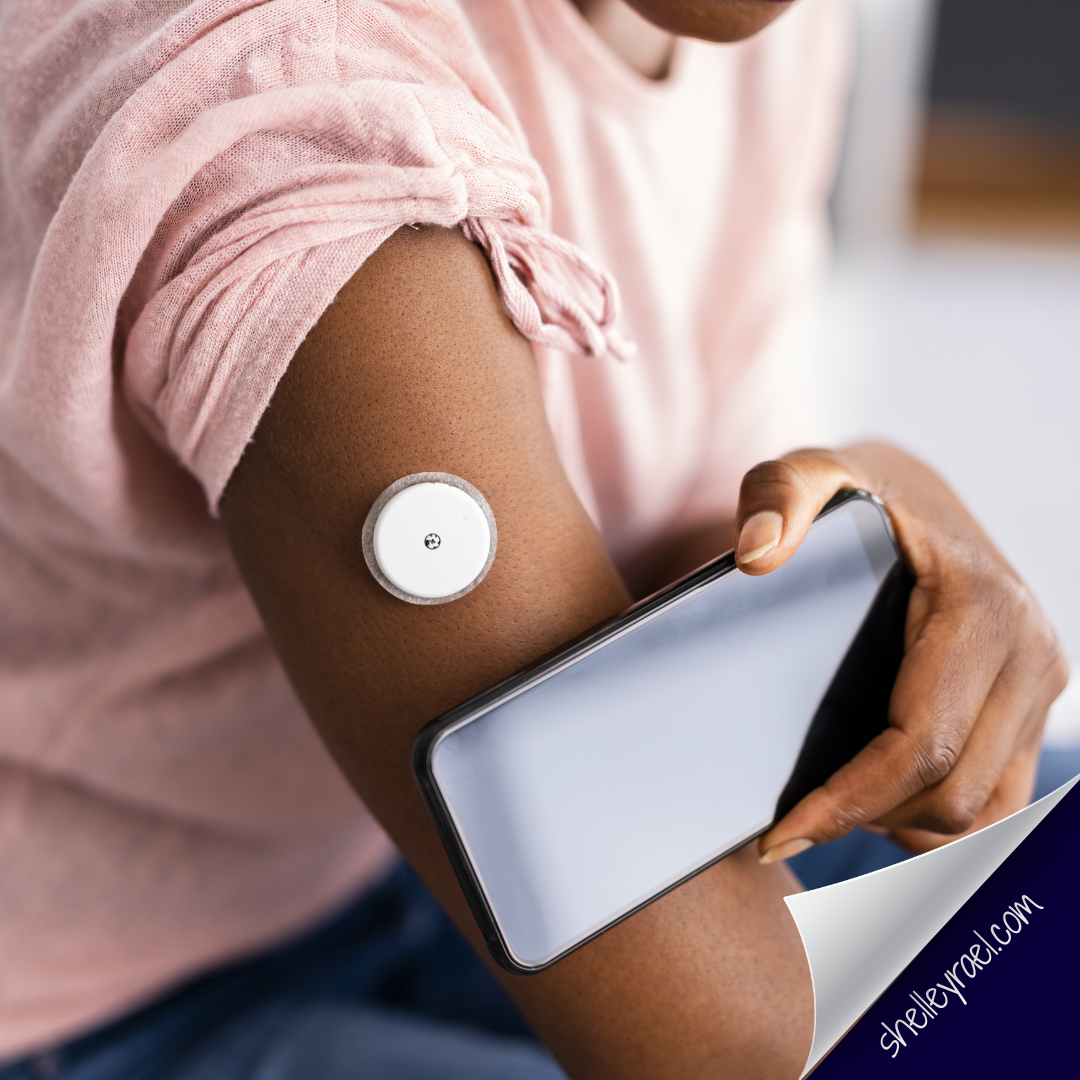
A continuous glucose monitor is a small wearable device that measures glucose levels throughout the day and night.
Most CGMs use a small sensor inserted just under the skin, commonly on the back of the upper arm or abdomen. Rather than measuring glucose directly from the blood, the sensor measures glucose in interstitial fluid, the fluid surrounding the body's cells. It then estimates blood glucose levels and sends readings to a smartphone, receiver, or insulin pump. Readings are generally updated every few minutes.
Side note: In the late 1990s, I was part of a research study investigating glucose readings without a finger stick, which eventually became this technology.
This is different from a traditional blood glucose meter, which requires a finger stick to collect a small blood sample.
One important clarification: CGMs are not completely independent of finger-stick testing. Because interstitial glucose can lag behind blood glucose, especially when levels change quickly, a finger-stick check may still be necessary to confirm a reading or guide treatment decisions. Again, this applies to people with diabetes.
Why Do People With Diabetes Need to Monitor Glucose?
For someone with diabetes, monitoring glucose isn't about curiosity. It provides information that can guide treatment and help prevent complications.
Depending on the type of diabetes, medications, and individual circumstances, glucose monitoring can help:
Guide medication and insulin decisions. People who use insulin need to understand their glucose levels to help determine appropriate doses and avoid taking too much or too little.
Identify low blood sugar. Hypoglycemia can be dangerous, particularly when glucose drops significantly or while someone is sleeping. CGM alerts can provide an important warning.
Identify high blood sugar. Consistently elevated glucose levels can increase the risk of diabetes-related complications such as neuropathy, eye, and kidney issues.
Understand patterns. Seeing how glucose changes after meals, during exercise, overnight, or when taking medication can help people and their healthcare teams adjust treatment.
Reduce the burden of finger sticks. Instead of checking glucose repeatedly throughout the day, a CGM provides ongoing information without needing a new blood sample for every reading.
CGMs can be particularly helpful for people who use insulin or medications that can cause low blood sugar. Research has shown improved glucose management and reduced hypoglycemia for many people with diabetes who use these devices.
This is where the technology has made a substantial difference. It provides more information with less interruption to everyday life.
What About People Who Don't Have Diabetes?
This is where things get a little more complicated.
CGMs are now marketed to people who want to understand how their bodies respond to different foods, exercise, sleep, and daily routines. Some devices are available without a prescription for adults who aren't using insulin.
There are potential advantages, but there are also limitations worth considering.
Potential benefits for people without diabetes:
Increased awareness: Seeing glucose patterns may help someone understand how meals, activity, and other factors affect their glucose levels.
Personal feedback: Some people find it interesting to see how their own glucose responds to different foods or activities.
Behavior changes: For some, the feedback may encourage more physical activity, more balanced meals, or other health-supporting habits.
A temporary learning tool: When used with guidance from a qualified healthcare professional, a short period of monitoring may provide information that supports specific lifestyle goals.
However, these potential benefits must be weighed against what the research has not established.
Potential drawbacks for people without diabetes:
Normal fluctuations can look concerning. Blood glucose is supposed to change throughout the day. A rise after eating does not automatically mean something is wrong.
Not every glucose spike is a problem. You don't need to keep glucose completely flat. Even healthy people experience changes after meals, and the size of a glucose response alone does not tell us whether a food is healthy or unhealthy.
It can encourage unnecessary food restriction. Someone might start avoiding fruit, whole grains, or other nutritious carbohydrate-containing foods because they see a glucose increase afterward.
Constant monitoring can create anxiety. Watching every reading can turn normal physiological changes into something to worry about. It may also shift attention away from the bigger picture of overall health.
The information can be misleading. CGMs have limitations, and readings are estimates rather than direct blood glucose measurements. A single reading doesn't provide a diagnosis or a complete picture of metabolic health.
Cost and convenience are considerations. Sensors need to be replaced, can irritate the skin, and require time and attention. That may not be worth the expense for someone who has no medical reason to monitor glucose.
There is currently insufficient evidence to recommend CGMs as a screening or diagnostic tool for diabetes or prediabetes. Clinicians diagnose those conditions using established laboratory tests, such as A1C, fasting blood glucose, and the oral glucose tolerance test.
Is a CGM Necessary to Improve Your Health?
For most people without diabetes, the answer is no.
You don't need a continuous glucose monitor to know that eating a variety of foods, including fiber-rich carbohydrates, getting regular physical activity, sleeping well, and following a balanced eating pattern support good health.
You also don't need to avoid foods simply because a CGM shows a temporary rise in glucose after eating them. A glucose reading doesn't tell you everything about the nutritional value of a meal. It doesn't measure fiber, vitamins, minerals, protein, or the many other factors that contribute to health.
If you have concerns about blood sugar, diabetes risk, or symptoms that could indicate a glucose problem, talk with your healthcare provider. Appropriate screening and laboratory testing are much more useful than trying to interpret CGM readings on your own.
And if you have diabetes, a CGM may be an excellent tool to discuss with your healthcare team. The decision should be based on your treatment, individual needs, and preferences.
Knowing More Isn't Always the Same as Knowing What to Do
I think continuous glucose monitors are an impressive advancement in diabetes care. For people who need to monitor their glucose regularly, they can make an ongoing and sometimes complicated part of managing diabetes considerably easier.
But I don't think everyone needs access to every possible health measurement.
In full transparency, I don’t have, and won’t get, an Apple Watch or other wearable. In the past, I was a pedometer- and Fitbit-wearing person but got too hung up on the numbers. So I needed to let go of those devices.
There's a difference between useful information and information that simply gives us more numbers to watch. Sometimes, constant feedback helps us make better decisions. Other times, it creates unnecessary concern about normal changes that our bodies are designed to manage.
It's useful to know how your body works. It's also important to understand what the information actually means and whether it gives you something actionable.
You don't need to monitor every fluctuation to take good care of your health.
Resources and Further Reading: