
Don’t Blame the Rice
For years I’ve heard people say they “don’t eat carbs.” When I ask what they mean, they usually list the same four foods: bread, pasta, rice, and potatoes. I have to wonder why these foods specifically became the villains.
Potatoes aren’t a nutrition zero. Neither is rice. What matters is what we do with them. Deep frying potatoes and loading them with sour cream and cheese isn’t the same as having a baked potato with veggies. Rice on its own is not the problem either.
Some people avoid bread and pasta because of gluten. That makes sense if you have celiac disease or gluten sensitivity. But rice doesn’t have gluten, and neither do potatoes. So eliminating rice doesn’t solve a gluten issue.
And here’s the question: how much rice are people really eating that cutting it out makes a dramatic difference in weight?
Cultures all over the world eat rice daily. In many Asian countries, rice is the staple food. Yet obesity rates there are much lower than in the United States. By contrast, the U.S. eats far less rice per person and far more meat than any of those countries, and yet we struggle with some of the highest obesity rates in the world. Rice is not the culprit here.
Rice Basics
Let’s clear up a few things. Rice is naturally:
Fat-free
Cholesterol-free
Non-GMO
Vegan
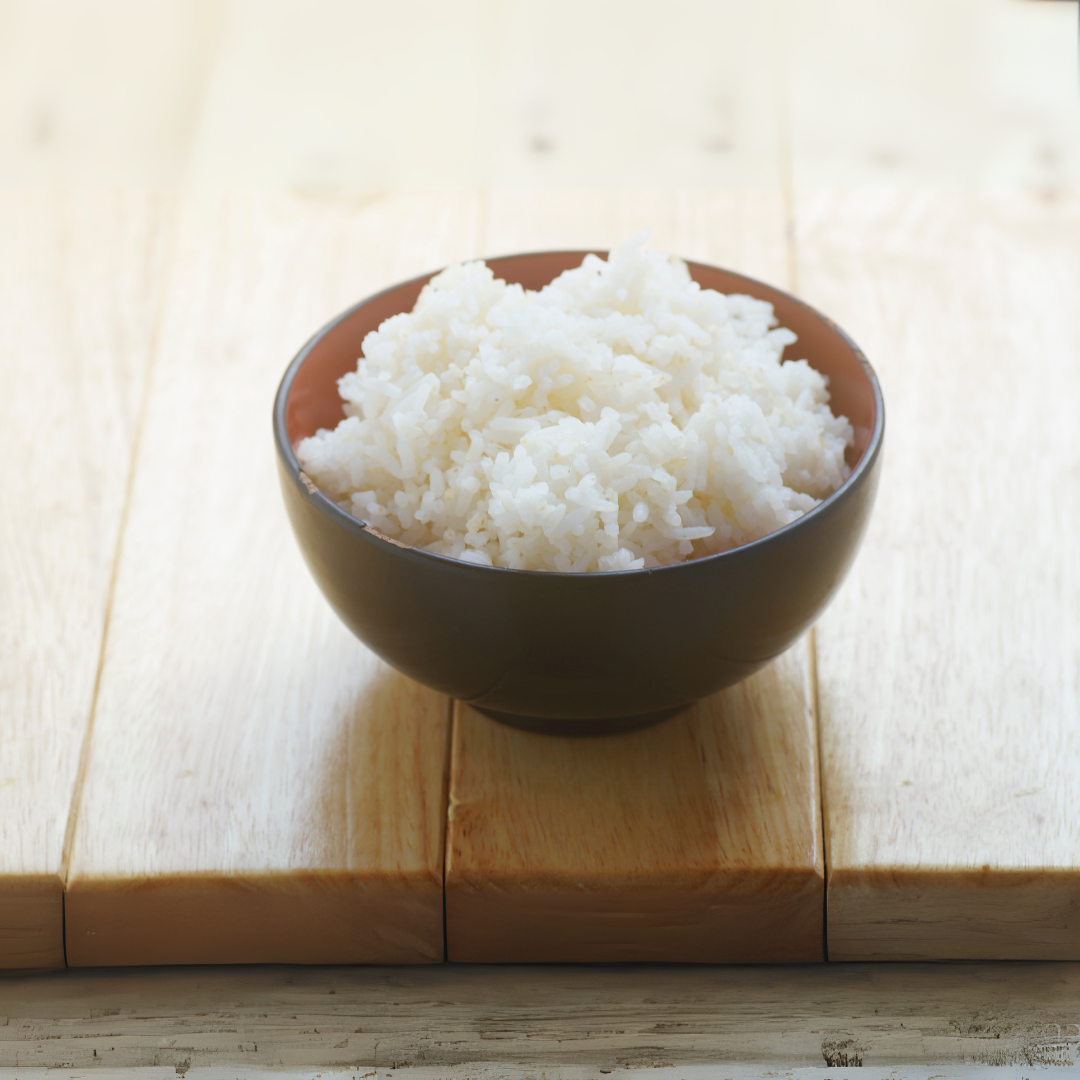
People often ask if rice is fattening, or assume it’s genetically modified. The truth is simpler. Rice is a grain, it contains carbohydrates (fuel for the brain and muscles), and depending on the type, it has some fiber and protein.
Here’s a quick look at cooked rice nutrition per half-cup:
Brown rice: 108 calories, 1.8 grams fiber, 2.5 grams protein
White rice: 103 calories, 0.3 grams fiber, 2.1 grams protein
Rice also provides B vitamins, including folic acid, as well as iron, selenium, potassium, and zinc. Definitely not a nutrition zero.
I eat both white and brown rice. People are surprised by that, but the difference isn’t as dramatic as many think. And you can get fiber from plenty of other foods like fruits and vegetables.
Resistant Starch: A Bonus Benefit
One thing that doesn’t get talked about enough is resistant starch. When rice (or potatoes or pasta) is cooked, cooled, and eaten cold or reheated, it forms resistant starch. This acts more like fiber in the body. Resistant starch helps support gut health, steadies blood sugar, and can even help you feel fuller. That means yesterday’s leftover rice, cooled and reheated, may actually have some added benefit.
Food Safety and Rice
Rice does come with one caution: food safety. Cooked rice should not sit out for hours at room temperature. This is because of Bacillus cereus, a bacteria that can grow in rice if it’s left in the “danger zone.” The best approach is to refrigerate leftovers quickly (within an hour if possible) and reheat them thoroughly when you’re ready to eat. Proper storage keeps rice safe and still delicious as leftovers.
Why Rice Gets Blamed
So why does rice end up demonized? Because it’s a starchy food, and “starch” often gets lumped in with “bad carbs.” But carbs are not the enemy. Carbohydrate is a nutrient, not a dirty word. Rice is a grain that provides energy, some protein, and depending on the type, some fiber.
The bigger picture matters more. A plate of fried rice loaded with oil and salty sauces is very different from a serving of plain rice alongside grilled chicken and vegetables. Before blaming rice, look at the whole meal.
The Bottom Line
Rice is not the reason for weight gain or poor health. It’s one part of a meal, and how it’s prepared and paired matters more than the rice itself. Cultures around the world have eaten rice daily for generations without the health struggles seen in the U.S.
Rice can absolutely fit into a balanced eating plan. Whether you prefer white or brown, freshly cooked or reheated for that resistant starch boost, it can be part of meals that fuel your body, support energy, and keep you satisfied.
Don’t blame the rice. Look at the bigger picture of your eating habits.
More information:
Real World Nutrition Refreshed: I am revitalizing and updating my blog archive and re-publishing it. Stay tuned as I review, update, refresh, and re-share these posts to provide you with even more valuable information on nutrition, health, and overall wellness—and keep things timely. A portion of this blog was initially posted on September 29, 2022, and is updated here.