
Which is Better: Black or Green Tea?
Which is Better: Black or Green Tea?
Spoiler: You don’t have to pick just one.
Even though I’m 100% team coffee in the mornings, tea still has a solid place in my day. And I’m not alone. After water, tea is the most consumed beverage in the world. From Japan to the UK to right here in the U.S., tea drinkers are everywhere.
Whether you prefer it hot or iced, sweetened or plain, green or black tea offers a flavorful alternative to water and some legitimate health benefits.
So… is green tea better than black? Or vice versa? Let’s break it down.
Black Tea vs. Green Tea vs. Herbal Tea
First, both black and green tea come from the same plant: Camellia sinensis. The difference is in how the leaves are processed:
Green tea is steamed or pan-fired shortly after harvesting, which helps preserve its green color and delicate flavor.
Black tea is fully oxidized, having been exposed to air to darken the leaves and deepen the flavor.
There’s also white tea, which is made from younger leaves and buds. It’s lighter in flavor and usually lower in caffeine.
And then there’s herbal tea, which technically isn’t tea. Herbal teas (like chamomile, peppermint, or hibiscus) don’t contain Camellia sinensis and are infusions or tisanes. They’re naturally caffeine-free and can have benefits, but they don’t offer the same compounds as true teas.
Health Benefits of Real Tea (Green & Black)
Both green and black teas contain flavonoids, which are plant compounds that act as antioxidants. These flavonoids are also found in fruits, vegetables, cocoa, coffee, and even red wine.
Here’s what the research shows about tea:
Supports heart health
May reduce the risk of type 2 diabetes
Can contribute to better bone health
Helps with hydration
May reduce the risk of certain cancers
Has compounds that may help reduce tooth decay
And yes, this is true whether the tea is hot or iced.
Other Claims About Tea
You may have heard that green tea can help with weight loss or boost metabolism, and that’s primarily due to a compound called EGCG (epigallocatechin gallate), a type of antioxidant found in higher amounts in green tea. Some research suggests EGCG may slightly increase fat oxidation and metabolic rate, especially when combined with caffeine. And, by slight, that is equivalent to an increase of less than 50 calories a day, and often far less than the amount most people consume. But let’s be clear: green tea alone isn’t a magic weight-loss fix. If it helps you stay hydrated, supports your energy, and fits your lifestyle, great—but it’s not a miracle solution.
Another unique compound in tea, particularly green tea, is L-theanine, an amino acid that promotes a sense of calm without inducing sleepiness. It works synergistically with caffeine, which is why many people find tea gives them a more focused, steady energy compared to the jolt (and crash) of coffee. That combo of gentle alertness and calm focus? It’s one of tea’s underrated benefits.
Caffeine in Tea: Not Just a Green Tea Thing
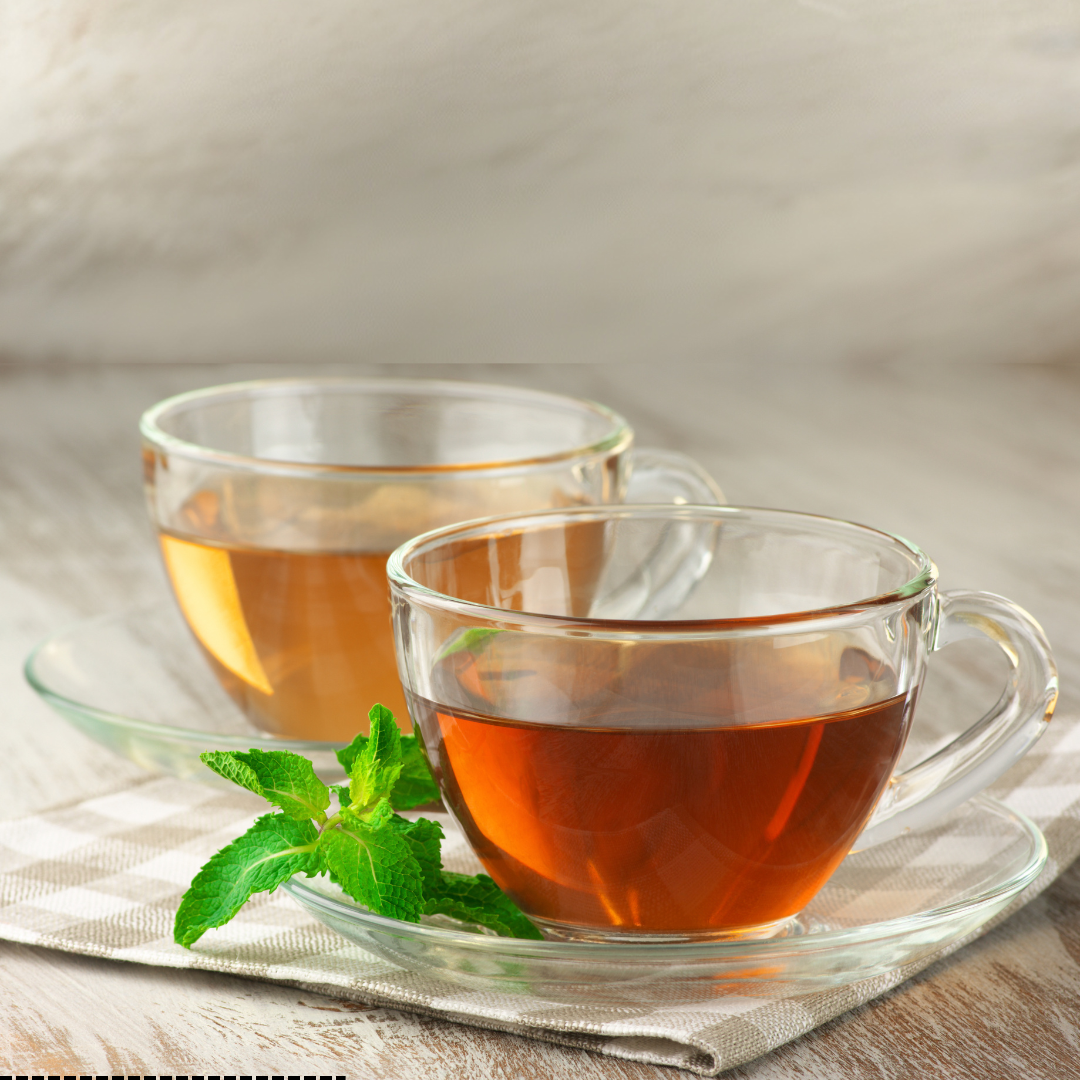
Quick myth-busting: Green tea is not caffeine-free. Both green and black tea contain caffeine, roughly 30–50 mg per cup. That’s less than coffee (which clocks in around 100–150 mg), but still, something to keep in mind if you’re watching your intake or is you are especially sensitive to caffeine.
If you’re looking for a “lighter” pick-me-up than coffee, tea can be a great option. Be aware of the cumulative effect if you’re sipping multiple cups throughout the day or also consuming caffeine from other sources.
Tea and Calories: It’s in the Add-Ons
Tea on its own = calorie-free. That includes black, green, and most herbal teas—if nothing else is added.
But the way you prepare or purchase it matters.
Some examples:
That orange spice tea I love? Still calorie-free.
A peach or blackberry iced tea? Probably has calories. Likely has calories.
A sweetened iced tea from a restaurant? Not so much.
A 32-ounce sweet tea from Cracker Barrel is 130 calories, and their peach tea is 220 calories from added sugar. And those peach, raspberry, or mango bottled teas at the store? Check the label—many have just as much sugar as a soda.
If you’re choosing tea for the health benefits, it’s worth watching what else comes with it.
Hot vs. Iced: Does It Matter?
Good news: You get the benefits either way. So, whether you love your tea steaming hot with a splash of milk or poured over ice with lemon, it’s all fair game, and for most of us, a seasonal choice.
One caution, though—don’t mix lemon and milk. It’s not dangerous, but the acid from the lemon can cause the milk to curdle. And no one wants that weird lumpy situation in their tea.
For me, I naturally reach for hot tea in colder months and iced tea in warmer ones. No rules—just preferences.
So… Which Is Better?
Short answer: Both are great. Green tea and black tea each have their benefits, and unless you’re sensitive to caffeine, you can enjoy both as part of a healthy routine.
If you enjoy the grassy flavor of green tea or prefer a lighter option, go for it. Do you like the bold taste of black tea (or iced black tea with a wedge of lemon)? Enjoy.
You don’t need to overthink it. If it helps you stay hydrated and you enjoy it, it's a win-win.
Want to Learn More About Tea?
TheTea Association of the U.S.A. provides a wealth of information on various types of tea, brewing tips, and health research.
Real World Nutrition Refreshed: I am revitalizing and updating my blog archive and re-publishing it. Stay tuned as I review, update, refresh, and re-share these posts to provide you with even more valuable information on nutrition, health, and overall wellness—and keep things timely. A portion of this blog was initially posted on June 14, 2022, and is updated here.