
Vitamin B?
Something I hear people say all the time is that they need more “vitamin B,” or that they aren’t getting enough of it or are low in “vitamin B,” or that a particular food is a good source of “vitamin B.”
The truth is, there isn’t just one vitamin B. There are eight. And while I can name them all, I sometimes think of them like the Seven Dwarfs: I know them, but listing them all off the top of my head isn’t always easy since I tend to forget one of them – sorry, pantothenic acid.
Here they are:
Thiamin (B1)
Riboflavin (B2)
Niacin (B3)
Pyridoxine (B6)
Folate (B9), also known as folic acid
Cobalamin (B12)
Biotin (B7)
Pantothenic acid (B5)
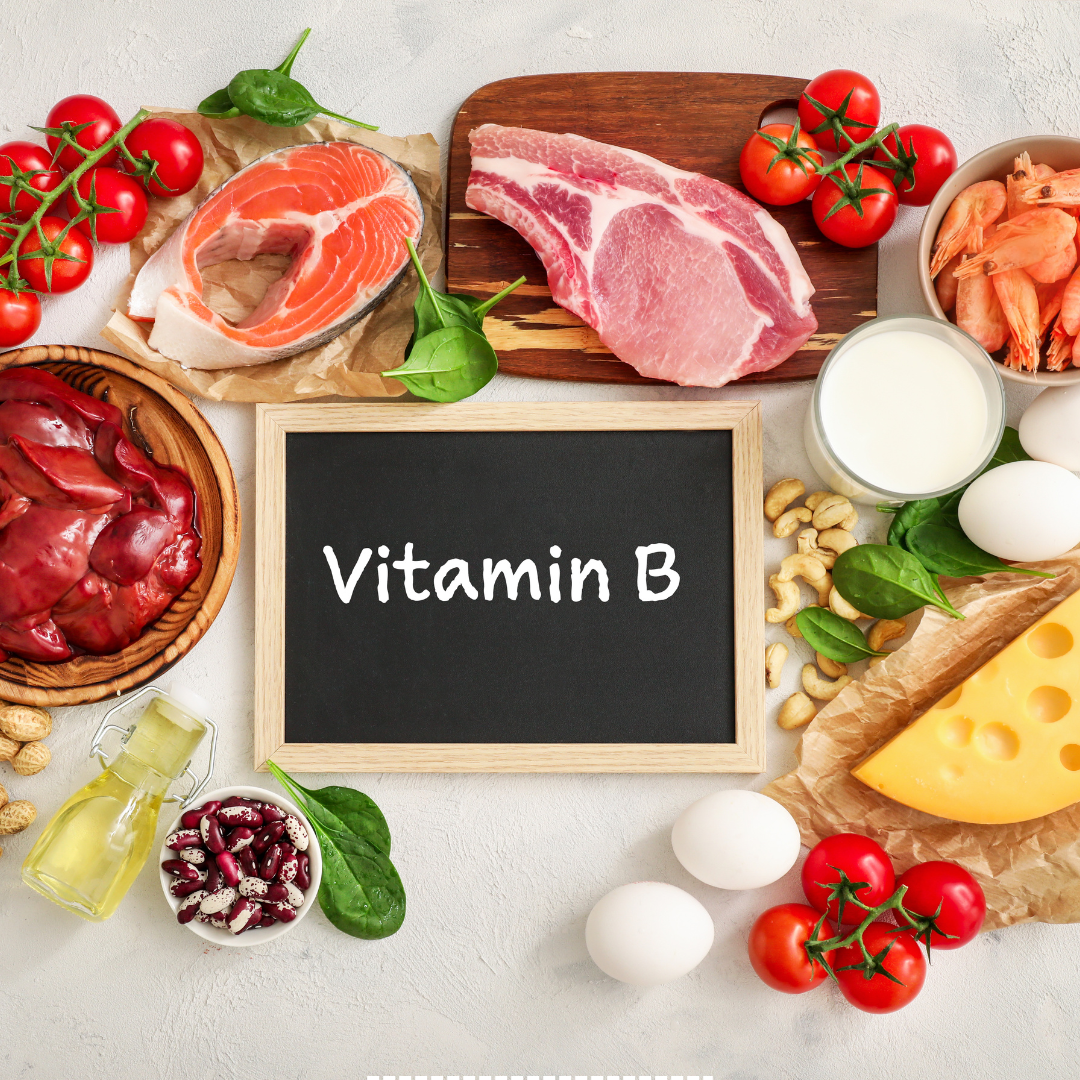
These eight vitamins are grouped together because they share similar roles in metabolism and energy production. But they each have unique jobs in the body, too. They’re found in all food groups, including grains, beans, nuts, meat, poultry, fish, dairy, eggs, fruits, and vegetables.
Do you need a supplement?
For most healthy adults, it takes effort not to get enough B vitamins through food. A balanced diet generally provides plenty. But there are some exceptions.
Vitamin B12 is found naturally only in animal foods and fortified foods like cereals. Vegans usually need a supplement. As we age, our ability to absorb B12 from food decreases, so older adults may also need a supplement. B12 injections, however, aren’t necessary for most healthy people. The real benefit of those shots often goes to the person selling them.
Thiamin (B1) is sometimes supplemented in people with alcohol use disorder, since alcohol interferes with how the body processes it.
Folate (B9) is essential for anyone who could become pregnant. It supports the developing brain and spinal cord of a baby, so supplementation is recommended before and during pregnancy. We also have a version referred to as folic acid.
Several B vitamins also support heart health, red blood cell formation, and nerve function. Low levels can contribute to certain types of anemia. So when someone says they have anemia, it isn’t always an iron deficiency, but possibly related to one of these B vitamins.
What about B-complex supplements?
Many people take B-complex supplements “just in case,” but for most, this isn’t necessary. Unless you’re in one of the groups I mentioned above, a supplement is often unnecessary.
All B vitamins are water-soluble, which means your body does not store them. If you take more than you need, the extra is excreted in urine. Some call that “expensive urine.” I usually say it’s money flushed down the toilet.
Do B vitamins give you energy?
This is one of the biggest myths. B vitamins do not give you energy. Vitamins do not contain calories, and calories are what provide energy.
B vitamins are involved in the chemical processes that help break down carbohydrates, protein, and fat into usable energy, but they are not the source of energy themselves.
So, if you feel more “energized” after a B12 shot or from a drink packed with thousands of percent of your daily needs for B vitamins, it’s not the vitamins. It’s the caffeine and other stimulants in those drinks. Those don’t provide energy either; they just stimulate your nervous system, which can feel like an energy boost.
How much do you need?
The recommended amounts vary depending on which B vitamin we’re talking about, as well as age, sex, and life stage. Pregnancy and breastfeeding also change needs. This is why you can’t just say “I need more vitamin B.” Which one? And how much?
The bottom line: there are eight B vitamins, and you probably get plenty from the food you eat. Unless you fall into a specific situation, supplements are rarely needed. Instead of spending money on unnecessary pills or shots, focus on a variety of foods. That’s where your B vitamins are really coming from.
Real World Nutrition Refreshed: I am revitalizing and updating my blog archive and re-publishing it. Stay tuned as I review, update, refresh, and re-share these posts to provide you with even more valuable information on nutrition, health, and overall wellness—and keep things timely. A portion of this blog was initially posted on March 22, 2022, and is updated here.