Bone Health Basics: Easy Nutrition Tips for Strong Bones
May is Osteoporosis Awareness Month, so it’s a great time to discuss a topic that often doesn’t get attention until it’s too late: bone health.
While osteoarthritis (a condition involving joint cartilage wear and tear) often gets lumped into this conversation, it’s osteoporosis that we’re focusing on here—a condition where bones become weak, brittle, and more likely to fracture. Many people consider osteoporosis an “older adult” issue, but the reality is that bone health is a lifelong concern. There’s a saying in the bone health world: “Osteoporosis is a pediatric disease with geriatric consequences.”
In other words, when most people ask about their bone density, they’ve already missed the most critical windows for prevention.
What Is Osteoporosis (and Why It’s Not Osteoarthritis)
Osteoporosis is a condition that reduces bone mass and strength, making bones more porous and susceptible to breaks, especially in the hips, spine, and wrists. It’s a silent disease until a fracture occurs; unfortunately, it’s often well advanced by then.
Osteoarthritis, on the other hand, is a degenerative joint disease marked by cartilage breakdown, pain, and stiffness. It has an entirely different mechanism and involves different tissues. This is a topic for another day.
Osteoporosis Risk Factors
Like many health issues, osteoporosis involves both modifiable and non-modifiable risk factors.
Non-modifiable factors include:
Age: Risk increases as we get older.
Sex: Women are at greater risk, especially post-menopause, due to hormonal changes.
Family history: A parent or sibling with osteoporosis increases your risk.
Ethnicity: Caucasian and Asian individuals are at higher risk.
Modifiable factors include:
Low calcium or vitamin D intake
Sedentary lifestyle
Smoking
Excessive alcohol consumption
Low body weight or disordered eating history
And here’s the kicker: the more risk factors you have, the higher your overall risk. But even if you can’t change your genetics, there’s a lot you can do through everyday habits, especially with your nutrition and movement, and of course, making lifestyle choices of not smoking and no or low alcohol consumption.
Nutrition Tips for Stronger Bones
Bone health isn’t just about chugging milk. Several nutrients (and behaviors) work together to keep bones strong and reduce your risk of osteoporosis. Let’s break down the key players and how to include them in your day-to-day routine.
Calcium – The Foundation Mineral
Why it matters: Calcium is a major building block of bone. Your body stores 99% of its calcium in bones and teeth.
Recommended Intake:
Adults aged 19–50: 1,000 mg/day
Women 51+ and men 71+: 1,200 mg/day
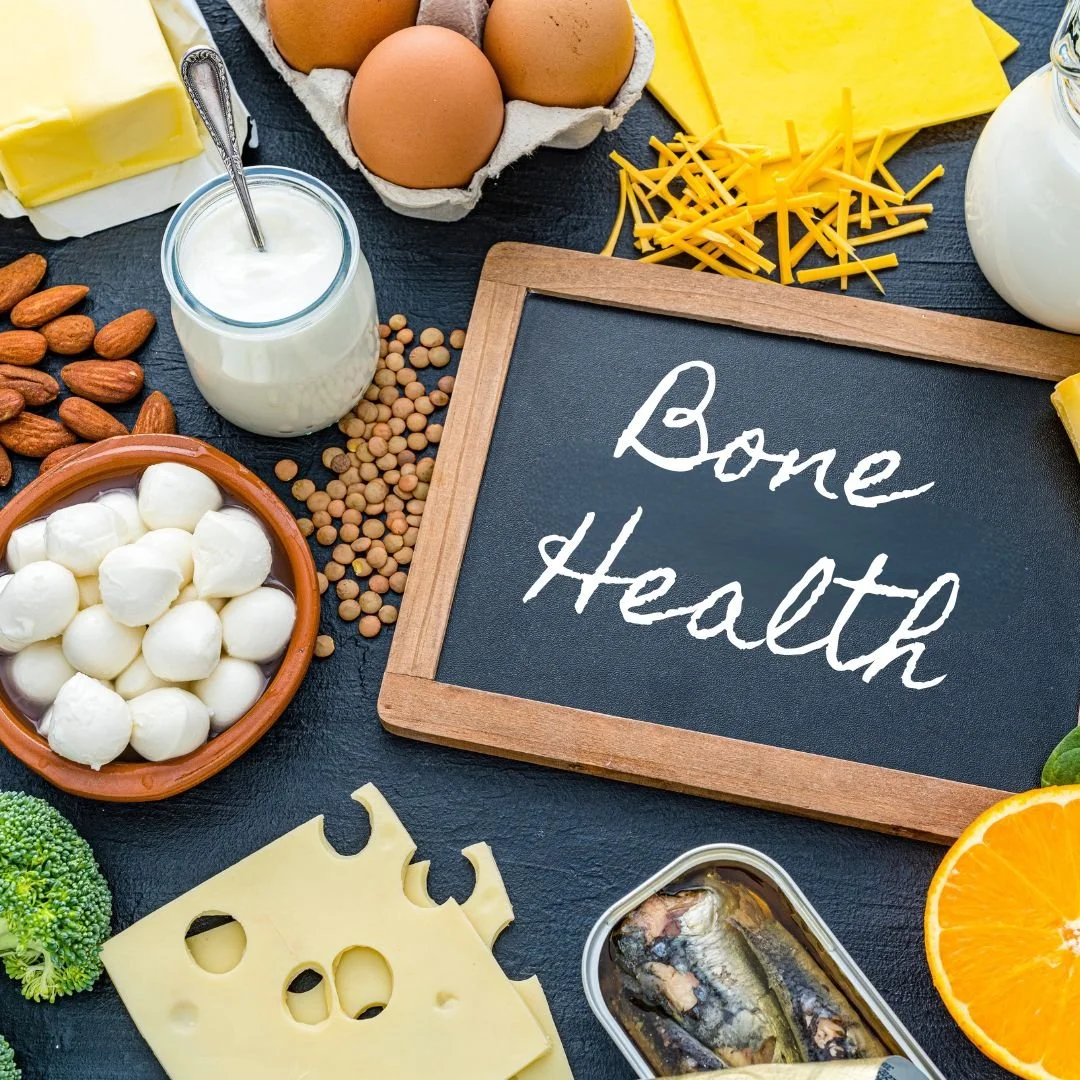
Sources: Dairy (milk, yogurt, cheese), leafy greens, tofu with calcium sulfate, fortified plant milks, sardines with bones, almonds.
Pro tip: Spread calcium intake throughout the day for best absorption. If choosing a supplement, look for one 500 mg or less per dose.
Vitamin D – The Calcium Helper
Why it matters: Vitamin D helps your body absorb calcium and regulate bone turnover.
Recommendation:
600–800 IU/day for most adults; more may be needed based on blood levels (talk to your provider).
Sources: Sunlight, fortified foods (milk, cereals), fatty fish (salmon, mackerel), egg yolks, supplements if needed.
Pro tip: Check your vitamin D level since knowing where you stand without it is hard. And you can overdo it with vitamin D supplements, so stick with any physician recommendations based on the blood test results, or no more than 400 IU/day.
Magnesium – The Unsung Supporter
Why it matters: Magnesium is involved in bone structure and helps with calcium metabolism.
Recommendation:
Women: 310–320 mg/day
Men: 400–420 mg/day
Sources: Nuts, seeds, legumes, whole grains, leafy greens, dark chocolate.
Pro tip: If your diet is plant-forward, you may already get enough, but variety matters. The UL for magnesium is 350 milligrams from supplements only. High-dose supplements can lead to diarrhea, nausea, and cramping in some people. That UL is not related to food intakes.
Vitamin K – For Bone Protein Production
Why it matters: Vitamin K helps activate osteocalcin, a protein involved in bone formation.
Recommendation:
Women: 90 mcg/day
Men: 120 mcg/day
Sources: Leafy greens (kale, spinach, collards), broccoli, Brussels sprouts.
Pro tip: Vitamin K from food is safe, if you’re on blood thinners, do not supplement without checking with a health care provider such as your PCP, pharmacist, or Registered Dietitian. Generally, supplements are not recommended, as we make some, not enough, in our gut.
Movement Matters
Why it matters: Weight-bearing and resistance exercises stimulate bone growth and slow loss.
What to do: Aim for at least 30 minutes most days, combining walking, strength training, and balance exercises (like yoga or tai chi).
Pro tip: It’s not just about cardio! Bone needs impact and resistance to stay strong.
Everyday Strategies That Work
Pair calcium-rich foods with vitamin D sources for better absorption.
Swap refined grains for whole grains to get more magnesium.
Add a handful of leafy greens to smoothies, soups, or grain bowls.
Snack on almonds or yogurt instead of ultra-processed choices.
Get outside and move—even if it’s just a walk with the dog.
Remember: Bone Health Is a Lifelong Investment
This blog just scratches the surface of what goes into protecting your bones. But the takeaway is simple: Start early, stay consistent, and know that every small step counts.
Whether in your 20s, 50s, or beyond, it’s not too early or too late to prioritize strong bones.