We Still Don’t Live Among the Pyramids—Why MyPlate Still Matters
We Still Don’t Live Among the Pyramids—Why MyPlate Still Matters
Let’s clarify: we’re no longer living in pyramid times. Haven’t been for years. Yet, in conversations with clients, friends, policy makers, and even some health professionals, the food pyramid keeps coming up like it’s still a thing.
Spoiler alert: It’s not.
I was reminded of this recently when someone casually mentioned “trying to follow the pyramid,” and I had to pause. The Food Pyramid hasn’t been part of U.S. nutrition guidance since 2011. That’s nearly a decade and a half ago!
So, let’s revisit the current food guidance, food icon, and why it’s not shaped like a triangle.
Remembering the Pyramid Days
If you’re of a certain age, you probably remember the original Food Guide Pyramid released in 1992. It had a black background and a base stacked with bread and grains, and it was confusing for the average person. In 2005, the USDA tried to modernize it with MyPyramid, a more colorful but still pretty cryptic design that didn’t do much better (worse by some views).
Then came 2011, and a moment I’ll never forget.
Nutrition nerds like me—dietitians, students, and health educators—gathered around our computers to watch a livestream (which was still a big deal back then) as the USDA unveiled something new: MyPlate.
Instead of a pyramid, we got a plate. A simple image that actually looked like something you might eat off of. Revolutionary, right?
What is MyPlate?
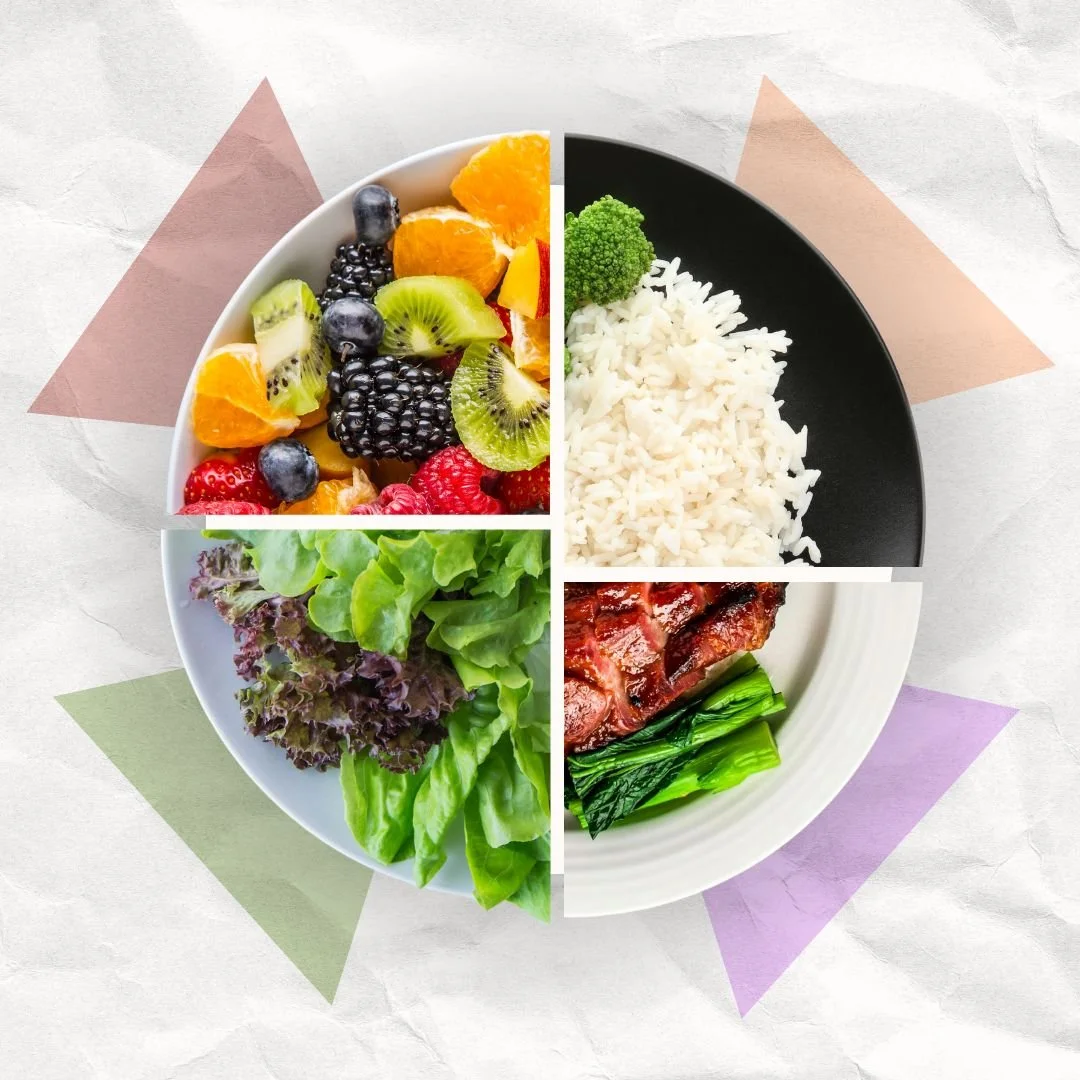
MyPlate is a graphic that shows a plate divided into sections:
One-quarter protein: Think lean meats, poultry, fish, eggs, beans, tofu, or nuts. Fried options? Save those for rare treats.
One-quarter grains or starchy veggies: Whole wheat bread, brown rice, quinoa, or even a baked potato. Aim for whole grains at least half the time. (The starchy vegetables part is my added point of view.)
One-half fruits and vegetables: Yes, half. Combine colorful veggies and fruits to fill up this side of your plate. Ideally, a little more veggies than fruit, but either way – HALF.
Add dairy: A side serving of low-fat or non-fat milk, yogurt, or a dairy alternative that contains calcium and protein (sorry, almond milk doesn’t quite count here).
This layout is visual, approachable, and a big improvement over the pyramid days. It’s also something that kids can understand and adults can apply, whether they’re at home or eating out.
How MyPlate Works in Real Life
I’ve been using a “plate method” for years, even before MyPlate, by drawing sad, lopsided circles for clients to show them how to build a balanced meal. Trust me, I’m no artist, but the concept works.
And it’s not just for home-cooked meals.
Let’s say you’re dining out. You’re brought a bread basket or chips, and salsa. That’s your starch or grain. The salad? Vegetables. Your entrée probably has enough protein for three meals (restaurant portions are no joke), and you may need to mentally “edit” your sides. Instead of adding rice and potatoes, choose the steamed veggies if they’re available. If you skipped the bread or pre-dinner starch/grain, go ahead with the baked potato or rice.
And yes, desserts like cheesecake or crème brûlée do contain dairy, but no, it’s not your dairy serving. (Nice try, though.) And wine isn’t your fruit. (Yes, I have been asked this.)
Why It Still Matters
Is MyPlate perfect? No, but it’s relatable. It’s not a rigid plan; it’s a guide that helps people pause and consider what’s missing or what might be too much.
What’s missing for most? Fruits and vegetables. What’s too much? Highly processed carbs and giant protein portions.
It'd already be a win if every meal were eaten off a real plate, rather than out of a takeout bag, a box, or while standing at the counter.
Visualizing your meals this way encourages mindfulness, balance, and a little more intention, which is something the pyramid never managed to do for most people.
Time to Move On
If you’re still using the food pyramid as your reference point, it’s time to update your mental image. MyPlate isn’t new, and it’s not complicated. It’s simple, accessible, and a whole lot more helpful than a stack of triangles.
So next time you’re planning a meal—or even glancing at your plate in a restaurant—ask yourself:
What would this look like on the MyPlate icon?
That question alone can nudge you toward better choices without guilt or extremes.
And no pyramid required.
Real World Nutrition Refreshed: I am revitalizing and updating my archive of blogs and re-publishing them. Stay tuned as I review, update, refresh, and re-share these posts to provide you with even more valuable information on nutrition, health, and overall wellness—and keep things timely. A portion of thisblog was initially posted on March 1, 2022, and is updated here.