
Rice, Potatoes, and Grains: Why Did Carbs Get Such a Bad Reputation?
Rice is bad.
Potatoes are bad.
Bread is bad.
Pasta is bad.
Carbohydrates cause blood sugar spikes, insulin spikes, weight gain, inflammation, and apparently just about every other nutrition problem you can think of.
At least, that's what you might believe if you've spent any time on social media looking at nutrition advice. Some people I talk to have even said that is what they hear all their lives from family members.
But I want to pause here and note the following:
Rice isn't the problem. Potatoes aren't the problem. Grains aren't the problem.
So where did we get the idea that we need to fear carbohydrates? Or at least these specific ones or types of carbohydrates.
Part of the answer is that we've taken some legitimate nutrition concepts, removed all the context, and turned them into “rules.”
Yes, carbohydrate quality matters.
Yes, different carbohydrate-containing foods affect blood glucose differently.
FAQ About Carbohydrates
Carbohydrates generate a lot of nutrition questions, especially about foods like rice, potatoes, bread, and other grains. Here are answers to some of the most common questions I hear about carbs, blood sugar, insulin, and healthy eating.
Here’s a concise FAQ that should fit nicely at the end of the blog without repeating the main article.
Is rice unhealthy?
No. Rice is a staple food enjoyed worldwide and can be part of a nutritious eating pattern. Different types of rice have different nutritional characteristics, and brown rice generally provides more fiber than white rice. What you eat with the rice and how much you eat can also matter. Most people don’t need to eliminate rice simply because it contains carbohydrates.
Are potatoes bad for you?
No. Potatoes provide nutrients including potassium, vitamin C, vitamin B6 and fiber, particularly when the skin is eaten. The type and preparation matter, too. A baked or boiled potato is a very different food experience from French fries or potato chips. That doesn't make one food "good" and another "bad," but preparation can affect the overall nutritional profile.
Do carbohydrates turn into sugar?
Some carbohydrates are broken down into glucose during digestion, which can raise blood glucose. But carbohydrates are not the same thing as sugar. Carbohydrates include sugars, starches, and fiber. Rice and potatoes, for example, primarily provide starch rather than added sugar.
Do carbs cause insulin spikes?
Eating carbohydrates triggers insulin release because insulin helps move glucose from the bloodstream into cells. That's a normal part of how your body regulates blood glucose. The amount and duration of the response can vary depending on the food, portion, what else you eat with it, and individual factors. A rise in insulin after eating carbohydrates is not, by itself, a sign that something is wrong.
Are whole grains better than refined grains?
Whole grains generally provide more fiber and retain more of the grain's original components than refined grains. That makes them a nutritious choice to include regularly. However, refined grains aren't inherently unhealthy or something you need to avoid. Foods such as white rice, pasta, and bread can fit into an overall nutritious eating pattern.
Can you eat carbohydrates if you have diabetes?
Yes. Having diabetes does not mean you need to eliminate carbohydrates. Carbohydrate-containing foods affect blood glucose, so the type, amount, timing, and combination of foods can be important. Individual needs vary, and working with your healthcare team or a registered dietitian nutritionist can help you determine an eating pattern that supports your blood glucose goals while still including foods you enjoy.
Yes, eating patterns high in refined carbohydrates and added sugars may not provide the same nutritional benefits as patterns that include more whole grains, fruits, vegetables, beans, and other minimally processed foods.
But that's very different from saying that carbohydrates are "bad" or that rice, potatoes, and grains are unhealthy.
First, carbohydrates are not the same thing as sugar
I really want to start here because this is one of the most common misunderstandings and one I need to clear up all the time.
Carbohydrates are not a food group!
Carbohydrates are a macronutrient.
They include sugars, starches, and fiber.
Sugar is one type of carbohydrate.
Starch is another.
Fiber is also a carbohydrate, although our bodies don't digest it in the same way we digest sugars and starches.
So when someone says, "Rice is basically all sugar," that's simply not an accurate description of what rice is.
Rice contains starch. Starch is made up of glucose molecules, but that doesn't make a bowl of rice the same thing as eating table sugar.
The same applies to potatoes and grains.
Your digestive system breaks down many starches into glucose, which can raise blood glucose levels. That's a normal part of digestion and metabolism.
A rise in blood glucose isn't automatically a bad thing.
A rise in blood sugar is a normal part of metabolizing food, so blood sugar will always rise after eating virtually anything. In most people, it returns to “normal” levels within a couple of hours after eating.
The question is what the overall eating pattern looks like, how much of a particular food you're eating, what else you're eating with it, and how your individual body responds.
Rice is a staple food for a reason
Rice sometimes gets treated as though it is a modern nutrition mistake.
It isn't.
Rice has been an important food for thousands of years and remains a staple for billions of people worldwide. The Food and Agriculture Organization describes rice as one of the world's most important staple foods, providing a significant share of global calories.
Rice comes in wide varieties, including white, brown, black, red, jasmine, basmati, arborio, and others.
They don't all have identical nutritional profiles or culinary characteristics.
Brown rice retains the bran and germ, so it generally contains more fiber and some nutrients than white rice. White rice has had the bran and germ removed, making it a refined grain. Some refined grain products are enriched with certain B vitamins and iron after processing.
That doesn't make white rice forbidden.
It simply means different forms of rice have different nutritional characteristics.
And rice is rarely eaten by itself.
Think about the meals people actually eat.
Rice with beans.
Rice with vegetables and tofu.
Rice with chicken and vegetables.
Sushi with fish and vegetables.
Rice in a stir-fry.
Rice in a curry.
Rice in a burrito bowl.
The whole meal needs to be considered – not just one part.
Potatoes aren't just "empty carbs" either
Potatoes have also received a harsh reputation.
But potatoes are a real food that provides nutrients, including potassium, vitamin C, vitamin B6, and fiber, especially when you eat the skin.
And potatoes are a global staple food, not just something Americans eat as French fries. They were first cultivated in South America thousands of years ago and are now grown and eaten worldwide.
Potatoes also come in many different kinds.
Russet potatoes are relatively high in starch and have a fluffy texture when cooked.
Red and other waxy potatoes tend to hold their shape better.
Yukon Gold potatoes fall somewhere in between.
Purple potatoes contain anthocyanins, the same family of plant compounds that give foods like blueberries and purple cabbage their color.
Sweet potatoes are botanically different from white potatoes and provide beta-carotene when they have orange flesh.
So even within the category of "potatoes," there is variety.
And, again, how the various potatoes are prepared matters.
A baked potato topped with beans and vegetables is a very different meal from a large serving of French fries alongside a bacon cheeseburger.
That doesn't mean French fries are toxic or that you can never eat them. Don’t be silly.
It means the food and the context are different.
What about the blood sugar spike?
This is where things often get confusing and clarification, context, and a bit more explanation is necessary.
So, you may have seen someone say that rice or potatoes cause a huge glucose spike, followed by an insulin spike, and therefore should be avoided.
There is some truth buried inside that statement.
Rice and potatoes contain starch. Starches are digested into glucose, and some varieties and preparations can raise blood glucose relatively quickly.
But saying, "This food raises blood glucose," is not the same as saying, "This food is unhealthy."
Blood glucose is supposed to rise after eating.
Your pancreas responds to rising blood glucose by releasing insulin. That's part of normal physiology.
The magnitude and duration of the response can vary depending on the food, the amount eaten, the preparation method, what else is in the meal, and individual differences. Even the same food can have different responses in the same person at different times.
For example, eating a bowl of plain white rice by itself is different from eating a smaller serving of rice as part of a meal that also contains vegetables, beans or another protein source and some fat.
This is one reason I get frustrated with nutrition advice that evaluates foods in isolation without considering other factors.
We eat meals, not nutrient spreadsheets.
Whole grains versus refined grains
One place I do want to be clear: we do want to focus more on whole grains than refined grains.
Whole grains contain the bran, germ, and endosperm of the grain. Refining removes the bran and germ, which reduces fiber and some nutrients. Some refined grains are enriched, meaning certain nutrients are added back after processing. This is not a bad thing.
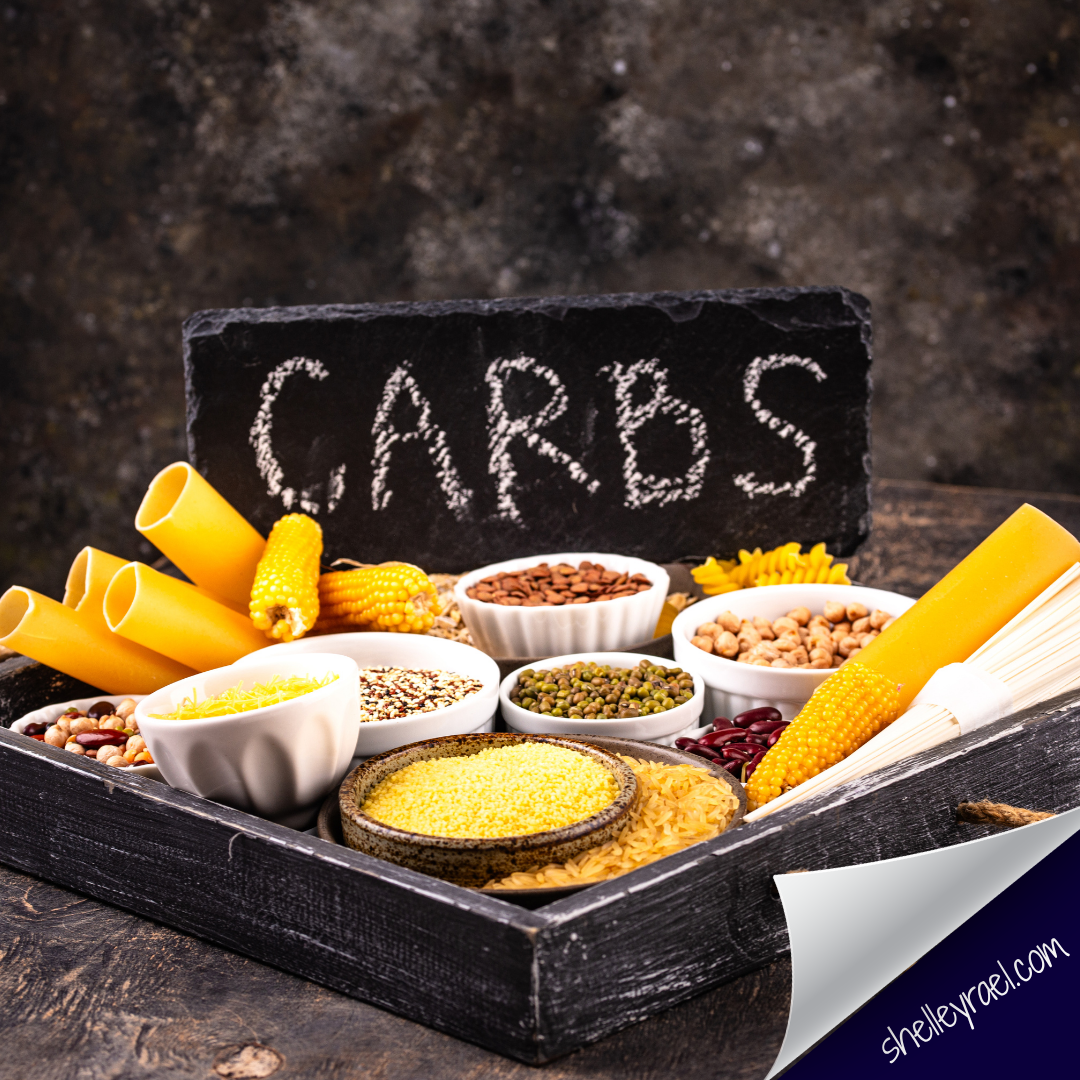
Whole grains include foods such as:
Oatmeal
Barley
Whole wheat
Bulgur
Quinoa
Brown rice
Wild rice
Whole grain corn
Whole grain breads and pastas
This doesn't mean refined grains are "bad."
White rice, regular pasta, white bread, and other refined grain foods can still fit into an overall nutritious eating pattern.
But if you're choosing between two similar products, choosing a whole grain more often can be a useful way to increase fiber and other nutrients.
That's a very different message from "never eat white rice."
Portion matters, but portions aren't moral judgments
Another problem with carbohydrate conversations is portion size.
A large serving of almost any food provides more calories and nutrients than a smaller serving.
That isn't unique to carbohydrates.
The amount you eat can matter.
But that doesn't mean the food is "good" in one portion and "bad" in another.
A serving of rice alongside vegetables, beans and chicken may be exactly what you need for a satisfying meal.
A large bowl of plain rice may not be as satisfying because it provides little protein, fat, or fiber.
This is where context becomes useful.
Instead of asking, "Is rice healthy?"
A better question might be:
How does rice fit into this meal and my overall eating pattern?
That's a much better nutrition question.
Preparation matters too
The way we prepare foods can change the overall nutritional picture.
Consider potatoes.
A baked potato with the skin, topped with Greek yogurt, vegetables, and some cheese is one meal.
French fries cooked in oil are another.
Potato chips are another.
Mashed potatoes made with butter and cream are another.
The potato didn't suddenly become healthy or unhealthy.
The preparation changed.
I often say it’s not the potatoes that are the issue, but what we do to them.
Research also suggests that potatoes' health associations can differ depending on how they're prepared, with fried potatoes showing less favorable associations than baked, boiled, or mashed potatoes in some studies.
This is why "Is this food healthy?" can be such an oversimplified question.
So, should you avoid carbohydrates?
For most people, no.
Carbohydrates provide energy and are found in a wide range of nutrient-rich foods, including fruits, vegetables, beans, whole grains, dairy foods, and many other foods.
The goal isn't to eliminate carbohydrates.
Instead, think about variety and quality.
Include whole grains when you enjoy them.
Eat fruits and vegetables.
Enjoy beans and lentils.
Include potatoes if you like them.
Eat rice if you like rice.
Choose refined grains sometimes because they're convenient, culturally meaningful, or simply what you want to eat.
Pair carbohydrate foods with other foods that make your meals satisfying.
And remember, no single food needs to carry the entire burden of a healthy diet.
We don't need to be afraid of food
I think one of the biggest problems with the carbohydrate conversation is that it turns normal foods into things to fear.
Rice becomes "too many carbs."
Potatoes become "a blood sugar bomb."
Bread becomes "basically sugar."
And suddenly a sandwich, a baked potato, or a bowl of rice becomes a nutrition problem that needs to be solved.
It doesn't have to be that complicated.
Carbohydrates are not a moral category.
Rice isn't good or bad.
Potatoes aren't good or bad.
Grains aren't good or bad.
Foods differ nutritionally, and those differences are worth understanding. But we can recognize those differences without turning them into rigid food rules.
If you'd like a more detailed explanation of carbohydrates, including the differences between fiber, starch, and sugar, I've written about that before:
What Are Carbohydrates? Fiber, Starch, and Sugar Explained
And if you're curious about what low-carb and no-carb diets get right, and where they go too far, you can also read:
Low-Carb and No-Carb Diets: What They Get Right and What They Miss
Because when it comes to nutrition, the goal isn't to find another food to eliminate.
It's about understanding how food works, looking at your whole eating pattern, and making choices that work in your real life.
Sources and further reading:
Harvard T.H. Chan School of Public Health: The Nutrition Source