
Colorectal Cancer and Nutrition: Risk Factors, Fiber, and Prevention
Colorectal Cancer and Nutrition: Risk Factors, Fiber, and Prevention
Colorectal cancer has been getting more attention recently, and for good reason.
Rates are increasing among younger adults. According to theCancer Research Institute, “Today, 1 in 5 people diagnosed with CRC is under age 55, and it is now the leading cause of cancer-related death among young adults. Once considered primarily a disease of older age, CRC is rising at an alarming rate in people under 50 – by nearly 3% per year – even as incidence has declined slightly in the overall population.”
This means, like it or not, what was once thought of as something to be concerned about later in life now deserves attention earlier. Though let’s face it, that is just the screening aspect. Cancer risk is often a culmination of what we do throughout life. And while this spotlight on earlier screening age can feel unsettling, it also highlights the importance of awareness, prevention, and early detection.
Before getting into nutrition and lifestyle, it helps to understand what we are talking about.
What is Colorectal Cancer?
Colorectal cancer refers to cancer that starts in the colon or rectum. It often begins as small growths called polyps that can develop over time into cancer if not detected and removed.
This is one of the reasons screening matters. Colonoscopies are not just diagnostic. They are preventive.
During a colonoscopy, polyps can be removed before they become more serious.
Why the Increased Attention?
Colorectal cancer is one of the most common cancers in the United States. It is also a leading cause of cancer-related deaths.
What has shifted is that rates are increasing among adults under 50. As a result, screening recommendations have changed in recent years. The general guideline now starts at age 45 for those at average risk, but this can vary depending on personal and family history. There are people with apparently healthy lifestyles who have been diagnosed under the age of 30.
And yes, the screening process comes with some inconvenience. Even a lot of inconvenience. And if you haven’t been through it, it is 100% the prep that is the worst part. No matter what people imagine about the actual colonoscopy procedure, trust me, you don’t feel, hear, or see a thing. It’s night-night, sleep tight, welcome back, did you have a nice nap?
The prep is not anyone’s favorite. It usually takes about a day and requires planning. Having done it myself with my appointment less than a week after Thanksgiving, after turning 50, I can say it is not something you look forward to. And why does this post-Thanksgiving thing matter? Between my brother-in-law’s chocolate pecan pie and my mom’s baklava, that was way more nuts than I realized. IYKYK.
But it is temporary. That prep is maybe 24 hours – really, it was less, considering that my prep started mid-day the day before and was completed by midnight, and my appointment was morning.
And when you compare that to the alternative, a series of appointments, treatments, and hearing the words “you have cancer,” it puts things into perspective. At least it should. Like the mammogram, it’s 15 minutes (less than that, really) of being terribly uncomfortable, but it’s certainly better than the alternative.
Screening is one piece of the puzzle.
The other piece is risk.
Some risk factors are not within our control. These include age, family history, and certain genetic conditions. But there are also modifiable factors where nutrition and lifestyle play a role.
In many cases, what matters more is what we do in life between screenings. And before we even need them.
Fiber and Colorectal Cancer Risk
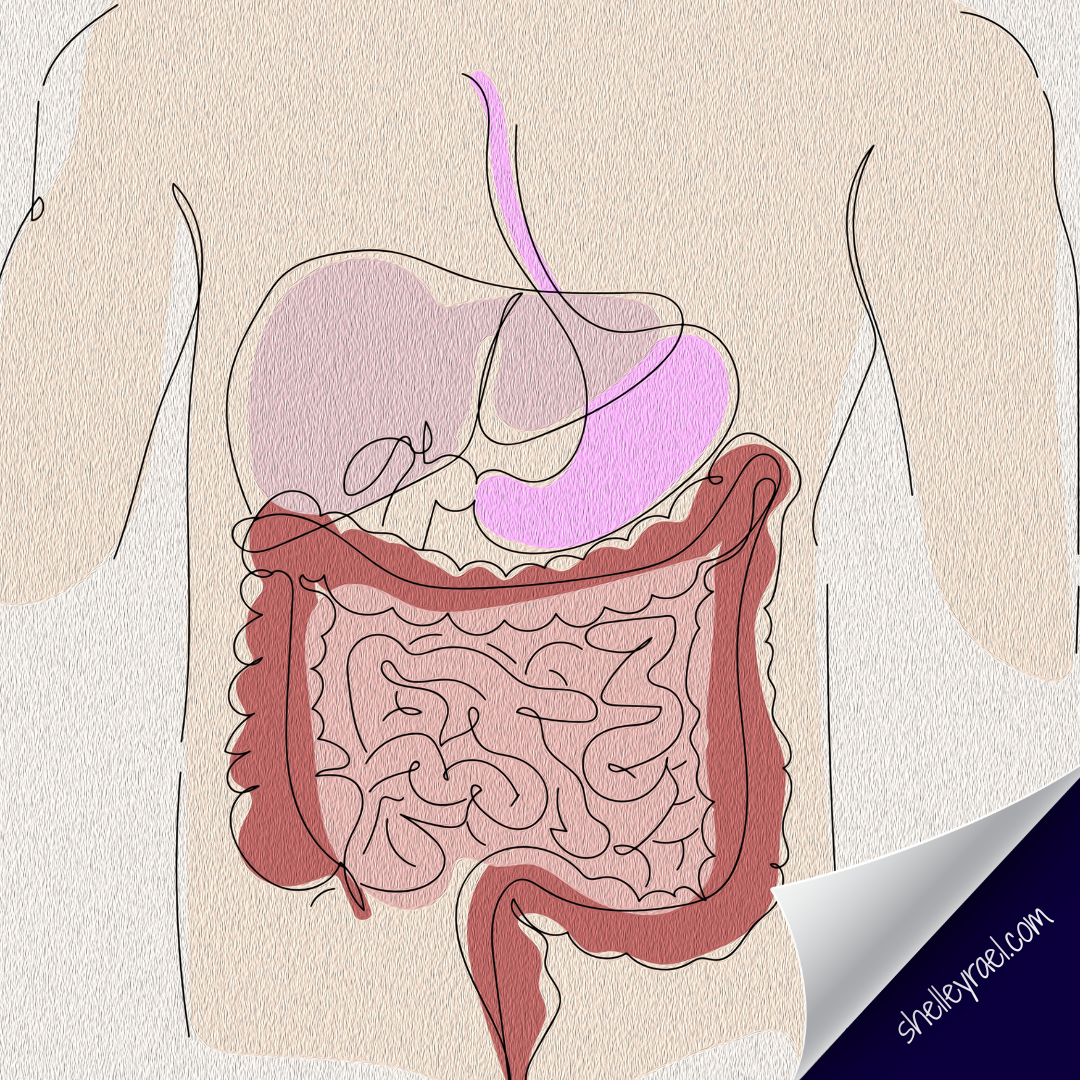
Fiber is one of the most extensively and consistently studied nutrients for colorectal cancer prevention and risk reduction.
Specifically, insoluble fiber and certain fermentable fibers support gut health. Fiber helps increase stool bulk, reduces transit time through the colon, and supports beneficial gut bacteria. When fiber is fermented in the colon, it produces short-chain fatty acids such as butyrate, which may have protective effects on colon cells.
Despite this, most people are not getting enough fiber.
In the United States, average fiber intake is around 15 grams per day, which is well below recommendations.
General targets are about 25 grams per day for women and 38 grams per day for men, with flexibility depending on intake and body size. For example, another way to determine how much you need is to use calorie intake, which in part depends on body size. That recommendation is 14 grams of fiber per 1,000 calories. So someone who needs 2,000 calories a day needs 28 grams, and someone who needs 3,000 calories a day should aim for 42 grams.
Getting there does not require supplements or drastic changes. It is about consistently including plant foods like:
Fruits
Vegetables
Whole grains
Beans and lentils
Nuts and seeds
This is where overall eating patterns make a difference. It is not about one high-fiber meal. It is about what shows up consistently from day to day, week to week, and beyond.
I covered fiber more extensively in this blog, where you can read more: Fiber 101: Soluble, Insoluble, Functional Fiber, and Resistant Starch
Red and Processed Meats and Colon Cancer Risk
This gets intermittent attention. But I want to clarify this risk.
Red meat includes beef, pork, and lamb. Processed meats include foods like bacon, sausage, hot dogs, and deli meats.
These have been classified by the World Health Organization based on their carcinogenic potential. Processed meats are classified as Group 1 carcinogens, meaning there is strong evidence linking them to cancer, particularly colorectal cancer. Red meat is classified as Group 2A, meaning it is probably carcinogenic.
Carcinogen: anything that promotes the development of cancer
Group 1 carcinogen: the substance is known to cause cancer in humans with certain exposure.
Group 2A carcinogen: the substance is likely to cause cancer in humans, meaning that, with certain exposure and circumstances, it is probably carcinogenic to humans.
Read more: https://en.wikipedia.org/wiki/Carcinogen
This classification reflects the strength of the evidence, not the level of risk from a single food.
So processed meats have strong evidence that they are a bigger risk factor for colon cancer than red meat. But both can pose a potential risk.
The concern with these foods centers on compounds formed during processing or cooking, such as nitrates, nitrites, and certain high-temperature byproducts.
The recommendation is not elimination.
A more realistic approach is moderation.
How much, as well as often or how frequently, is the processed meat being consumed. What type of red meat is it, and how is it prepared?
This may look like limiting processed meats as much as possible and being mindful of portion sizes and frequency of red meat intake. It can also include choosing leaner cuts, varying protein sources, and incorporating more plant-based proteins like beans and lentils. Again, it’s not elimination, but balance.
Alcohol and Colorectal Cancer
Alcohol has also been classified as a Group 1 carcinogen.
Recent research suggests that no level of alcohol is completely risk-free when it comes to cancer.
This applies across all types of alcohol. Beer, wine, and distilled spirits all contain ethanol, which is the compound associated with cancer risk. There is no protective effect by type.
Alcohol can impact colorectal cancer risk in several ways, including its role in inflammation, effects on the gut lining, and how it is metabolized into acetaldehyde, a known carcinogen.
For those who choose to drink, recommendations generally suggest limiting intake to no more than one drink per day for women and two for men.
In this blog, Alcohol in Moderation: What the Current Guidelines and Research Actually Say, I go into more detail about what the risk of alcohol consumption is.
Physical Activity and Colon Cancer Risk Reduction
Physical activity plays a meaningful role in reducing the risk of colorectal cancer. It plays a meaningful role in the risk reduction of many diseases.
It helps regulate digestion, reduces inflammation, supports a healthy weight, and may influence hormone levels and immune function.
General recommendations include:
At least 150 minutes per week of moderate-intensity activity, or 75 minutes of vigorous activity
Strength training at least two days per week
Regular movement throughout the day
This does not have to be complicated – or an all-or-nothing approach.
Walking, cycling, strength training, and other forms of movement all count. Consistency matters more than intensity alone.
It’s the Combination of These Things, Not Just One of Them
It is easy to look at each of these factors in isolation.
Fiber. Red meat. Alcohol. Exercise.
But they do not exist separately in real life.
This is about patterns. It almost always is.
A higher intake of fruits, vegetables, whole grains, and beans.
Regular physical activity.
Moderate intake of red meat.
Limited processed meats.
Thoughtful alcohol intake.
These factors work together.
So, it is not about doing one thing and expecting a result. It is about the overall pattern across time. It always comes back to that.
A Note About Screening – the Dreaded Colonoscopy
Screening is still one of the most effective tools for prevention and early detection.
Guidelines currently recommend starting at age 45 for those at average risk, but this can vary. It is important to talk with a healthcare provider about what is appropriate for you.
And yes, the prep is inconvenient.
It requires planning. You need to arrange a ride home that isn’t a rideshare. It disrupts your routine for a day or two.
But the procedure itself is relatively short, and you are not even aware that it is happening.
And when you compare that to the potential alternative, it becomes easier to justify.
Bottom Line…oh, no pun was intended there…
Colorectal cancer risk is influenced by both factors we cannot control and those we can.
Nutrition and lifestyle choices are part of that picture.
Fiber intake matters. Red and processed meats should be moderated. Alcohol intake should be limited. Physical activity should be consistent.
None of these needs to be approached in an extreme way.
This is about balance.
And when it comes to screening, it is not something to put off. Get it over with. In most cases, people will say, " It wasn’t all that bad, really.
Because a day of inconvenience is a very different experience from long-term treatment.