
Eating for Brain Health: What Matters More Than a Single “Brain Food”
If you have noticed nutrition headlines about brain health, you might wonder whether they're legitimate. The “secret: or “newly discovered” path to a healthy brain and longevity of cognitive health. One day it's coffee, green tea, dark chocolate, blueberries, or some newly discovered superfood.
Researchers have studied each of these foods for its potential health benefits. Some of the findings are interesting, even promising, and researchers continue to investigate how specific nutrients and plant compounds affect the brain.
But here's the bigger, and perhaps better, question: What if supporting brain health has less to do with eating one food and more to do with your overall eating pattern and lifestyle?
As people live longer, maintaining cognitive function, memory, and independence as we age has become an increasingly important and discussed topic. Nutrition is part of that.
Frequently Asked Questions
What is the best diet for brain health?
There is no single best diet. Eating patterns such as the Mediterranean diet emphasize vegetables, fruits, whole grains, beans, nuts, and healthy fats, which support overall health.
Can certain foods prevent dementia?
No single food has been shown to prevent dementia. A varied eating pattern and healthy lifestyle may help address some risk factors, but they cannot guarantee prevention.
Does coffee improve brain health?
Caffeine can temporarily improve alertness and attention. Research on long-term brain health is mixed, and coffee has not been proven to prevent dementia.
Let's look at what impacts brain health, including what we know about individual foods, dietary patterns, and other factors that help keep your brain functioning.
Your Brain Needs More Than One Nutrient
Your brain is an energy-demanding organ. It needs a steady supply of energy, oxygen, and nutrients to support communication between nerve cells, maintain its structures, and carry out its many, many functions.
That means your brain needs an overall supply of nutrients, not a single magical one.
Carbohydrates provide glucose, an important and preferred fuel for the brain under normal conditions. Protein supplies amino acids used to make neurotransmitters and other essential compounds. Dietary fats provide components of cell membranes, including those in the brain. Vitamins, minerals, and other nutrients support the many processes that keep the nervous system functioning.
This is one reason a varied eating pattern is vital. Different foods provide different combinations of nutrients, and no single food supplies everything your brain needs. In fact, no single food provides everything your body needs.
It also helps to remember that brain health is broader than memory. It includes thinking, learning, movement, sensory function, emotional responses, and the ability to carry out everyday activities.
What About Coffee, Tea, and Chocolate?
Throughout this series, I’ve covered coffee and caffeine, tea and polyphenols, and chocolate and cocoa. These foods and beverages contain compounds that researchers are studying for their potential effects on cognitive health.
Coffee and caffeine may temporarily improve alertness and attention. However, caffeine can also interfere with sleep, depending on the amount consumed, timing, and individual sensitivity.
Tea contains polyphenols, including catechins in green tea and other compounds in black tea. Cocoa contains flavanols that may influence blood vessel function and certain aspects of cognitive performance. Research on these compounds is interesting, but the evidence does not establish that drinking tea or eating chocolate prevents dementia.
The form of the food matters, too. Unsweetened tea differs from heavily sweetened bottled tea. Natural cocoa powder differs from heavily processed cocoa, and a dark chocolate bar is not nutritionally equivalent to every other chocolate product.
You can enjoy these foods and beverages, and they may contribute useful compounds to your eating pattern. But you don't need to eat them if you don't enjoy them.
The goal isn't to focus only on “brain foods.” It is to build an overall eating pattern that supports your health.
Which Eating Patterns Support Brain Health?
Researchers have studied several dietary patterns for their potential effects on cognitive health, particularly the Mediterranean diet and the MIND diet.
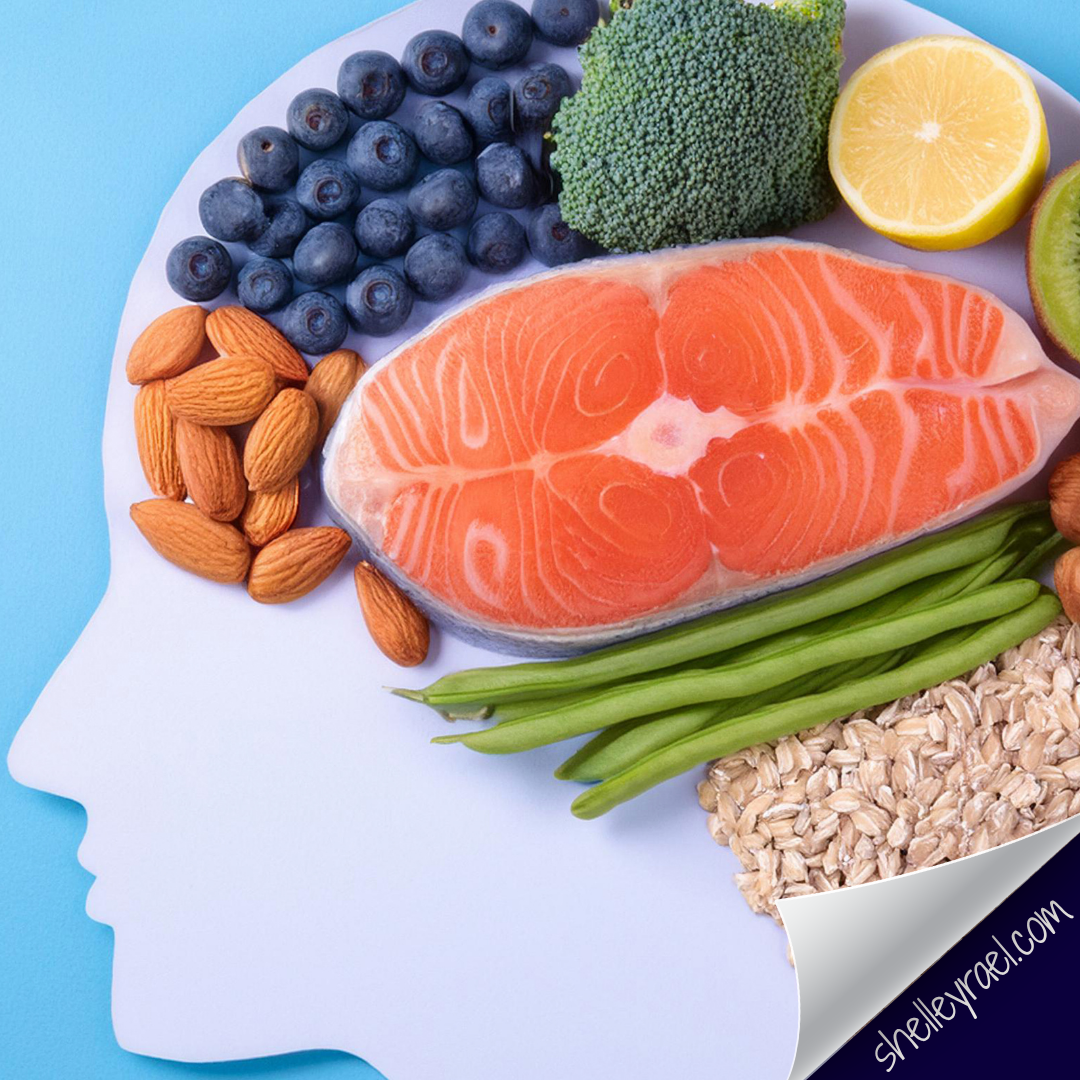
The Mediterranean eating pattern emphasizes vegetables, fruits, whole grains, beans, nuts, seeds, olive oil, and other unsaturated fats. Fish and seafood are included regularly, with other animal foods incorporated according to individual preferences and the overall pattern.
The MIND diet combines elements of the Mediterranean and DASH eating patterns, with particular emphasis on foods such as leafy green vegetables, berries, nuts, whole grains, beans, and fish.
Observational studies have associated these eating patterns with better cognitive outcomes in some populations. However, association does not prove that a particular diet causes those outcomes.
In a randomized clinical trial published in 2023, researchers compared the MIND diet with a control diet that also included mild calorie restriction. After three years, the researchers found no statistically significant difference in cognitive change between the two groups. That doesn't mean eating patterns are irrelevant to brain health. It means we need to be careful not to promise more than the evidence supports. Research is ongoing.
You do not have to follow a named diet to put these principles into practice. Eating a variety of vegetables and fruits, choosing whole grains regularly, including beans and other protein sources, and incorporating nuts, seeds, and unsaturated fats can help support overall health. An added benefit of eating this way? It can support cardiovascular, metabolic, and endocrine health.
For more information, see the National Institute on Aging's guidance on cognitive health.
Your Heart and Your Brain Are Connected
One of the most important connections in brain health is the relationship between cardiovascular health and cognitive function.
Your brain depends on healthy blood vessels and adequate blood flow. Conditions such as high blood pressure, diabetes, and high cholesterol can affect blood vessels and are associated with increased risks of stroke and cognitive problems.
This is another reason to focus on an overall eating pattern rather than a single food. A pattern that supports cardiovascular health can also support brain health.
That includes eating a variety of nutrient-rich foods, getting enough fiber, choosing unsaturated fats regularly, and being mindful of excess sodium and added sugars without treating individual foods as forbidden.
It also means paying attention to and managing health conditions you may already have. Managing blood pressure, blood glucose, and cholesterol, along with getting recommended health screenings and following appropriate medical care, are important parts of protecting your long-term health.
Nutrition Is Only One Piece of the Puzzle
Food choices matter, but several other factors also contribute to brain health as we age.
Physical activity: Regular movement supports cardiovascular health, physical function, and mental well-being. It can be as simple as walking, dancing, gardening, or choosing activities you enjoy. The goal is to move consistently and safely.
Sleep: Sleep is critical for attention, learning, memory, and emotional regulation. If caffeine affects your sleep, adjusting how much you consume or when you drink it may be more useful than adding another supposed brain-boosting food.
Mental stimulation: Learning new skills, reading, working on a hobby, solving problems, or trying something unfamiliar can keep you engaged. You do not need a special brain-training product to find mentally stimulating activities.
Social connection: Spending time with friends and family, participating in community activities, and maintaining meaningful relationships support well-being. Research continues to investigate the relationship between social engagement and cognitive health.
Managing health conditions: Addressing high blood pressure, diabetes, depression, hearing problems, and other health concerns can be part of a broader approach to healthy aging.
None of these factors guarantees that you will avoid dementia or other neurological conditions. Genetics, environmental exposures, and other influences also play a role. But you can take steps to minimize risk and support your health throughout life.
The World Health Organization's guidance on reducing the risk of cognitive decline and dementia provides additional information on these areas.
So, What Should You Eat for Brain Health?
Rather than asking which single food you should eat for your brain, start with a few questions:
Am I eating a variety of vegetables and fruits?
Do I regularly include whole grains, beans, nuts, seeds, and other fiber-rich foods?
Am I getting enough protein and eating a range of protein sources?
Do I include sources of unsaturated fats, such as olive oil, nuts, seeds, and fish?
Is my overall eating pattern one I can maintain while still enjoying my food?
You don't have to change everything at once. Adding a serving of vegetables to dinner, choosing oatmeal with nuts and fruit for breakfast, including beans in a meal, or taking a walk after lunch are all reasonable places to start.
And if you enjoy coffee, tea, or chocolate, you can keep enjoying them. Just don't feel that you need to consume a particular food or supplement to protect your brain.
The Bottom Line: Think Bigger Than Brain Foods
Brain health is not determined by whether you drink green tea, eat dark chocolate, or add blueberries to your breakfast.
Those foods may offer beneficial nutrients or compounds, but the evidence does not support treating any single food as a solution to cognitive aging.
An overall eating pattern, cardiovascular health, physical activity, sleep, social connection, and appropriate medical care all contribute to the bigger picture.
We cannot control every aspect of how our brains age. But we can make choices that support our health, help us stay engaged in life, and may reduce some risk factors for cognitive decline.
Instead of chasing the next brain-boosting food, focus on the habits that work together over time. That's a more useful approach to supporting your brain than any single ingredient can offer.