
Stress and Nutrition: The Best & Worst Foods for Managing Stress
Stress and Nutrition: The Best & Worst Foods for Managing Stress
Stress is not just a feeling. It can completely derail our self-care. When life gets hectic, one of the first things we tend to skip is self-care, and nutrition is often at the top of the list of things that go out the window.
As I discussed in the last blog, when we’re overwhelmed, we often neglect our normal eating routines, exercise, sleep, and other wellness habits. This is totally understandable. But eating well during stressful times can actually help us manage that stress more effectively.
Yet many of us turn to “comfort” foods. We crave something salty, sweet, or heavy, which feels like a well-deserved reward or quick fix. But often, those choices don’t support how we want to feel long-term. So, let’s talk about what actually helps and what might be making things harder.
Why Stress Changes Our Eating Habits
When you’re stressed, your body produces more cortisol, the “stress hormone.” Cortisol can increase appetite and cravings for quick energy: hello, carbs and sugar. It’s why you might find yourself reaching for chips, cookies, or fast food, even if you weren’t all that hungry a few minutes ago.
You may not be thinking about balanced meals when you’re tired, depleted, or emotionally overwhelmed. But recognizing what fuels us vs. what drains us is key. Let’s look at how certain types of foods support us in stressful times—and which ones might leave us feeling worse.
Best Types of Foods for Managing Stress
These foods don’t just keep us full—they can actually help our body and mind feel more balanced.
1. Whole Grains
Think oats, brown rice, quinoa, and whole-grain bread. These support steady blood sugar and keep you full longer and avoiding the crash that comes with highly processed foods. Plus, they help your brain make serotonin, a feel-good chemical.
2. Fruits and Vegetables
Rich in vitamins, minerals, fiber, and antioxidants, fruits and vegetables help your body manage inflammation and oxidative stress. Berries, leafy greens, oranges, and sweet potatoes are all great choices.
3. Nuts and Seeds
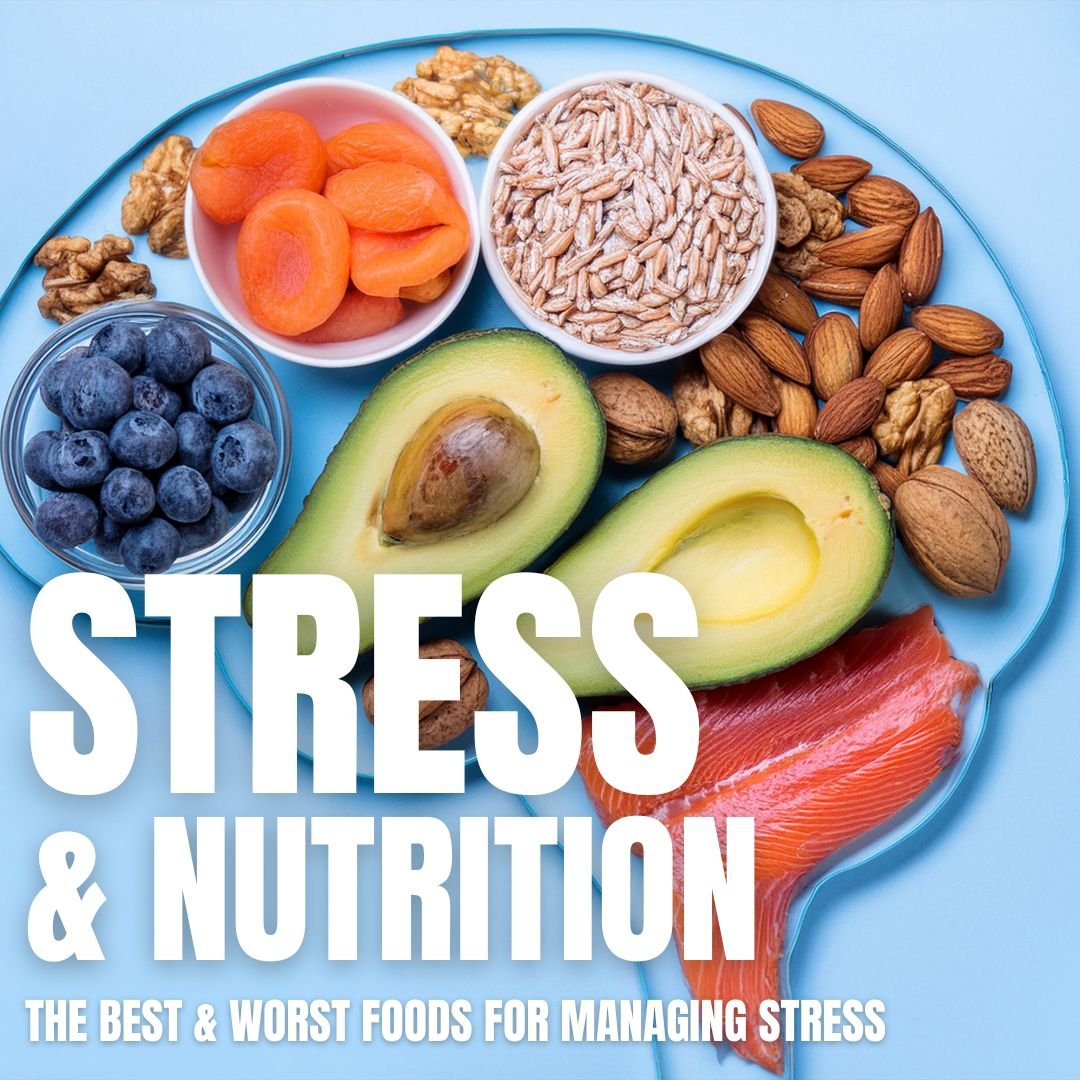
A handful of almonds, walnuts, sunflower seeds, or chia seeds can deliver magnesium, which is often depleted when we’re stressed. Magnesium supports relaxation and better sleep.
4. Protein-Rich Foods
Lean meats, tofu, eggs, yogurt, legumes, and even protein shakes can help stabilize blood sugar and keep you feeling full and focused.
5. Fermented Foods
Gut health and brain health are connected. Yogurt, kefir, kimchi, sauerkraut, and other fermented foods support the gut microbiome, which in turn can help regulate mood and stress response.
How to eat these foods:
Keep it simple. Think sheet-pan dinners with veggies and chicken, a smoothie with fruit and Greek yogurt, or a quick salad with beans and seeds. You don’t need a full-on recipe—just a mix of fiber, protein, and healthy fats goes a long way.
Worst Types of Foods for Managing Stress (And How to Navigate Them)
These aren’t “off-limits” foods, but they are the ones that tend to make things harder when we’re already under pressure. The goal isn’t restriction. It’s awareness and balance.
1. Foods High in Added Sugars
Cookies, pastries, sweetened coffee drinks, and soda may give you a quick energy boost but often lead to an energy crash and more cravings.
2. Highly Processed or Fried Foods
These often contain unhealthy fats and additives that can affect mood and increase inflammation. Think chips, frozen dinners, fast food meals.
3. Excessive Caffeine
A little can be helpful. Too much? It can disrupt sleep and increase anxiety, making stress feel even worse.
4. Alcohol
It may feel like it helps you relax, but it can interrupt sleep, affect blood sugar, and actually increase stress levels over time. Read more here: Alcohol & Stress: How Drinking Impacts Your Body and Mind
How to handle these foods:
Notice your patterns. Are you eating because you’re hungry or because you’re stressed or tired? Practice pausing before reaching for a snack. And if you do have something sweet or salty, enjoy it, but consider pairing it with something nutrient-dense too, like fruit or nuts.
The Bottom Line: Stress Eating Doesn’t Have to Be All or Nothing
You’re human. Stress happens. It’s okay to reach for comfort foods sometimes, but know there are ways to support your body even during high-stress times. The more you incorporate foods that fuel and support your well-being, the more resilient you may feel.
You don’t need a perfect plan. Just small, realistic steps. Start with one meal. One food swap. One new habit that feels doable.
You’re in control of what’s next.