
Does Dairy Deserve a Place in a Healthy Diet?
Does Dairy Deserve a Place in a Healthy Diet?
Few food groups generate as much debate as dairy.
Depending on who you ask, dairy is either an essential part of a healthy diet or something that should be avoided entirely. Social media has only amplified the confusion, with claims ranging from “milk is only for baby cows” to “humans are the only species that drink milk after infancy.”
Questions Addressed in this Blog:
What foods count as dairy?
Is lactose-free milk still real milk?
What is A2 milk?
Is soy milk nutritionally similar to cow’s milk?
Is raw milk safe to drink?
As with most nutrition topics, the reality is much less black-and-white and many shades of gray.
The purpose of this article is not to convince everyone to consume dairy. Some people cannot tolerate it. Others choose not to consume it for personal, cultural, ethical, or religious reasons. And no matter what the facts are, some people will not be swayed into acknowledging them.
Instead, I want to approach this from the angle of what dairy contributes nutritionally, address some common misconceptions, and discuss whether dairy can fit into a healthy eating pattern.
Dairy Is More Than Milk
When many people hear the word dairy, they immediately think of milk.
Milk is certainly part of the dairy group, but it is not the only food in that group.
Dairy foods include:
Milk
Yogurt
Greek yogurt
Cottage cheese
Cheese
Kefir
Buttermilk
These foods provide varying amounts of protein, calcium, potassium, phosphorus, riboflavin, vitamin B12, and other nutrients.
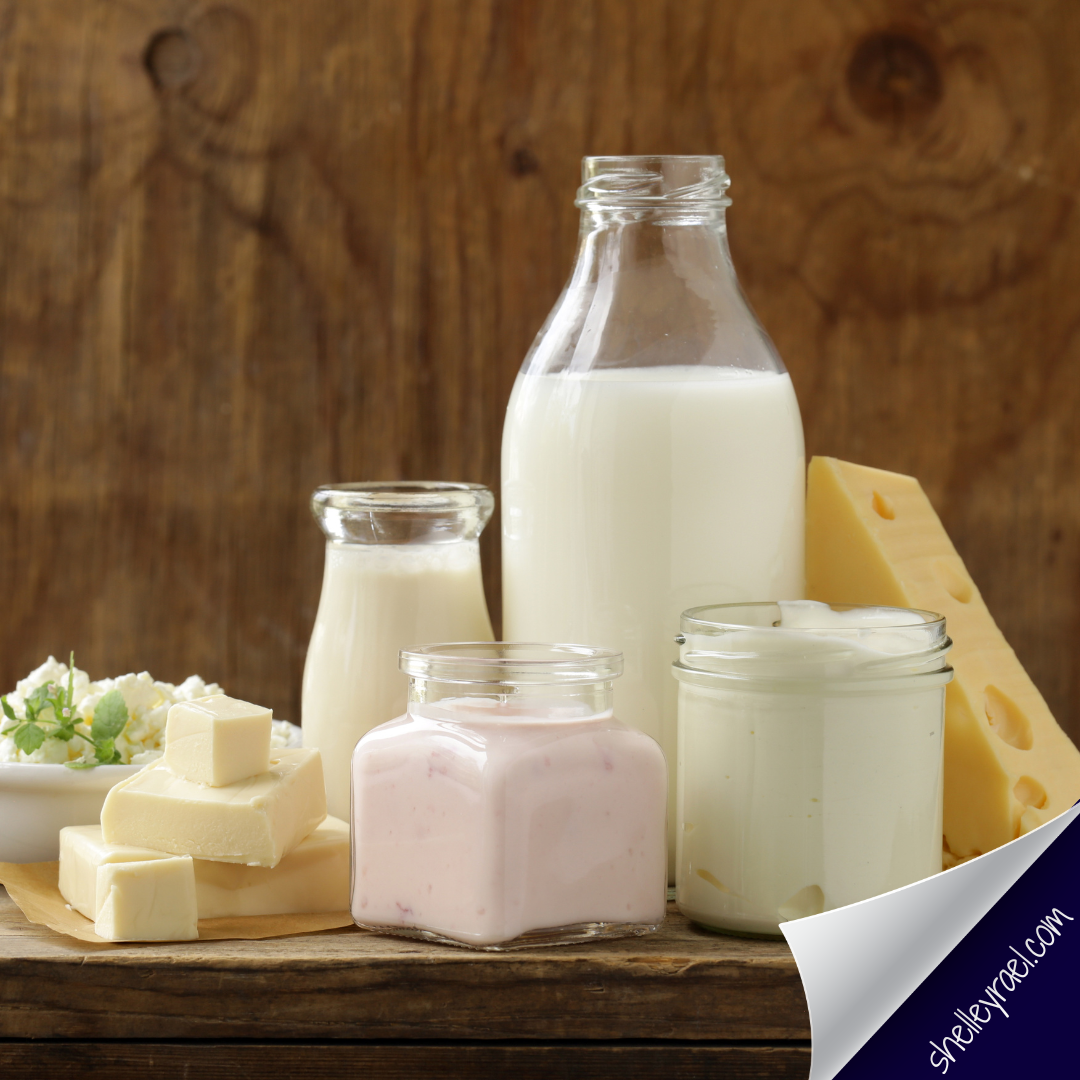
While they all come from milk, they are not nutritionally identical.
Why Dairy Gets So Much Attention
One reason dairy receives so much attention is its nutrient profile.
Dairy foods contain several nutrients that many Americans do not consume in adequate amounts, including:
Calcium
Potassium
Vitamin D (when fortified)
Protein
Calcium often gets the most attention, and for good reason.
While calcium is found in many foods, dairy provides calcium in a highly bioavailable form, meaning the body absorbs and uses it efficiently.
Calcium is also found in foods such as:
Tofu made with calcium sulfate
Fortified plant beverages
Fortified orange juice
Sardines with bones
Salmon with bones
Kale
Bok choy
Collard greens
The challenge is that many people do not consume these foods regularly or in sufficient quantities to meet their calcium needs.
Comparing Milk Options
One of the biggest misconceptions is that lower-fat milk contains less protein or calcium.
The reality is that the protein and calcium content remain remarkably similar. In fact, the entire nutrient profile is similar except for the fat content.
Per 8-ounce serving, milk generally provides:
Whole Milk: ~150 calories, 8 grams of fat, 8 grams of protein, and ~300 mg of calcium
2% Milk: ~120 calories, 5 grams of fat, 8 grams of protein, and ~300 mg of calcium
1% Milk: ~100 calories, 2.5 grams of fat, 8 grams of protein, and ~300 mg of calcium
Fat-Free Milk: ~80 calories, 0grams of fat, 8 grams of protein, and ~300 mg of calcium
The primary difference is the amount of fat and calories.
All can fit into a healthy diet depending on an individual’s needs, preferences, and goals.
Yogurt and Cottage Cheese: More Similar Than Different
The same principle applies to yogurt and cottage cheese.
Removing fat changes the calorie content, but the protein and calcium remain relatively comparable.
For example:
Yogurt (6-ounce serving)
Whole Milk Yogurt
~140 calories
~7 grams fat
~8 grams protein
~250 mg calcium
Nonfat Yogurt
~90 calories
0 grams fat
~9 grams protein
~250 mg calcium
Cottage Cheese (1/2 cup)
Whole Milk Cottage Cheese
~110 calories
~5 grams fat
~13 grams protein
Low-Fat Cottage Cheese
~90 calories
~2 grams fat
~13 grams protein
Again, neither option is inherently better.
They are simply different choices.
What About Dairy Alternatives?
Plant-based beverages have become increasingly popular, but not all are nutritionally equivalent to dairy milk.
Many people assume almond milk, oat milk, coconut milk, and dairy milk are interchangeable.
Nutritionally, that is often not the case.
Soy milk is generally the closest alternative because it naturally provides protein levels similar to dairy milk.
Many almond, oat, rice, and coconut beverages contain significantly less protein, and in some case, virtually no protein, unless specifically fortified.
When choosing a dairy alternative, it is worth looking at:
Protein content
Calcium fortification
Vitamin D fortification
Added sugars
If someone avoids dairy, these nutrients deserve special attention and people need to ensure they are getting them, except the added sugars, in other areas of their diet.
Understanding Lactose Intolerance
Lactose intolerance is often misunderstood.
Lactose is the natural sugar found in milk.
People with lactose intolerance do not produce enough lactase, the enzyme needed to fully digest lactose.
Common symptoms include:
Gas
Bloating
Abdominal discomfort
Diarrhea
Fortunately, lactose intolerance does not necessarily mean all dairy must be avoided.
Many people tolerate:
Yogurt
Aged cheeses
Small amounts of milk consumed with meals
Lactose-free milk is another option.
Lactose-free milk is real milk that has been treated with the lactase enzyme before packaging. The lactose is essentially pre-digested, making it easier to tolerate while providing the same nutrients as regular milk.
What Is A2 Milk?
A2 milk has gained attention in recent years and is often misunderstood.
Milk contains proteins called caseins. Most conventional milk contains both A1 and A2 beta-casein proteins.
A2 milk comes from cows that naturally produce only the A2 form.
Some individuals report fewer digestive symptoms when consuming A2 milk, although research is still evolving.
One important clarification:
A2 milk is not genetically modified.
The cows naturally produce this protein profile through selective breeding. It has nothing to do with genetic engineering.
Addressing Common Dairy Myths
“Cow’s Milk Is for Baby Cows”
Technically, yes.
Just as human milk is designed for human infants.
However, humans have consumed dairy products for thousands of years and have developed cultural and biological adaptations that allow many populations to digest milk throughout life.
The fact that a food originated for one purpose does not automatically mean it has no value in another context.
“Humans Are the Only Species That Drink Milk After Infancy”
Humans are also the only species that:
Drive cars
Use smartphones
Cook food
Refrigerate food
Read nutrition labels
This argument does not tell us whether a food is healthy, unhealthy, beneficial, or harmful.
It simply describes a behavior unique to humans.
“Whole Milk Is the Same as Raw Milk”
This is a misconception that seems to be becoming more common.
Whole milk refers to the fat content.
Raw milk refers to whether the milk has been pasteurized.
These are entirely different concepts.
Whole milk can be pasteurized.
Skim milk can be pasteurized.
Both are commonly pasteurized.
Raw milk is milk that has not undergone pasteurization.
Pasteurization helps reduce the risk of foodborne illnesses caused by bacteria such as:
Salmonella
E. coli
Listeria
Campylobacter
These infections can be serious and, in some cases, life-threatening.
This is why public health agencies continue to recommend avoiding raw milk.
Can Dairy Fit Into a Healthy Diet?
Absolutely.
Dairy foods can contribute protein, calcium, potassium, vitamin D, and other nutrients to a healthy eating pattern.
For people who enjoy and tolerate dairy, there is no reason it cannot be included.
For people who choose not to consume dairy, careful planning can help ensure nutritional needs are met through other foods and fortified products.
The goal is not to pressure anyone into drinking milk.
The goal is to make informed decisions based on evidence rather than social media sound bites.
Nutrition should be about understanding options, not judging what someone else chooses to put on their plate.
For many people, dairy can be one option.