
We often hear about sugar, salt, and fat as the villains of our diet. They’re blamed for chronic diseases, weight gain, and poor health. But the truth is more complicated. Each of these nutrients plays an essential role in the body, and we can’t survive without them. The problem comes when we get too much, often from added or processed sources. This series looks at sugar, salt, and fat individually—why we need them, what happens when we don’t get enough, and the potential consequences of excess. This is the final part of the three-part series on sugar, salt, and fat.
Fat Facts: Why We Need It and Why Type Matters
What is Fat?
Fat, also called lipid, is one of the three macronutrients along with carbohydrate and protein. It’s more than just the oil in a pan or the marbling in a steak—it’s a critical component of every cell in the body. Fat helps insulate organs, build cell membranes, regulate body temperature, and store energy for when food isn’t readily available.
It’s important to note that when we talk about dietary fat, we’re not talking about body fat. Dietary fat refers to the fat found in food, while body fat is stored energy in the body. These two are connected, but they are not the same thing.
Fats are made up of fatty acids, and not all are the same. The main categories are:
Saturated fats: Found in animal products and some tropical oils.
Unsaturated fats: Include monounsaturated and polyunsaturated fats, found in foods like olive oil, nuts, seeds, and fish.
Trans fats: Industrially produced fats once common in processed foods; now largely removed from the food supply because of their harmful effects.
Why Do We Need Fat?
Fat does more than provide energy. It:
Supports the absorption of fat-soluble vitamins A, D, E, and K.
Helps build hormones, including sex hormones and cortisol.
Protects the brain and nervous system, which are primarily made of fat.
Provides satiety, keeping meals satisfying and preventing constant hunger.
Without enough dietary fat, people may experience deficiencies in fat-soluble vitamins, hormone imbalances, and even impaired brain function. This is one reason why extremely low-fat diets are not recommended.
Is Fat All Bad?
For decades, fat was labeled as unhealthy, and many people still equate “fat” in food with “fat” on the body. But dietary fat is not the enemy. The type of fat matters more than the total amount.
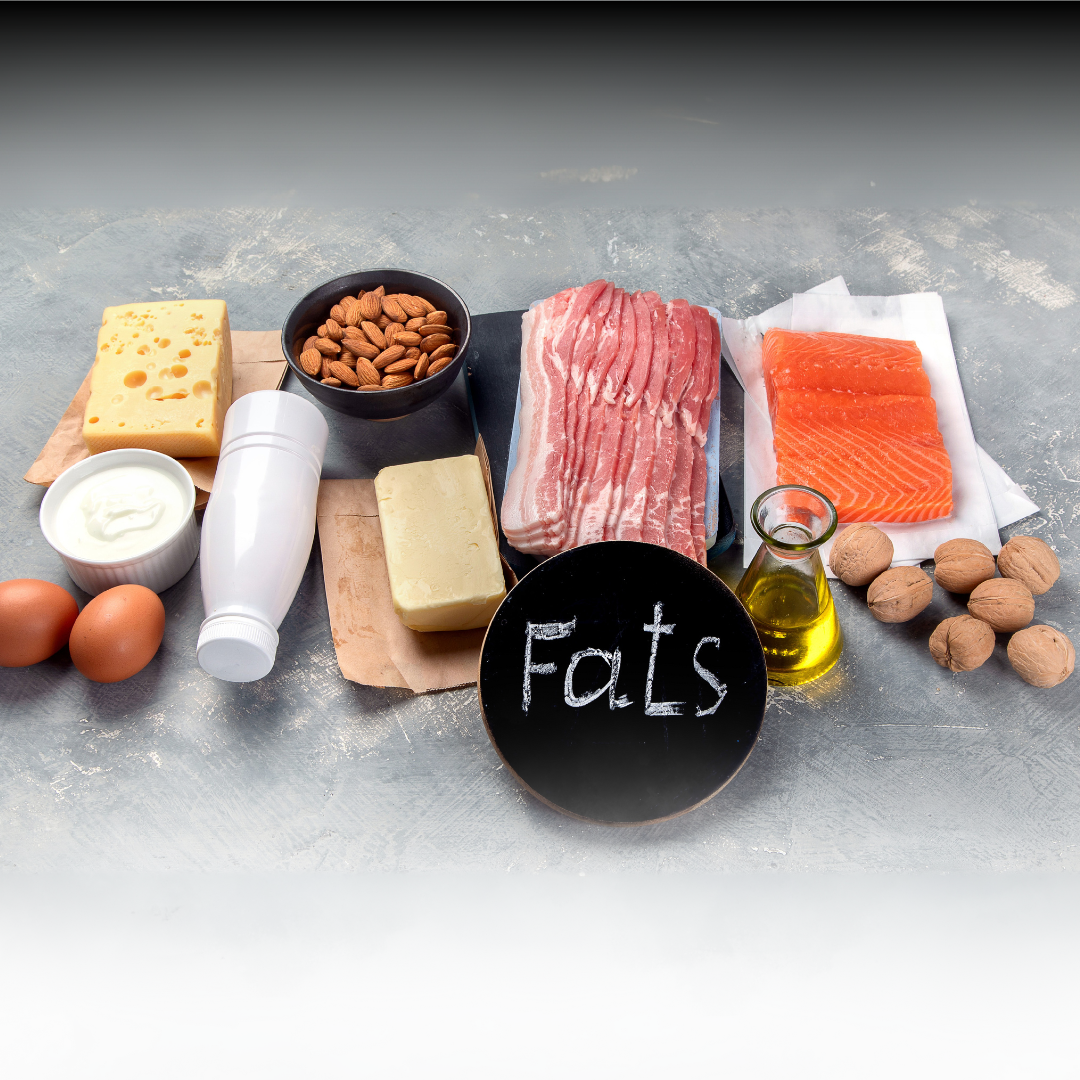
Unsaturated fats, especially omega-3 fatty acids found in salmon, walnuts, and flaxseeds, are linked with heart and brain health. Saturated fat, when consumed in moderation, is not as harmful as once believed. Still, diets high in saturated fat at the expense of healthier fats may raise cholesterol and increase cardiovascular risk.
The real danger lies with trans fats, which increase inflammation, raise LDL (“bad”) cholesterol, and lower HDL (“good”) cholesterol. These fats have no safe level of intake and are best avoided altogether.
What Happens if We Get Too Much?
Fat is calorie-dense, providing 9 calories per gram compared to 4 calories per gram from carbohydrate or protein. Eating excessive amounts of fat, mainly from processed foods, fried foods, and baked goods high in saturated and trans fats, can contribute to weight gain and raise the risk of chronic conditions like heart disease and type 2 diabetes.
But avoiding fat altogether is not the solution. The Dietary Guidelines for Americans recommend that 20–35 percent of daily calories come from fat, with an emphasis on unsaturated fats. This allows for a balance of nutrient absorption, hormone production, and energy without tipping into excess.
Friend, Foe, or In Between?
So is fat your friend or your foe? The answer lies in the middle. Fat is essential to life and health, but the types and sources of fat make the most difference. Whole-food sources like nuts, seeds, avocados, olive oil, and fatty fish are beneficial, while heavily processed foods with hidden fats can push intake into the “too much” category.
Rather than fearing fat, the goal is to choose wisely and enjoy it as part of a balanced diet.
Sugar, salt, and fat are not the enemies of health, they’re often made out to be. They are essential nutrients that keep the body running, but they can become harmful when consumed in excess—especially from added or highly processed sources. Understanding the balance between “enough” and “too much” is the key. This series was to remind readers that nutrition isn’t about extremes or elimination. It’s about finding the middle ground where food supports both health and enjoyment.
For more information:
The Benefits of Omega-3s and Where to Find Them