
How Many Meals Should You Eat Each Day? Three Meals, Six Meals, or One?
How Many Meals Should You Eat Each Day? Three Meals, Six Meals, or One?
Three meals a day.
Six small meals.
One big meal.
Breakfast, lunch, dinner, and snacks.
Eating within an eight-hour window.
Skipping breakfast.
Eating every two hours.
If you've spent any time looking at nutrition advice, you've probably heard that there is a "right" way to structure your meals.
The problem is that the right answer isn't the same for everyone.
Frequently Asked Questions
Is it better to eat three meals or six small meals?
Neither is automatically better. Both can support a healthy eating pattern when meals are nutritious and portions fit your individual needs. The best choice depends on hunger, schedule, preferences, activity, and health considerations.
Does eating more frequently increase your metabolism?
No. Eating more frequently does not automatically cause you to burn more calories or increase your metabolic rate. Your total energy needs are influenced by many factors, including body size, age, muscle mass, and physical activity.
Is intermittent fasting healthier than eating three meals a day?
Not necessarily. Intermittent fasting can help some people manage their food intake and weight, and research suggests potential metabolic benefits, but it isn't inherently healthier than other eating patterns. The best approach depends on the individual.
Is eating late at night bad for you?
Not automatically. Meal timing may influence metabolic health and sleep, but eating at a particular time does not automatically cause weight gain. The overall quality and amount of food you eat matter too.
Do I have to eat breakfast?
No. Some people enjoy breakfast and feel better eating in the morning. Others aren't hungry early in the day. What matters is whether your overall eating pattern provides the energy and nutrients you need and works with your schedule.
Some people are perfectly happy eating three meals a day. Others prefer smaller meals and snacks throughout the day. Some people like a later first meal and an earlier dinner. And some people follow an intermittent fasting pattern that limits the hours during which they eat.
So which one is best?
The answer is probably the least exciting nutrition answer of all:
It depends.
Does Eating More Often Boost Your Metabolism?
This is one of the biggest myths surrounding meal frequency.
You may have heard that eating small meals throughout the day "keeps your metabolism going" or that eating every few hours prevents your metabolism from slowing down.
Your metabolism doesn't work like a fire that needs to be constantly stoked with food.
Your body is using energy all the time. You're breathing, thinking, digesting food, maintaining body temperature, moving around, and keeping your organs functioning whether you have just eaten or it's been several hours since your last meal.
Eating more frequently does not automatically cause you to burn more calories.
And eating fewer times a day does not automatically slow your metabolism.
Your overall energy needs are influenced by factors such as your body size, age, sex, muscle mass, physical activity, and other individual factors.
That doesn't mean meal timing is irrelevant. It simply means we need to stop treating the number of times you eat as a magic metabolic switch.
What About Three Meals a Day?
Three meals a day is a common eating pattern for a reason.
It can provide structure.
Breakfast, lunch, and dinner give you three opportunities to eat a balanced meal and get a variety of nutrients throughout the day.
For some people, three meals are enough to provide the energy and nutrients they need without feeling overly hungry between meals.
It can also make planning easier.
You don't have to think about food every couple of hours, and you may find it easier to build meals around your schedule.
But three meals is not automatically better than four or five.
If you're genuinely hungry between meals, adding a snack may make more sense than following an arbitrary rule that says you aren't "allowed" to eat again until dinner.
What About Six Small Meals?
Eating smaller meals more frequently has also been promoted for years.
The idea is that smaller, more frequent meals can help control hunger, prevent overeating, stabilize energy, and keep metabolism humming along.
Some people do find this eating pattern helpful.
If large meals leave you uncomfortable, smaller meals may feel better.
If you have a long workday and need portable food throughout the day, smaller meals and snacks may be practical.
There are also specific medical situations in which healthcare professionals may recommend smaller, more frequent meals. For example, people with certain digestive conditions may be advised to eat several small meals rather than a few large ones. (NIDDK)
But again, six meals a day isn't inherently healthier than three meals a day.
And eating six times a day doesn't mean you automatically eat less.
You can still consume more energy than your body needs if those six meals become six full-sized meals.
The size and quality of what you're eating still matter.
What About One Large Meal?
This is where intermittent fasting tends to come up.
Some people eat most or all of their food within a relatively short window each day. One version is called one meal a day, or OMAD.
Other forms of intermittent fasting are less extreme. Time-restricted eating, for example, involves eating within a specific window each day and fasting for the rest of the hours. Some people might eat within an eight- or ten-hour window and then fast overnight.
Research suggests that intermittent fasting and time-restricted eating can help some people, not necessarily everyone, lose weight and may offer metabolic benefits.
But that doesn't mean fasting is inherently superior to eating three meals a day.
One reason intermittent fasting can work for some people is simply that having a shorter eating window may make it easier to consume fewer calories overall.
It can also provide structure.
If you aren't eating after 8 p.m., for example, you're not going to be reaching for a snack at 10 p.m.
But that doesn't make eating after 8 p.m. inherently fattening.
And it doesn't mean everyone needs to fast.
Does Meal Timing Matter?
Here's where things get a little more interesting.
When you eat may matter to some degree, particularly given the relationship among food intake, sleep, and our body's circadian rhythms.
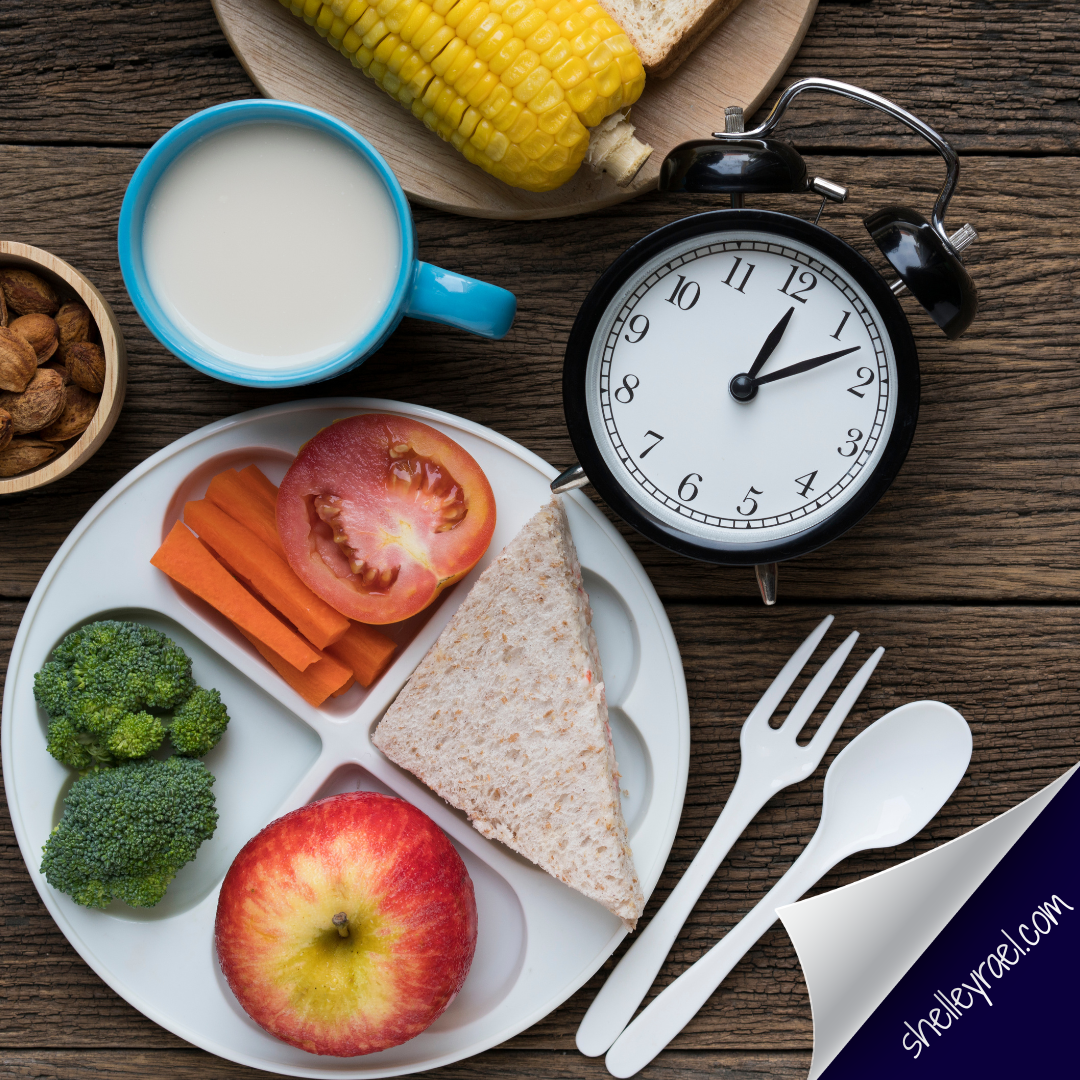
Research on meal timing is still evolving. Studies have found potential benefits from strategies such as eating earlier in the day or limiting the daily eating window, but the long-term effects and the best approach for different people are still being studied.
This doesn't mean you need to start eating dinner at 4 p.m.
It means that meal timing is another factor to consider, rather than a universal rule.
And for many people, the biggest issue isn't whether dinner happens at 5:30 or 7:30.
It's what they're eating, how much they're eating, whether they're getting enough nutrients, and whether their overall eating pattern works for their life.
So, How Many Meals Should You Eat?
Here's the answer I want you to remember:
Eat in a way that supports your hunger, your energy, your health, and your lifestyle.
If three meals a day works for you, great.
If you need a morning snack and an afternoon snack, that's fine too.
If you prefer a later breakfast and an earlier dinner, that can work.
If you exercise in the morning and need something to eat beforehand, eat.
If you're not hungry first thing in the morning, you don't necessarily have to force yourself to eat just because someone told you breakfast is the most important meal of the day.
And if intermittent fasting appeals to you, it can be one option. It isn't the only option.
Pay Attention to Your Hunger
One of the most useful questions you can ask yourself isn't:
"How many times am I supposed to eat today?"
Instead, ask:
"Am I hungry?"
That doesn't mean you have to eat every time you experience hunger, and hunger isn't the only reason to eat.
We eat for social reasons.
We eat because food is enjoyable.
We eat because it's lunchtime and we know we have a busy afternoon ahead.
We eat because we're about to exercise.
Those are all part of normal eating.
But paying attention to your hunger and fullness can help you recognize whether your current meal pattern is actually working for you.
For example, if you routinely skip lunch because you're trying to follow a two-meal-a-day plan and then find yourself ravenous at 8 p.m., that may be useful information.
Your body may be telling you that pattern isn't working particularly well.
Likewise, if you're eating every two hours because you've been told it's necessary to keep your metabolism elevated, but you're rarely hungry and are constantly thinking about your next meal, you might want to reconsider whether that approach is helping you.
What About Weight Management?
Meal frequency by itself isn't a magic weight management strategy.
You can gain weight eating three meals a day.
You can lose weight eating six smaller meals.
You can maintain your weight with intermittent fasting.
And you can gain weight while intermittent fasting.
The pattern matters less than the overall picture.
For weight management, your total food and energy intake over time matters, along with the nutritional quality of your eating pattern and your physical activity. A healthy eating pattern should also be one you can maintain over time.
That's why I don't recommend choosing a meal schedule simply because someone claims it will "boost your metabolism."
Choose it because it works for you.
A Few Questions to Ask Yourself
If you're trying to figure out how often you should eat, consider:
Am I hungry between meals?
If yes, a snack may be appropriate.
Am I constantly eating when I'm not hungry?
You may want to look at whether you're eating out of habit, boredom, stress, or simply because food is available.
Do I have enough energy throughout the day?
If you're dragging through the afternoon, your meal pattern or the foods you're choosing may need some attention.
Am I getting enough protein, fiber, fruits, vegetables, whole grains, and other nutrient-rich foods?
Meal frequency matters much less if you're struggling to meet your nutritional needs.
Does MY eating pattern fit MY life?
This one is important.
The healthiest meal pattern on paper isn't very useful if you can't realistically maintain it.
The Bottom Line
There is no magic number of meals you need to eat each day.
Three meals can work.
Six smaller meals can work.
A time-restricted eating pattern can work for some people.
One meal a day may work for some people, although it can make it more difficult to meet nutritional needs and isn't appropriate for everyone.
Your metabolism does not require you to eat every few hours to keep it running.
And you don't need to force yourself into an eating schedule that leaves you hungry, exhausted, or thinking about food all day.
Instead, consider your hunger, energy, schedule, activity level, nutritional needs, and health goals.
Then build an eating pattern around those things.
Because when it comes to meal frequency, there isn't one "right" answer.
There is the eating pattern that works for you.
Sources and further reading:
NIH NIDDK – National Institute of Diabetes and Digestive and Kidney Diseases
NIH National Library of Medicine:
Note: banners on the NIH websites indicate “NIH Websites Are Changing” in the fall of 2026. The links above were accurate when accessed in August 2026.