
The Truth About Superfoods: Hype or Help?
We throw around the term “superfoods” loosely. Years ago, I even gave presentations about the “top 12 superfoods.” Why? To get people in the room and share that some foods do have multiple health benefits. But looking back, I realize the term itself is overhyped.
Superfoods usually refer to foods that offer more than just basic nutrition. This could be oats, beans, berries, yogurt, fatty fish, nuts, coffee, tea, dark chocolate, and many others. They tend to have nutrients and compounds that may lower disease risk, benefit heart health, or improve overall wellness.
Here’s the thing: all foods provide more than just calories and macronutrients. A candy bar has sugar and fat, but also tiny amounts of vitamins and minerals. A banana has carbohydrates, potassium, vitamin C, and water. Food is complex, and no one item is a magic bullet.
The Six Essential Nutrients
Every food provides at least one of these essential nutrients:
Carbohydrates – Found in fruits, vegetables, grains, beans, and dairy.
Protein – Found in meat, fish, poultry, eggs, dairy, beans, and some grains.
Fat – Found in oils, nuts, seeds, fatty fish, dairy, and some meats.
Vitamins – Found in all food groups, especially fruits and vegetables.
Minerals – Found in all food groups. Examples include calcium, iron, magnesium, and potassium.
Water – Found in beverages and most foods, especially fruits and vegetables.
Some foods also contain phytochemicals, which are compounds found in plants that can promote health. These may have antioxidant, anti-inflammatory, or other protective properties.
For example:
Avocado has healthy fats, fiber, potassium, vitamins C and E, and phytochemicals that support heart health.
Bananas contain carbohydrates, potassium, vitamin B6, vitamin C, and small amounts of other essential nutrients.
Even foods without calories can have benefits. Coffee and tea contain no macronutrients but do contain phytochemicals, such as polyphenols, which may help reduce inflammation and support heart health, as well as offer a range of additional benefits.
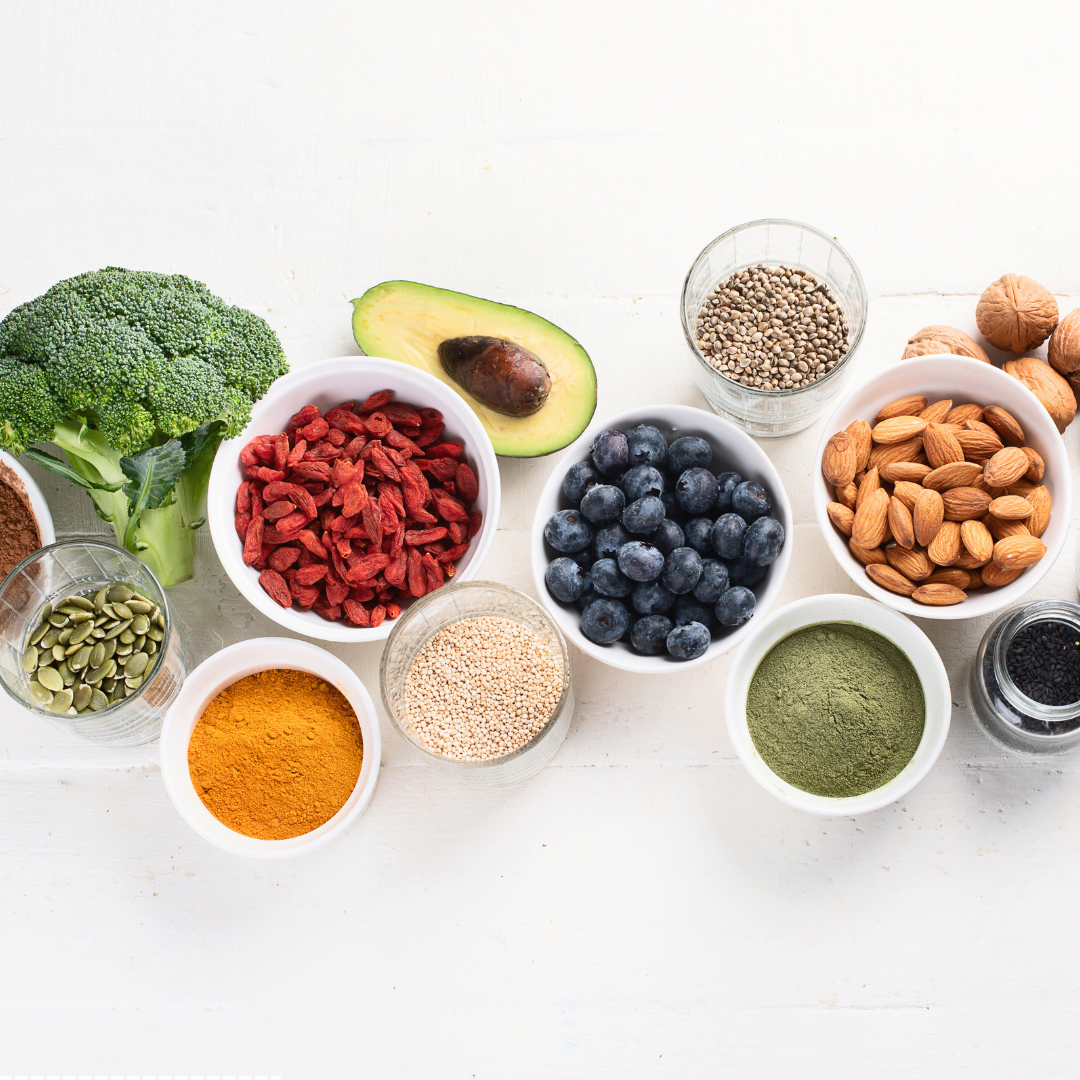
20 Everyday Foods with Extra Health Benefits
As much as I hate to have a list – I’m doing it. People want examples to help quantify and understand what other benefits various foods have. So here is a list of 20 “everyday” foods with extra health benefits that should be consumed regularly – at least weekly – in no particular order:
Oats – Fiber for heart health and blood sugar control
Beans – Fiber, protein, and minerals for digestive and heart health
Berries – Antioxidants and vitamin C for immune and cell health
Yogurt – Protein, calcium, probiotics for gut health
Fatty fish (salmon, sardines) – Omega-3s for heart and brain health
Nuts – Healthy fats and minerals for heart health
Seeds (chia, flax) – Omega-3s and fiber for heart health
Dark chocolate – Antioxidants for heart health (in moderation)
Leafy greens (spinach, kale) – Vitamins A, C, K, and folate
Tomatoes – Lycopene for heart and skin health
Broccoli – Fiber, vitamin C, and cancer-protective compounds
Garlic – Compounds that may support heart health
Carrots – Beta-carotene for eye and skin health
Green tea – Antioxidants for heart and brain health
Citrus fruits – Vitamin C and antioxidants for immune health
Sweet potatoes – Fiber, beta-carotene, and potassium
Coffee – Antioxidants and compounds linked to reduced disease risk
Whole grains (quinoa, brown rice) – Fiber, B vitamins, and minerals
Eggs – Protein, choline, and antioxidants for eye health
Mushrooms – Vitamin D, minerals, and immune-supportive compounds
The Bottom Line on Superfoods
Eating these foods regularly can support health, but they are not a quick fix. They will not cancel out smoking, a sedentary lifestyle, or excessive alcohol intake. The benefits stem from incorporating them as part of an overall healthy eating pattern, consistently combined with regular physical activity, adequate sleep, and effective stress management.
Just because a food is not on the “superfood” list does not mean it is not beneficial. Most whole, less processed foods provide essential nutrients. Focus on variety, enjoy what you eat, and avoid getting caught up in hype.
4. Unplugging
What This Means:
Taking intentional breaks from screens and devices.
How to Implement It:
No phone during meals. Turn off notifications for a while. No scrolling first thing in the morning or right before bed.
How Often:
Once or twice a day to start.
How Long:
Start with 15 to 30 minutes of screen-free time.
Benefits:
Short-term: Reduced stress and mental clutter.
Long-term: Better sleep, more focus, and improved mood.
Getting Started:
Pick one time of day to unplug. Maybe while eating lunch or the last 30 minutes before bed.
How to Keep It Going:
Create a routine that doesn’t involve your phone. Replace screen time with music, reading, or just sitting still for a few minutes.
5. Add Color to Your Meals
What This Means:
Adding fruits and vegetables of different colors to your meals and snacks.
How to Implement It:
Toss spinach into scrambled eggs. Add berries to yogurt. Throw some bell peppers into a sandwich or wrap.
How Often:
Aim to include some color at most meals.
How Long:
This takes less than five minutes and doesn’t require a full recipe.
Benefits:
Short-term: More nutrients and fiber to keep you full and energized.
Long-term: Supports immune health, heart health, and digestion.
Getting Started:
Buy pre-washed or frozen fruits and vegetables. Keep them where you’ll see them.
How to Keep It Going:
Mix it up each week. Don’t worry about perfection—just aim for a little more color most days.
Final Thoughts
Wellness doesn’t have to be some massive project. You don’t need to “get your life together” all at once. These small, low-effort actions can have a real impact when done consistently.
Pick one to start. Keep it simple. Let it become part of your day, not another thing on your to-do list.