
Sweet Potatoes and Pomegranates: Seasonal Favorites
Sweet Potatoes and Pomegranates: Seasonal Favorites
Sweet Potatoes: Not Just for the Holidays
Sweet potatoes show up for fall and winter seasonal meals, but they’re available all year long. Many people think of them as “holiday food,” covered in marshmallows and baked into casseroles. Personally, I think marshmallows ruin them, and that has brought significant disagreement for family gatherings. But if I’m making them, I decide whether marshmallows go on there, and nope, they don’t. I do more of a streusel topping with oats, nuts, coconut, and a bit of brown sugar. But I digress. These orange (and sometimes purple or white) tubers are loaded with nutrients, making them a year-round staple in your meals.
So, what exactly are sweet potatoes? Despite the name, they’re not the same as regular potatoes, and they’re not true yams either. They belong to a different plant family entirely. Yams are native to Africa and Asia, have rough brown skin and pale flesh, and are rarely found in most U.S. grocery stores. Sweet potatoes, on the other hand, are native to Central and South America and are what you’ll see labeled as “yams” in the produce section — a naming mix-up that stuck decades ago.
From a nutrition standpoint, sweet potatoes bring a lot to your diet. They’re rich in beta-carotene (a precursor to vitamin A), vitamin C, potassium, and fiber. A medium sweet potato offers about 100 calories, 4 grams of fiber, and more than 400% of your daily vitamin A needs.
When people ask if sweet potatoes are healthier than white potatoes, the honest answer is not really. They’re different, not better, despite what people want to believe. Both provide fiber, potassium, and vitamin C, though sweet potatoes edge ahead in vitamin A. The difference is often in how they’re cooked. Sweet potato fries might sound healthier, but once they’re fried, they have about the same fat and calorie content as regular fries. Baking or roasting is the way to go if you want the benefits without the excess oil.
One of my favorite ways to enjoy sweet potatoes is roasted — cut into cubes, tossed lightly with olive oil, sprinkled with salt and pepper, and baked until caramelized and crispy on the edges. (Time varies based on the oven temperature). They make a great side dish, salad topping, or even breakfast base with eggs and avocado. And, if you don’t want to do all that work? You can find them already diced and cooked in your freezer section with the other vegetables.
Pomegranates: Worth the Work (or Not)
If sweet potatoes are dependable and easygoing, pomegranates are the high-maintenance fruit of fall. They’re gorgeous, nutrient-rich, and often intimidating (or should we say it? A pain in the butt.)
Pomegranates grow on small trees native to the Middle East and South Asia. In the U.S., they’re primarily harvested in California from September through December, which is why they’re everywhere right now. I see them around in my neck of the country here in the southwest, but these are in people’s personal gardens/yards.
The edible part of a pomegranate is the aril — the juicy, ruby-red seed inside. Each one is loaded with antioxidants, vitamin C, potassium, and fiber. Pomegranates have been linked to heart health benefits and reduced inflammation (think of the promotions for pomegranate juice). Compared to other seasonal fruits like apples or pears, pomegranates are higher in antioxidants and have a unique mix of polyphenols that give them their bright color. If you can get to them.
Yes, you can eat the seeds. I have seen people spitting them out, but those arils are entirely edible, though they can be a choking hazard for very young children. The tricky part is getting them out without looking like you lost a battle and have a crime scene with blood spatter (that stuff stains, but will not show up with luminol, so no worries). Some people swear by cutting the fruit in half and tapping it with a spoon, others submerge it in water to release the arils cleanly. My tip? Just buy the ready-to-eat arils and save yourself the mess. It’s the same logic as buying pre-cut pineapple — possible to do yourself, but not always worth the hassle.
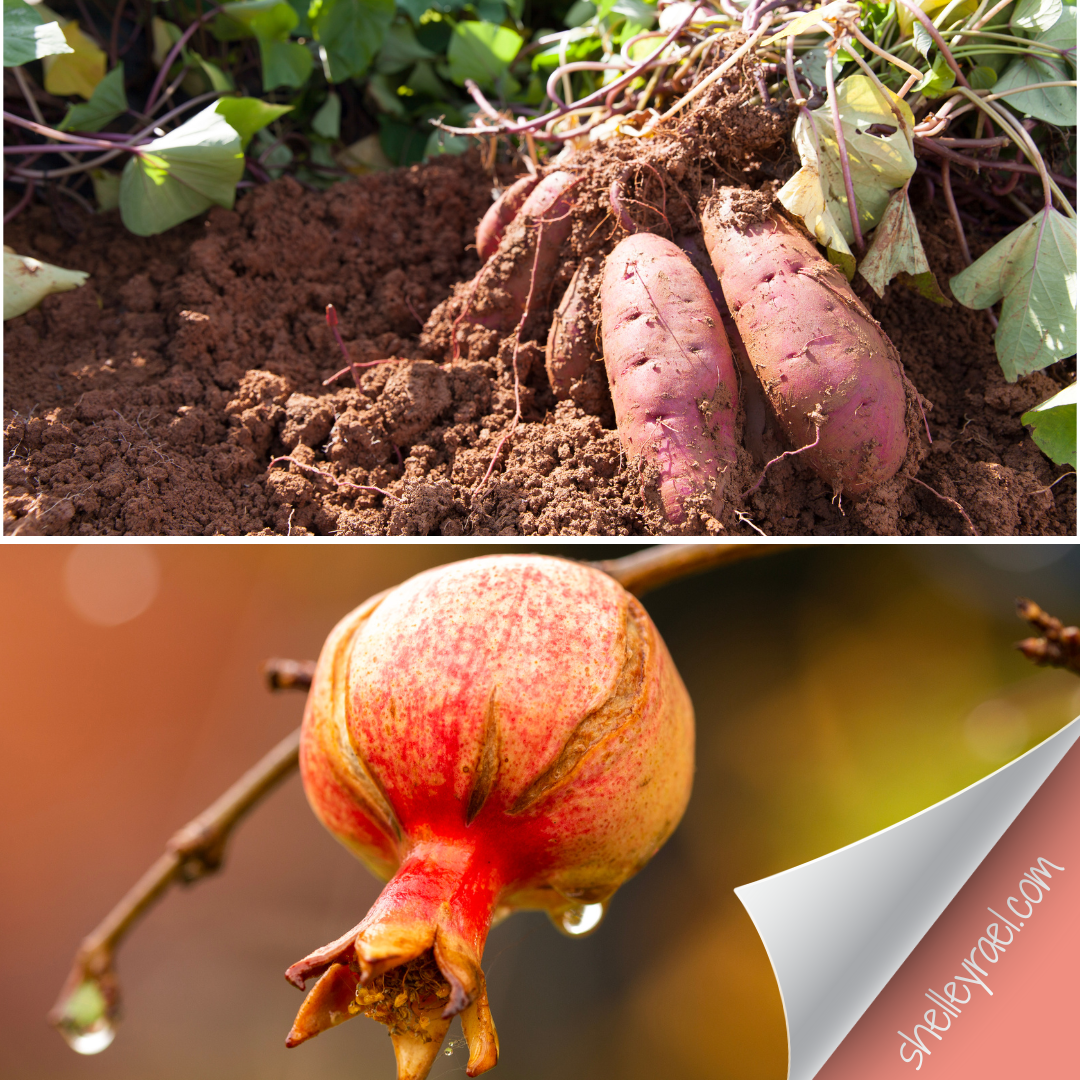
Three Easy Ways to Enjoy These Fall Favorites
Sometimes people just don't know what to do with these foods - so here are a few simple ways to try them.
1. Roasted Sweet Potato Wedges
Toss 2 medium sweet potatoes (cut into wedges) with 1 tablespoon of olive oil, a pinch of salt, and your favorite spice — paprika or cinnamon both work well. Roast at 425°F for 25–30 minutes, flipping halfway through. If you are cooking other items at a different temperature, the time can be adjusted accordingly.
2. Pomegranate Yogurt Parfait
Layer Greek yogurt with fresh pomegranate arils, a drizzle of honey, and a sprinkle of granola or chopped nuts. It’s simple, quick, and loaded with antioxidants and protein.
3. Sweet Potato and Pomegranate Salad
Combine roasted sweet potato cubes with baby spinach, pomegranate arils, and feta cheese. Drizzle with olive oil and balsamic vinegar. It’s colorful, filling, and perfect for fall.
Sweet potatoes and pomegranates may seem like opposites — one hearty and earthy, the other tart and shiny — but both bring seasonal color and nutrition to your plate. Sweet potatoes are easy to use year-round, while pomegranates remind us to enjoy what’s fresh while it’s here. You can freeze the arils – but don’t try to save them for too long since they will spoil.
Eat them for their taste, nutrients, and variety they add to your meals. No hype, no trends. Just real food that’s been around for centuries and still deserves a place in your kitchen today.
Relevant Links: