Talking Turkey: Myths, Facts, and Real Talk About Your Thanksgiving Bird
Talking Turkey
It’s that time again—Thanksgiving week. The grocery stores are insufferable—I refuse to go this week. I’ll prep the week before with what I need, and if I am desperate? I’ll outsource it to a family member or go without. I can’t stand going to the store on a weekend after the first of the month, let alone any other time I will be super busy. Then there’s the bird brining, wrapping it in a full pound of bacon, or frying their bird, and somewhere in the mix, there’s confusion about what’s true when it comes to turkey. Let’s clear up a few things before the big day.
“Turkeys are pumped full of hormones.”
No. They’re not.
There are no approved implantable steroid hormones for poultry, pigs, or dairy cows according to the FDA. None. People love to claim their turkey is “Hormone-Free” or “No Added Hormones,” but that label doesn’t mean anything special—it’s true for all turkey.
Like every living creature, turkeys have natural hormones in their bodies. That’s biology, not a cause for concern. So, the next time you see “No Added Hormones” on a package, know it’s just a marketing tool. Every single turkey in the U.S. meets that same standard.
“Get antibiotic-free turkey.”
Here’s another common claim that doesn’t mean what people think. There are no antibiotics in your turkey—even if the label doesn’t say “antibiotic-free.”
Turkeys (and chickens) may be treated with antibiotics if they’re sick or to prevent disease, but before they ever go to processing, there’s a strict withdrawal period to make sure no residues remain. The USDA tests routinely, and violations are extremely rare.
“A "withdrawal" period is required from the time antibiotics are administered before the bird can be slaughtered. This assures that no residues are present in the bird's system. FSIS randomly samples poultry at slaughter and tests for residues. Under the Federal meat and poultry inspection laws, any raw meat or poultry shown to contain residues above established tolerance levels is considered adulterated and must be condemned.” Turkey from Farm to Table
So if you prefer to buy a bird labeled “antibiotic-free,” that’s fine, but know that all turkeys sold in the U.S. are antibiotic-free. Do you think a turkey farmer will risk losing all that revenue? If their poultry contains those residues and must be condemned, do you think they are going to risk that? It’s not just one, two, or a few birds. It’s the whole lot.
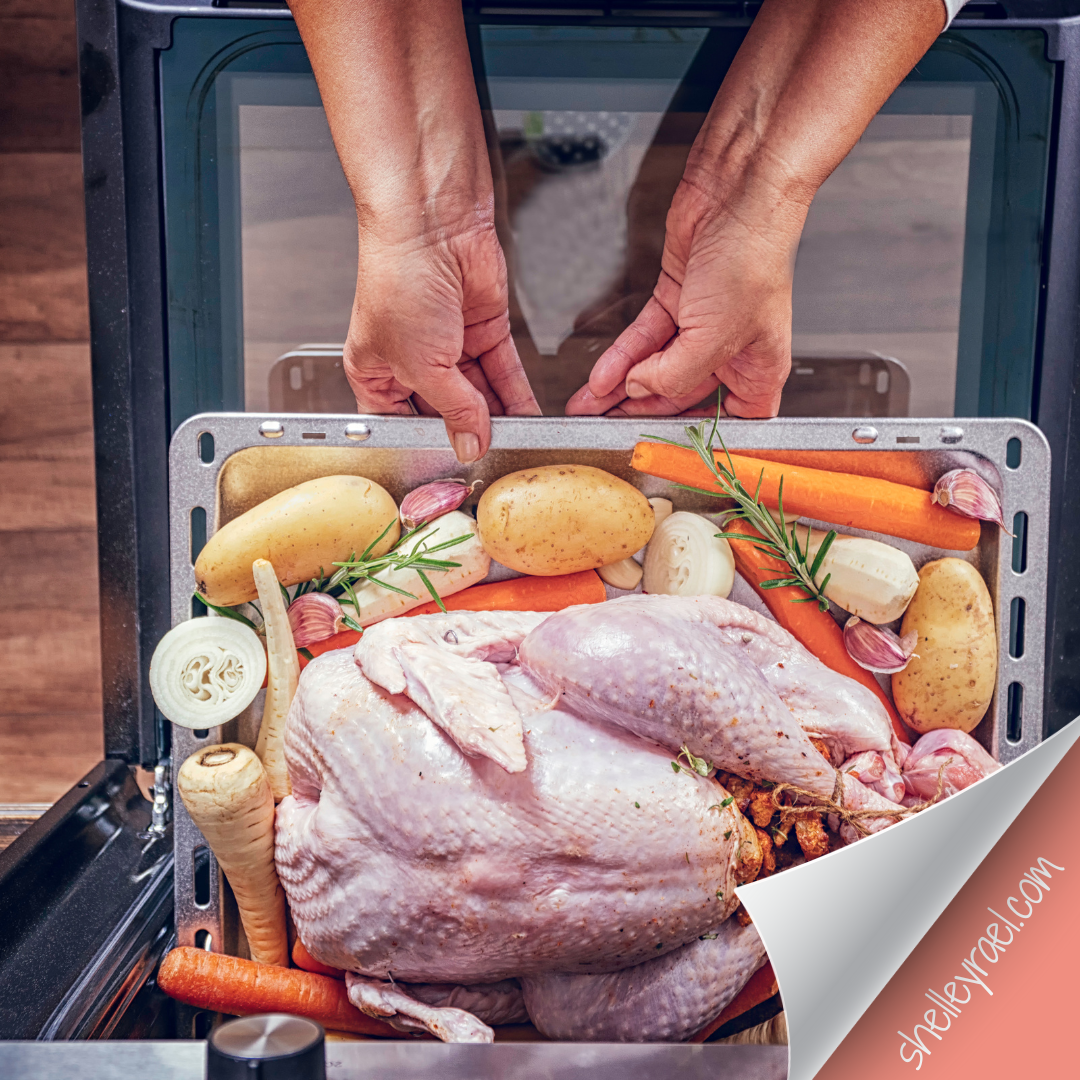
“Cook the turkey without the skin to reduce fat.”
Cooking turkey with the skin on doesn’t make it fattier. The fat doesn’t soak into the meat—that’s not how it works. The skin helps hold in moisture, so you get a juicier bird. If you don’t want to eat the skin, fine. But go ahead and cook with it on. And for those who wrap theirs in bacon? Same thing—that fat isn't infused into the meat. It adds moisture. I add herbs, seasoning, and olive oil between the skin and the meat. It doesn’t change the fat content of the meat.
And while we’re here: worrying about every gram of fat on Thanksgiving probably isn’t necessary. Enjoy the meal, eat what you like, and move on.
“Tryptophan makes you sleepy.”
Not quite.
Yes, turkey contains tryptophan, an amino acid that helps your body make serotonin and melatonin. But so do other foods like beef, chicken, milk, and soybeans. You don’t fall asleep after a cheeseburger, do you? But that glass of warm milk might. But for tryptophan to have this effect, it would have to be consumed on an empty or near-empty stomach. So that’s why the warm milk may do that, but not the burger or chicken wings. Or the turkey.
If you’re tired after Thanksgiving dinner, it’s likely from eating a large, high-carb meal, maybe paired with a drink or two. It’s not the turkey—it’s the total of everything you’ve eaten. Or, in my case, when things are at my house? The finality of the chaos is mostly over, and things are settling after being “on” for the last several hours.
“White meat is better [healthier] than dark meat.”
White meat is leaner, yes. Four ounces of white meat (no skin) has about 158 calories, 1.5 grams of fat, and 34 grams of protein. The same amount of dark meat (no skin) has about 183 calories, 5 grams of fat, and 33 grams of protein.
The difference isn’t huge. So eat the meat you actually enjoy. Today, or any day, isn’t the day to micromanage your plate.
“Leftovers last all week.”
Not quite. Leftovers should be eaten within three to four days. If you’re still staring at a container of turkey or stuffing come Monday, eat it that day or toss it.
If you plan to freeze some, do it right away. Don’t let it sit in the fridge for a week first. And for anything else—stuffing, gravy, mashed potatoes—the USDA FoodKeeper App is an excellent resource for how long food stays safe.
Here’s one tip I use every year: simmer the turkey carcass in a stockpot for an hour or two (or longer) to make stock. It’s a great way to get the most out of the bird, and the house smells great—no need to get fancy with carrots and onions unless you already have them handy. After that simmers, any leftover meat literally falls off the bones. The meat doesn’t have much flavor anymore, but the pups sure love it. Just make sure they don’t get any bones in there.
“What’s the deal with Tofurky?”
Tofurky has been around for decades and was one of the first plant-based alternatives to turkey. It’s made from tofu and wheat gluten, plus a few seasonings and fillers to give it texture. If you’re avoiding wheat or gluten, double-check the label before buying.
I’ve never had it myself, but plenty of people enjoy it. If that’s your tradition, go for it.
“Turkey Trots” and other pre-dinner workouts
If you’re doing a Thanksgiving 5K or family walk in the morning, that’s great. Just remember—it’s not a “pass” to overeat later. Physical activity isn’t punishment or permission for food. It’s something to enjoy for its own sake.
The holiday meal is meant to be shared and enjoyed. No guilt, no earning, no “making up for it later.” Eat what you love, savor it, and call it a good day.
Let’s do this…
Thanksgiving is about food, yes, but it’s also about connection, gratitude, and a break from the usual pace. Whether you’re cooking the turkey, the sides, or just showing up with an appetite, don’t overthink it. The turkey’s fine, you’re fine, and one meal won’t undo your overall habits.
Happy Thanksgiving.
Real World Nutrition Refreshed: I am revitalizing and updating my blog archive and re-publishing it. Stay tuned as I review, update, refresh, and re-share these posts to provide you with even more valuable information on nutrition, health, and overall wellness—and keep things timely. A portion of this blog was initially posted on November 24, 2022, and has been updated here.