What Does “Junk Food” Actually Mean?
“Junk food.”
We all know what that means.
Or do we?
If I asked ten people to make a list of junk foods, I would probably get ten slightly different lists.
Chips?
Probably.
Candy?
Most likely.
Cookies, soda, fast food, ice cream, frozen pizza?
Maybe.
What about granola bars? Sweetened yogurt? Breakfast cereal? Flavored oatmeal? A frozen dinner?
Suddenly, defining “junk food” gets a little more complicated.
The truth is, “junk food” isn't a scientific or nutritional classification. It's a casual term we use to describe foods generally considered high in calories, added sugars, sodium, or saturated fat, while providing fewer nutrients than other foods.
But even that definition has limitations.
And lately, there are other terms people tend to use, including “processed foods” and “ultra-processed foods.”
Junk Food and Processed Foods FAQ
What is considered junk food?
“Junk food” has no official nutritional definition. The term is commonly used for foods such as chips, candy, cookies, sugary drinks, and other foods that tend to provide fewer nutrients relative to their calories. However, labeling a food as “junk” doesn’t tell us how much, how often, or what else someone eats.
Is processed food the same as junk food?
No. Processing simply means a food has been changed from its original form. Frozen vegetables, canned beans, yogurt, peanut butter, and whole grain bread are all processed foods and can provide valuable nutrients.
What are ultra-processed foods?
Ultra-processed foods are generally industrial formulations made with multiple ingredients and may include additives such as flavors, colors, emulsifiers, or stabilizers. The category includes many snack foods and sugary drinks, but it can also include foods that provide useful nutrients, such as some whole grain breads and fortified cereals.
Can you eat junk food and still be healthy?
Yes. Foods that are less nutrient-dense can still fit into a healthy eating pattern. How often you eat them, how much you eat, and what the rest of your overall diet looks like matter more than any single food.
Is it bad to eat junk food every day?
Not necessarily. Having a cookie, some chips, or another favorite food every day doesn’t automatically make your diet unhealthy. The bigger question is whether your overall eating pattern provides enough fruits, vegetables, whole grains, protein, fiber, and other important nutrients. Frequency, portion, and the overall pattern all matter.
Unfortunately, these terms often get used interchangeably as though they all mean the same thing.
They don't.
What Is “Junk Food”?
Believe it or not, there is no official definition of junk food.
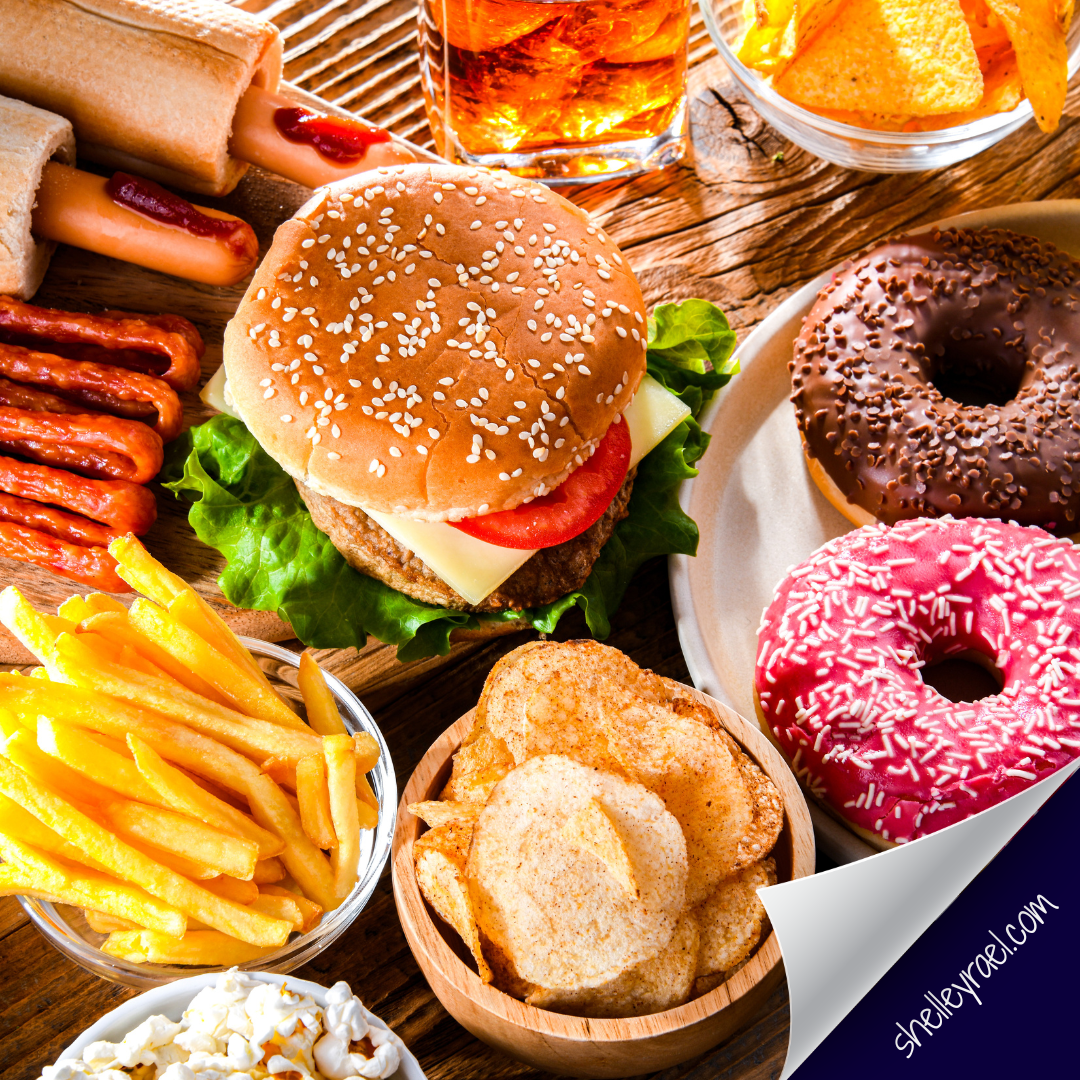
Generally, people use the term to describe foods such as:
Candy
Chips
Cookies
Pastries
Sugary beverages
Some fast foods
Other snack and dessert foods
These foods may provide fewer vitamins, minerals, fiber, or protein relative to the calories they contain.
But calling them “junk” doesn't really say much more than that.
It doesn’t address context.
It doesn't tell us how often someone eats them.
It doesn't tell us how much they're eating.
And it certainly doesn't tell us what the rest of their diet looks like.
This is an important point, an important distinction. The context.
Is Junk Food the Same as Processed Food?
No.
This is an important distinction because virtually everything we eat has been processed in some way.
Processing simply means a food has been changed from its original form.
Frozen blueberries are processed.
Canned beans are processed.
Peanut butter is processed.
Yogurt is processed.
Whole grain bread is processed.
Even washing, chopping, freezing, cooking, drying, fermenting, and canning are forms of food processing.
Calling something “processed” doesn't define or say anything about whether it's nutritious.
What About Ultra-Processed Foods?
Ultra-processed foods are a more specific category, often defined using a classification system called NOVA.
Read More:NOVA Classification and Ultra-Processed Foods: What “Processed” Really Means
These foods tend to be industrial formulations made with multiple ingredients and may contain substances not commonly used in home cooking, such as certain emulsifiers, flavorings, colors, stabilizers, and other additives.
Examples might include some:
Packaged snack foods
Soft drinks
Candy
Instant meals
Processed meat products
Sweetened cereals
Commercial baked goods
But even the term “ultra-processed” has limitations.
Some foods classified as ultra-processed may still provide valuable nutrients.
Certain whole grain breads, fortified cereals, plant-based milks, and yogurts may meet criteria for ultra-processing depending on their ingredients.
That's why a label alone doesn't tell us everything we need to know about a food.
A More Helpful Idea: Nutrient Density
Instead of sorting foods into “good,” “bad,” and “junk,” I prefer to talk about nutrient density.
Nutrient-dense foods provide substantial nutrition relative to the calories they contain.
Think:
Fruits.
Vegetables.
Beans.
Whole grains.
Nuts and seeds.
Fish.
Eggs.
Dairy foods.
Lean meats and poultry.
These foods tend to provide combinations of protein, fiber, vitamins, minerals, healthy fats, or other beneficial compounds.
Other foods may provide fewer of those nutrients relative to their calories.
That doesn't make them morally “bad.”
It simply means they serve a different role in our eating pattern.
A bowl of blueberries and a chocolate chip cookie don't offer the same nutrition. Obviously.
We don't need to pretend they do. That would be silly.
But we also don't need to turn that nutritional difference into a moral judgment. It’s okay to eat the cookie, and it is okay to eat the bowl of blueberries.
Can Less Nutrient-Dense Foods Fit Into a Healthy Diet?
Absolutely.
The more useful questions are:
How often?
How much?
And what else are you eating?
Consider ice cream.
Having ice cream doesn't suddenly make your diet unhealthy.
If you eat fruits, vegetables, whole grains, beans, lean proteins, and other nutrient-dense foods regularly, enjoying ice cream is simply one part of a much larger eating pattern.
The same applies to chips, cookies, French fries, or your favorite candy.
Context matters so much more than the individual foods.
If these foods make up most of someone's diet and regularly replace foods that provide needed nutrients, that's something to address.
But that's very different from eating them sometimes because you enjoy them.
Why Food Labels Can Become a Problem
I also need to address this: words matter.
When we label foods as “good,” “bad,” “clean,” “dirty,” or “junk,” those labels can influence how we feel about eating them.
Eat a “good” food, and you may feel virtuous.
Eat a “bad” food, and suddenly there's guilt.
“I was so bad this weekend.”
“I shouldn't have eaten that.”
“I need to work this off tomorrow.”
Food doesn't need that much emotional power.
Eating a cookie doesn't say anything about your character.
Neither does eating a salad.
They're foods.
One may provide more nutrients than the other, but neither makes you a better or worse person.
And Let's Not Judge Other People's Plates
Food judgment doesn't stop with ourselves.
It's incredibly easy to look at what someone else is eating and make assumptions.
We don't know their overall eating pattern.
We don't know their budget.
We don't know their access to food.
We don't know their culture, preferences, health needs, schedule, or circumstances.
One meal tells us almost nothing.
One snack tells us even less.
A food item in a grocery cart doesn’t tell us a thing other than it is a food item in a grocery cart.
Nutrition isn't a spectator sport.
We don't need to grade someone else's plate. Even I don’t do that as a dietitian.
Enjoyment Is Part of Eating, Too
Food provides nutrition.
But that's not its only purpose.
Food is also culture.
Tradition.
Celebration.
Connection.
Comfort.
And enjoyment.
Sometimes you eat something because it's rich in fiber or protein.
Sometimes you eat something because your grandmother made it every holiday when you were growing up.
And sometimes you eat something simply because it tastes good. Really good.
All of those experiences can coexist within a healthy relationship with food.
The Bigger Picture Still Matters Most
If you've followed my work for any length of time, you've probably heard me say this before:
The overall pattern matters.
One food doesn't determine your health.
One meal doesn't determine your health.
One weekend doesn't determine your health.
What you do consistently over time matters much more.
Instead of asking whether a food is “junk,” ask more useful questions.
Does my overall eating pattern provide the nutrients I need?
Am I getting enough fruits and vegetables?
Am I eating enough fiber?
Am I including a variety of protein sources?
Am I able to enjoy foods I love without guilt?
Those questions tell us far more about nutrition than whether something belongs on an arbitrary list of “good” or “bad” foods.
Key Takeaways
“Junk food” may be a familiar phrase, something that is part of your vocabulary, sbut it isn't particularly useful for understanding nutrition.
Processed doesn't automatically mean unhealthy.
Ultra-processed is a more specific classification, but even that label doesn't tell us everything about a food or someone's overall diet.
Some foods are more nutrient-dense than others. That's simply a nutritional fact, not a moral judgment.
Foods that provide fewer nutrients can still fit into a healthy eating pattern.
How often you eat them, how much you eat, and what the rest of your eating pattern looks like all matter.
So enjoy the foods that nourish you.
Enjoy the foods that bring you pleasure, too.
And leave the guilt and judgment off the plate.