Healthy Fats: Supporting Brain, Heart, and Hormonal Health
Healthy Fats: Supporting Brain, Heart, and Hormonal Health
This is the fifth post in a series of 12 simple, realistic steps to help you feel stronger, healthier, and more vibrant—now and for years to come. Each post covers one action that supports longevity, hormonal balance, and energy, no matter your age or current health status. You can catch up on prior posts at the links below.
Let’s talk about fat.
Few nutrients have been more misunderstood—or feared—than dietary fat. It wasn’t that long ago that all fat was lumped into the same category: bad.
Remember the low-fat and fat-free craze of the 1990s? Entire food aisles filled with low-fat cookies and yogurts made us believe that fat was the problem. For many, the idea that eating fat makes you fat still lingers.
But here’s the truth: Fat is essential. And no, eating healthy fat doesn’t automatically turn into body fat.
Let’s break down why fat matters, which kinds are best for your health, and how to include them in a way that feels effortless and balanced.
Dietary Fat ≠ Body Fat
There’s a difference between dietary fat (what we eat) and stored body fat (what the body stores). While excess calories from any source can contribute to fat gain, eating healthy fats doesn’t directly lead to weight gain. In fact, the right fats can support your metabolism, improve satiety, and help regulate key hormones that influence weight and energy.
Fat also plays vital roles in our physiology:
It’s a source of long-lasting energy
It protects organs and insulates the body
It helps absorb fat-soluble vitamins (A, D, E, and K)
It is essential for producing hormones
It forms part of our brain and nerve cells
Fat for Brain Health
The human brain is nearly 60% fat. That alone should tell us something. Fat is crucial for maintaining the structure and function of brain cells. In particular, omega-3 fatty acids are vital for cognitive function and may reduce the risk of cognitive decline as we age.
When we don’t get enough healthy fat, we might experience brain fog, fatigue, memory issues, or mood swings. On the flip side, excessive intake of unhealthy fats (like trans fats) has been associated with increased risk of cognitive decline and dementia.
Fat for Heart Health
Contrary to outdated beliefs, fat isn’t inherently bad for the heart. It depends on the type of fat.
Monounsaturated fats and omega-3 fats can reduce LDL ("bad") cholesterol, increase HDL ("good") cholesterol, reduce inflammation, and support overall cardiovascular function. In contrast, excessive saturated fats (from processed meats, fried foods, and high-fat dairy) and trans fats (in hydrogenated oils) can increase heart disease risk.
Balance is key. Reducing unhealthy fats while increasing the heart-healthy types is what truly supports your cardiovascular system.
Fat for Hormonal Health
Hormones are made from fat. In fact, cholesterol is the building block of many hormones, including estrogen, progesterone, cortisol, and testosterone.
Too little fat in the diet—especially among women in midlife—can disrupt hormone production, contribute to irregular cycles (for those still menstruating), and impact stress response, mood, and metabolism.
Yet, again, too much of the ”wrong” fats can also interfere with hormone balance. Chronic intake of trans fats or excess saturated fats has been linked to hormonal imbalances and inflammation.
Best Fats for Longevity and Health
Let’s talk specifics. These are the fats that support your brain, heart, and hormones:
Monounsaturated fats:
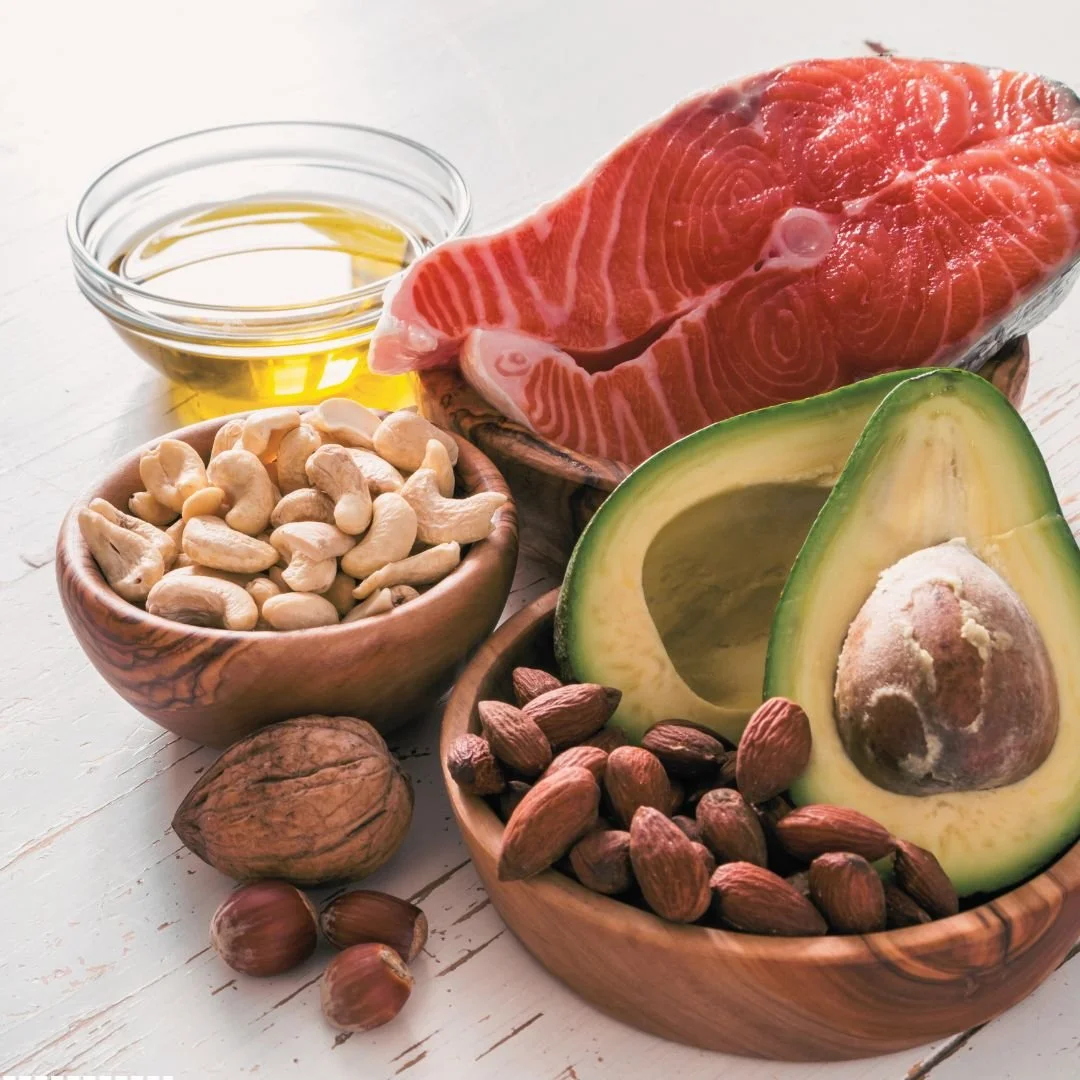
Found in: olive oil, avocado, nuts (almonds, cashews, pecans), and seeds
Benefits: Improve cholesterol, reduce inflammation, support insulin sensitivity
Omega-3 fatty acids (a type of polyunsaturated fat):
Found in: salmon, sardines, mackerel, flaxseeds, chia seeds, walnuts
Benefits: Reduce inflammation, protect the brain, support heart rhythm and blood vessel health
Fats to minimize:
Saturated fats (found in high amounts in butter, fatty cuts of meat, full-fat dairy, coconut oil): okay in small amounts, but best not to overdo.
Trans fats (found in hydrogenated oils, some baked goods, and fried foods): should be avoided entirely when possible.
How to Add Healthy Fats Without Extra Effort
Adding healthy fats doesn’t mean cooking everything in oil or adding avocado to every meal (unless you want to!). Healthy fats are already in many foods you probably enjoy.
Here are some simple, realistic ways to include healthy fats:
Add sliced avocado to toast, eggs, or salads.
Use extra-virgin olive oil in salad dressings and roasted veggies.
Snack on a small handful of mixed nuts.
Include fatty fish, such as salmon or sardines, a couple of times a week.
Add ground flaxseeds or chia seeds to smoothies or oatmeal.
Top yogurt with walnuts or almonds.
Use nut butter (like almond or peanut) as a dip for apples or celery.
Stir tahini into sauces or grain bowls.
Cook with avocado or olive oil instead of vegetable shortening.
Choose hummus or guacamole as a snack or spread.
These foods also contain fiber, antioxidants, and protein, making them nutritional powerhouses beyond just their fat content.
How Much Fat Do You Need?
There’s no need to track your fat grams meticulously. But aiming for a balanced intake where roughly 25–35% of your total calories come from healthy fats is a general guide.
More importantly, look at sources over numbers:
Focus on plant-based fats and omega-3s.
Be aware of saturated fat intake (not fear-based—just mindful).
Steer clear of trans fats whenever possible. Examine the ingredient list for hydrogenated fats.
Journal Prompt & Action Steps
Here are some things to consider when assessing your attitudes towards dietary fat, and how to ensure balance in your intakes and make healthier choices.
Action Steps Ideas
Look at your meals: Are you avoiding fat entirely, or could you swap in healthier sources?
Try adding one serving of healthy fat to one meal or snack each day this week.
If you track your food intake, notice how much of your fat comes from whole foods versus processed ones.
If you’re currently low-fat everything, try reintroducing a few higher-fat, nutrient-rich foods slowly.
Reflection Questions
Contemplation: What are my current beliefs about fat? Do I avoid fat out of habit or past messaging?
Preparation: Which meals (or snacks) feel like they’re missing something satisfying? What are some foods to add with healthier fats?
Action: What new fat-rich food have I added that I enjoy? Have I noticed a difference in how full I feel or how my skin looks?
Maintenance: How can I maintain this balance without going to extremes?
What is the biggest challenge you perceive in changing any prior beliefs or attitudes about dietary fat?
Next Blog: Smart Carbs
We’ve tackled fats, but what about carbs? They’ve been just as misunderstood.
Next up: Smart Carbs: Energy Without the Crash—where I’ll explain how to choose the right carbohydrates to keep your energy stable, support your hormones, and avoid the blood sugar rollercoaster.
Read More from this series on practical habits to help you feel stronger, healthier, and more vibrant for years to come: Your Personal Path to Longevity & Vitality