
Dairy Foods – More Than Milk
Dairy Foods – More Than Milk
Of all the food groups, dairy tends to stir up a surprising amount of debate. Some people are adamant that we don’t need it at all. Others quietly include cheese and yogurt in their daily routine while insisting they avoid dairy altogether.
The reality? Dairy is a broad category that includes more than just a glass of milk. And you don’t have to drink milk to benefit from this food group.
What Actually Counts as Dairy?
The general recommendation for adults and pre-teens is to include around three servings of dairy per day. That doesn’t mean drinking three glasses of milk.
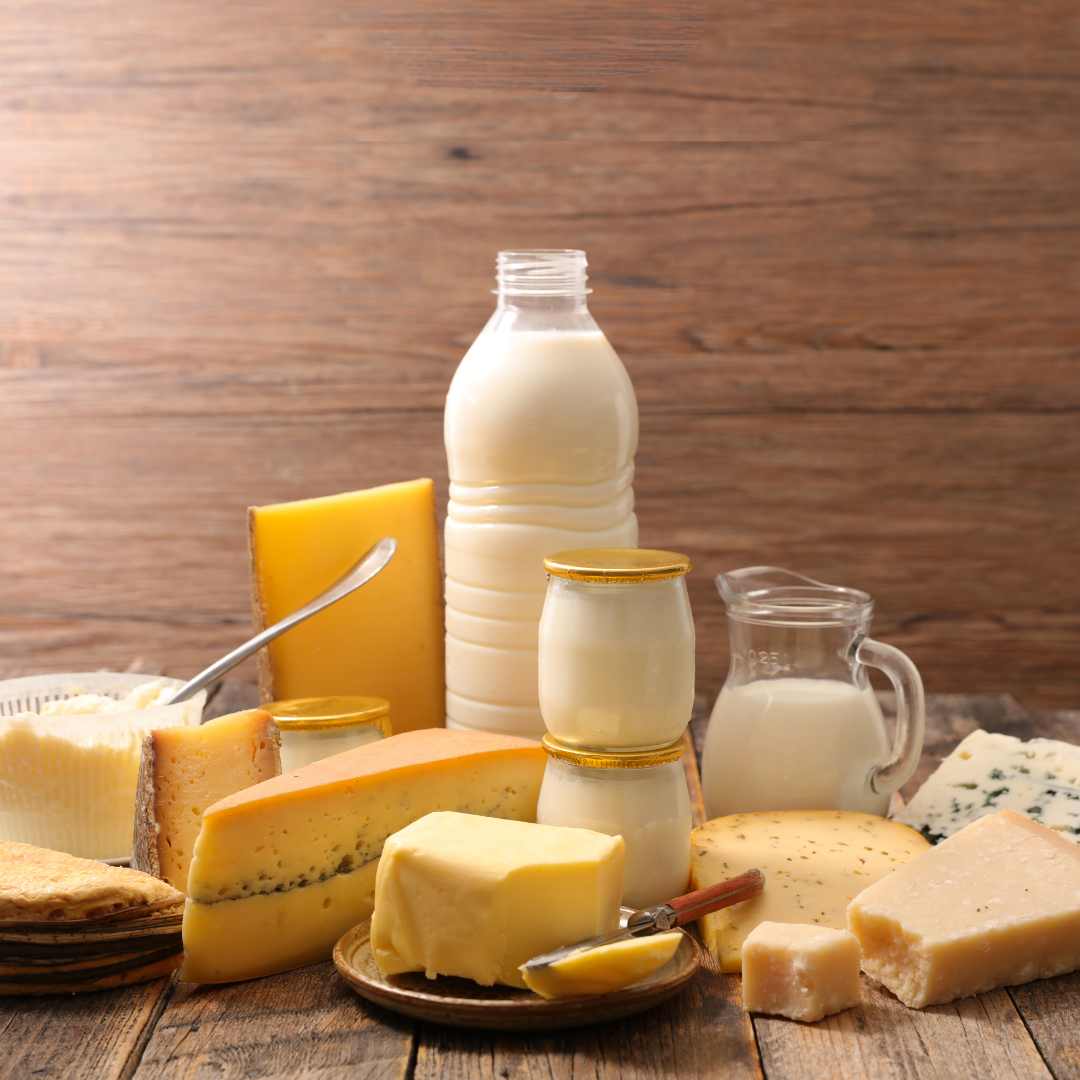
Dairy includes:
Milk (of course)
Yogurt
Cheese (sliced, shredded, or sticks)
So, if you pour milk into your coffee or a smoothie, that counts. A slice of cheese on a sandwich or some shredded cheese on a salad counts. A container of yogurt? That counts too.
It all adds up, and you don’t need to stick to a specific “milk-only” format.
But What Is a Serving?
With liquid dairy like milk or yogurt, it’s straightforward: 8 ounces equals one cup.
Cheese is measured differently:
1 to 1.5 ounces of hard cheese (a slice, a stick, or a small block) counts as one serving.
Shredded cheese? A quarter to a third of a cup is roughly one serving.
Cottage cheese? Two cups equal one serving, because it’s higher in protein than in calcium or potassium.
So yes, you can hit your dairy goal without ever pouring a glass of milk.
What Doesn’t Count?
Some dairy-based products don’t count toward your recommended intake:
Sour cream
Half and half
Cream
Butter
Ice cream
These are high in fat and low in the beneficial nutrients we look for in dairy, like calcium and protein. A tablespoon of sour cream isn’t giving you much besides saturated fat. Butter, while it technically comes from milk, is almost entirely fat and not a meaningful source of calcium or protein.
The Nutritional Power of Dairy
Most people think of calcium when they hear “dairy,” and that’s a big part of the picture. But there’s more.
Dairy naturally contains:
Calcium
Potassium
Protein
Riboflavin (vitamin B2)
Vitamin B12
In the U.S., milk is also fortified with vitamins A and D, as mandated by law. All milk, not just whole milk
And yes, you can choose low-fat or fat-free versions if you’re watching saturated fat intake. Many people still assume that all milk is high in fat, but skim milk has none, and even 1% milk is relatively low in fat.
Common Arguments Against Dairy
Let’s talk about some of the arguments that often pop up.
“Humans are the only animals that drink the milk of another species.”
Actually, animals in the wild do occasionally nurse or drink milk from other species, especially when caring for orphaned young. But beyond that, humans do plenty of things other animals don’t do: ride bikes, use the internet, and ferment foods into yogurt and cheese, to name a few.
“We’re the only animals who drink milk past infancy.”
True, and we’re also the only species with culinary traditions, education systems, and grocery stores. Human innovation enables us to understand and incorporate a wide variety of nutrient-rich foods, including dairy products.
“Broccoli has more calcium than milk.”
This one is repeated frequently, but it’s misleading. One cup of 1% milk has about 310 mg of calcium. A cup of raw broccoli contains approximately 40-45 mg, and even cooked broccoli has only 60-65 mg per cup. You’d need to eat a lot of broccoli to match the calcium in one cup of milk, and the calcium from dairy is generally more bioavailable.
What About Lactose Intolerance?
Lactose intolerance is real, but it doesn’t mean dairy is entirely off the table. It’s not an allergy, and tolerance can vary widely. Some people can tolerate yogurt just fine because the live active cultures help digest the lactose. Many others do well with lactose-free milk, which contains the lactase enzyme added.
And again, cheese, especially hard cheeses, tends to have very low levels of lactose.
Lactose Intolerance vs Dairy Allergy Are Not the Same
It’s important to understand the difference between lactose intolerance and a dairy allergy, they’re not the same thing.
Lactose intolerance is a digestive issue caused by the body’s reduced ability to break down lactose, the natural sugar in milk. People with lactose intolerance may still tolerate certain dairy foods, such as hard cheeses, yogurt with live active cultures, or lactose-free milk.
A dairy allergy, on the other hand, is an immune response to the proteins in milk. This is non-negotiable. Individuals with a dairy allergy must avoid all dairy products entirely, including milk, cheese, yogurt, ice cream, and even trace amounts in processed foods, to prevent a potentially serious reaction.
About Plant-Based “Milks”
Not all milk alternatives are created equal. If you’re looking for a true dairy substitute in terms of nutrition, soy milk or pea protein-based milks are the best options. They come closest in terms of protein and are often fortified with calcium and vitamin D.
Other plant-based milks (like almond, oat, or rice) tend to be low in protein and may have a long list of added ingredients. They can still be part of a balanced diet, but they aren’t direct substitutes for dairy in terms of nutrition.
The Bottom Line: You don’t need to drink milk to include dairy in your diet. From cheese to yogurt to fortified milk alternatives, there are many ways to get the nutrients dairy offers, without overthinking it.
Real World Nutrition Refreshed: I am revitalizing and updating my blog archive and re-publishing it. Stay tuned as I review, update, refresh, and re-share these posts to provide you with even more valuable information on nutrition, health, and overall wellness—and keep things timely. A portion of this blog was initially posted on June 7, 2022, and is updated here.