
What’s Up With Eggs? What the Labels Really Mean
What’s Up With Eggs? What the Labels Really Mean
Eggs have had quite the reputation roller coaster over the years. Once labeled a dietary disaster because of their cholesterol content, they were avoided for decades. But now we know better. The idea that eggs are “bad” for your heart was one of the most misleading nutrition messages of its time. To this day, I still encounter people weekly who still think we need to avoid or limit eggs.
Eggs are not only safe to eat, they’re one of the most nutrient-dense, affordable foods around. Yet, I still get questions about whether eggs are healthy or how many people should eat. Let’s set the record straight.
Egg Nutrition: Small Package, Big Benefits
A large egg has about 75 calories and 6 grams of high-quality, complete protein, meaning it has all nine essential amino acids. The white provides most of the protein (around 3.5 grams), and the yolk contains key nutrients like vitamin D, choline, lutein, and zeaxanthin—nutrients many people don’t get enough of.
And no, don’t skip the yolk unless your recipe calls for it. That’s where most of the nutrition is.
Eggs are also mostly unsaturated fat—about 70% of the total fat content—so the idea that they’re loaded with “bad fat” is outdated.
What About Cholesterol?
Each egg has about 200 mg of cholesterol, which used to sound alarming back when dietary guidelines limited cholesterol to 300 mg per day. But that limit was dropped years ago. Why? Because dietary cholesterol has little impact on blood cholesterol levels for most people.
The real concern is saturated fat and trans fats, not the cholesterol in foods like eggs. Your overall diet and lifestyle have far more influence on your cholesterol levels than a few eggs a week.
How Many Eggs Are OK?
For most people, an average of seven whole eggs a week fits comfortably into a balanced diet. That might mean one a day or a few on weekends. Eggs make a great breakfast, snack, or quick dinner. Just avoid cooking them in too much butter or oil, and you’re fine.
Food Safety Still Matters
Eggs are safe, but they do need proper handling. Because of the small risk of salmonella, cook eggs until the whites are firm and dishes reach 160°F. If you’re using raw eggs for recipes like homemade mayonnaise or Caesar dressing, use pasteurized eggs, which you can usually buy in a carton at the grocery store. Yes, those are “real” eggs.
In the U.S., eggs must be refrigerated because commercial washing removes the natural protective coating on the shell. If you get unwashed eggs from a local source, you can store them at room temperature or refrigerate them. Washed eggs should always be refrigerated in their carton.
Understanding Egg Labels: What They Actually Mean
Standing in the egg aisle can be confusing. There are claims about “natural,” “no hormones,” “cage-free,” “free-range,” and more. Let’s break them down.
Color of the Shell
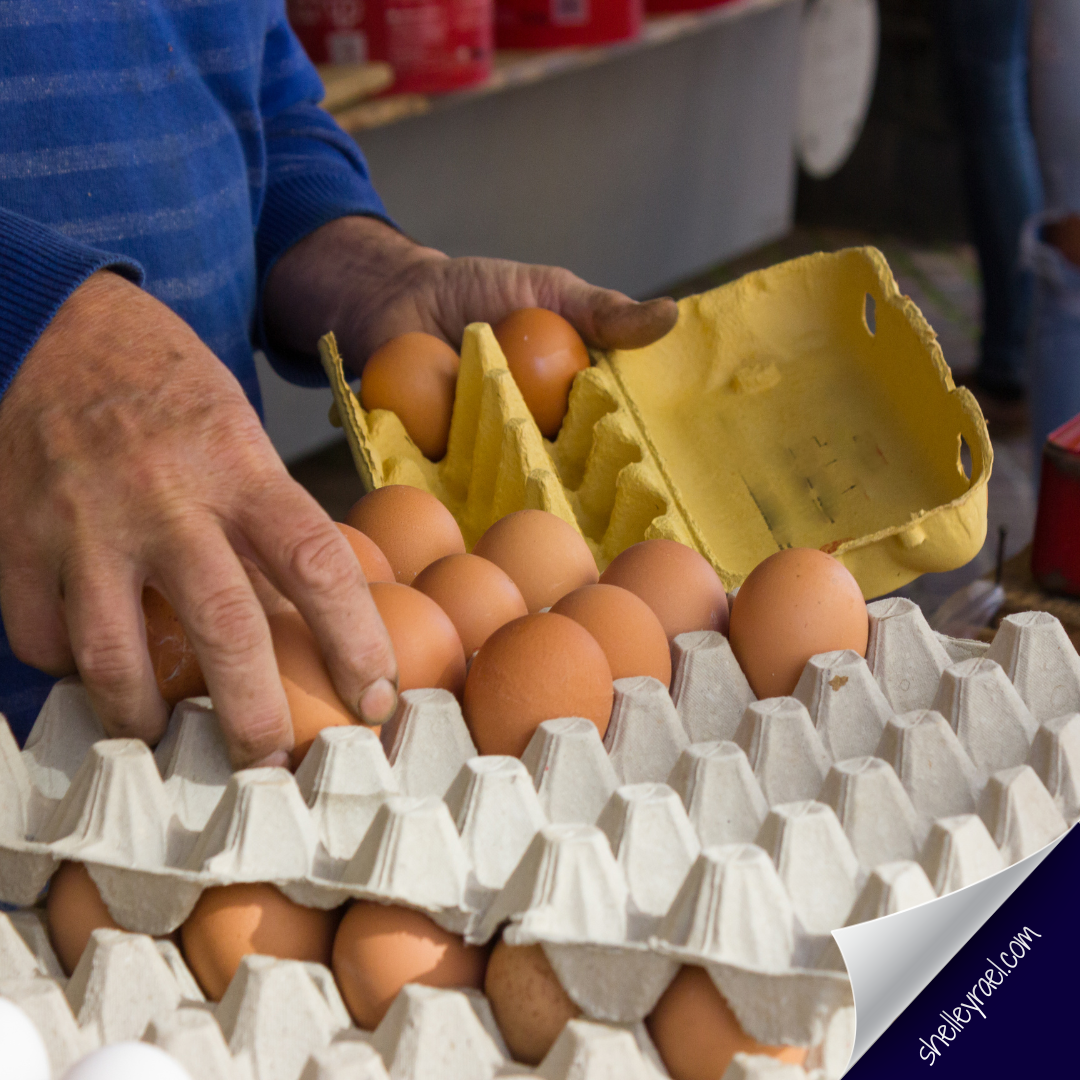
Brown, white, green—it doesn’t matter. The color simply depends on the breed of chicken. There’s no nutritional or quality difference between white and brown eggs.
“Natural” Eggs
All eggs are natural. They come from chickens, not a lab. The “natural” label doesn’t mean anything special, so don’t pay extra for it.
“No Hormones” or “No Added Hormones”
This one causes the most confusion. Hormones are not used in egg production. Period. It’s actually illegal in the U.S. for poultry producers to use hormones. That’s why cartons that say “no added hormones” must also include the statement “Hormones are not used in the production of shell eggs.”
So, all eggs are hormone-free in the same way.
Antibiotic-Free
If a hen is sick and treated with antibiotics, her eggs are not allowed to enter the food supply until the medication is completely out of her system. So “no antibiotics” isn’t really a special claim—it’s just standard practice.
Cage-Free and Free-Range
These terms sound nice, but don’t mean the hens are living and wandering the farmyard. “Cage-free” means the chickens aren’t kept in individual cages, but they’re usually still indoors in a large, crowded space. “Free-range” means they have access to the outdoors, but it doesn’t mean they actually go outside. Just like humans, they can choose to stay inside.
Organic Eggs
Organic eggs come from hens that eat certified organic feed and aren’t given antibiotics or synthetic pesticides. They’re also cage-free and have access to the outdoors (see the prior entry on cage-free and free-range). It’s a strict certification process, which is why organic eggs cost more.
Vegetarian-Fed and Gluten-Free
“Vegetarian-fed” means the hens’ diet doesn’t include animal byproducts. Chickens naturally eat insects, so this diet isn’t exactly how chickens behave in nature.
“Gluten-free”? All eggs are gluten-free—always have been.
Bottom Line
Eggs are one of the most reliable, often affordable, and nutritious foods you can eat. Labels can make it sound like some eggs are far superior to others, but most differences are about marketing, not nutrition. Focus on how you prepare them and what you pair them with, not what the carton says.
Real World Nutrition Refreshed: I am revitalizing and updating my blog archive and re-publishing it. Stay tuned as I review, update, refresh, and re-share these posts to provide you with even more valuable information on nutrition, health, and overall wellness—and keep things timely. A portion of this blog was initially posted on May 10, 2022, and May 12, 2022, and has been updated here.