
Healthy Fats: Why Avocados Aren’t the Only Good Source
Healthy Fats: Why Avocados Aren’t the Only Good Source
When someone says “healthy fats,” what foods immediately come to mind?
Avocados?
Olive oil?
Maybe nuts?
All excellent, and accurate, answers.
But healthy fats go far beyond avocado toast and bottles of extra virgin olive oil.
Fat is found throughout our food supply, from nuts and seeds to fish, dairy products, meat, cooking oils, salad dressings, and plenty of other foods.
And despite the low-fat messaging many of us grew up with, we need fat.
Healthy Fats FAQ
What are healthy fats?
“Healthy fats” generally refers to unsaturated fats, including monounsaturated and polyunsaturated fats. When these replace foods higher in saturated fat, they can support heart health and healthier cholesterol levels.
What foods are high in healthy fats?
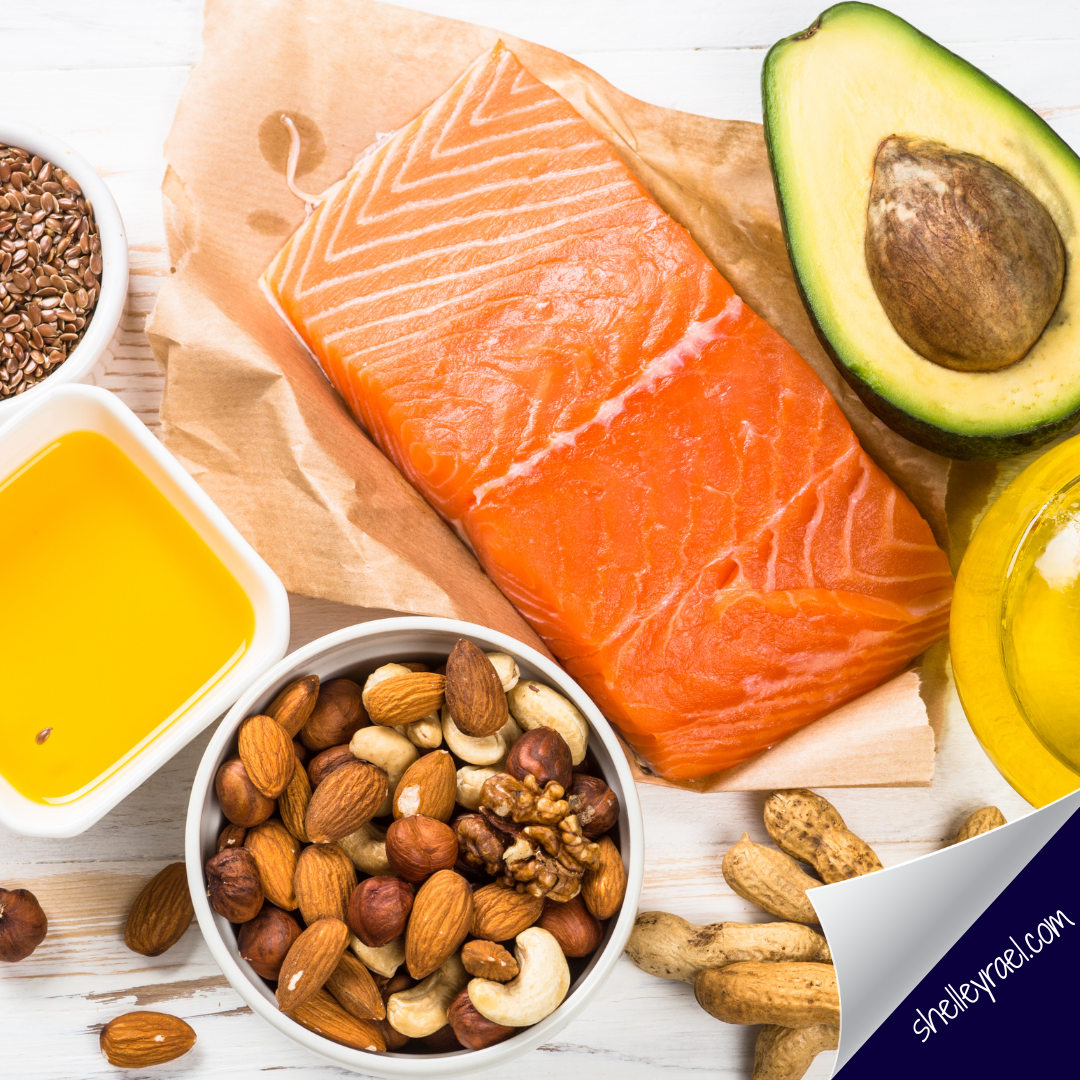
Good sources of unsaturated fats include nuts, seeds, avocados, fatty fish such as salmon and sardines, and oils such as olive, avocado, canola, soybean, and other plant oils. Different foods provide different types and proportions of fats.
Is avocado a healthy fat?
Yes. Most of the fat in avocado is monounsaturated, and avocados also provide fiber, potassium, folate, and other nutrients. They’re a great option, but they’re only one of many sources of unsaturated fats.
Is olive oil healthier than butter?
For regular use, olive oil generally has a more favorable fat profile. It is predominantly monounsaturated fat, while butter contains a much higher proportion of saturated fat. Replacing butter with olive oil more often can help shift your overall intake toward more unsaturated fat.
Are seed oils healthy?
Yes, oils such as canola, soybean, corn, and sunflower oil can be part of a healthy eating pattern. They are generally higher in unsaturated fats and lower in saturated fat. Despite many claims online, there is no need to routinely avoid seed oils because they are supposedly “inflammatory.”
Is coconut oil a healthy fat?
Coconut oil is often marketed as a healthy fat, but it is very high in saturated fat, which can raise LDL cholesterol. It can be used occasionally if you enjoy it, but oils higher in unsaturated fats, such as olive or canola oil, are better choices for regular use.
The more appropriate message isn't about trying to eat as little fat as possible.
It's about the types of fat we eat most often and what our overall eating pattern looks like.
First, We Need Fat
Dietary fat has several important jobs.
Fat provides energy, helps form cell membranes, supports hormone production, provides essential fatty acids, and helps us absorb the fat-soluble vitamins A, D, E, and K.
It also contributes flavor, texture, and satisfaction to food.
So fat isn't something we need to eliminate.
But different types of fat can affect our health differently, particularly cardiovascular health.
A Quick Overview of the Different Types of Fat
We generally talk about dietary fats in four categories.
Saturated Fat
Saturated fats are found in higher amounts in foods such as butter, coconut oil, beef tallow, lard, fatty meats, full-fat dairy products, and some highly processed foods.
Higher saturated fat intake can raise LDL cholesterol, which is associated with increased cardiovascular disease risk.
Current dietary guidance recommends limiting saturated fat and replacing some of it with unsaturated fats, particularly polyunsaturated and monounsaturated fats.
And that word replacing is the key.
If you use olive oil instead of butter, you've replaced a source higher in saturated fat with one higher in unsaturated fat.
Simply adding olive oil to an eating pattern already high in saturated fat isn't quite the same thing.
Monounsaturated Fat
Monounsaturated fats are found in higher proportions in foods such as olive oil, avocados, peanuts, and many nuts.
When monounsaturated fats replace saturated fats in the diet, they can support healthier blood cholesterol levels and cardiovascular health.
Polyunsaturated Fat
Polyunsaturated fats include the omega-3 and omega-6 fatty acids.
Sources include many plant oils, nuts, seeds, and fatty fish.
Some polyunsaturated fats are essential, meaning our bodies cannot make them and we need to get them from food.
Omega-3 fatty acids, particularly those found in fatty fish, are well known for their role in cardiovascular health.
Trans Fat
Trans fats are the type we want to minimize as much as possible.
Artificial trans fats from partially hydrogenated oils have largely been removed from the U.S. food supply, which is a very good thing.
Small amounts of naturally occurring trans fats can still be found in some animal foods.
Trans fats can raise LDL cholesterol while lowering HDL cholesterol, making them particularly unfavorable for cardiovascular health.
Foods Aren’t Made of Just One Type of Fat
Here's something that can be confusing when we talk about fats.
We say things like:
“Olive oil is a monounsaturated fat.”
“Walnuts are a polyunsaturated fat.”
“Butter is a saturated fat.”
That's convenient shorthand.
But it isn't literally true.
Most foods containing fat have a mixture of saturated, monounsaturated, and polyunsaturated fatty acids.
When we describe a food as a particular “type” of fat, we're usually talking about which type is present in the greatest proportion.
Olive oil, for example, contains all three.
It simply contains much more monounsaturated fat than saturated or polyunsaturated fat.
Butter also contains a mixture, but saturated fat makes up a much larger proportion.
So foods aren't neatly divided into separate fat categories.
Think of it as a profile.
Which type predominates?
That's generally what determines how we describe the food.
Avocados Are Great, But Let’s Expand the List
Avocados absolutely deserve their reputation as a source of unsaturated fat.
Most of the fat in avocado is monounsaturated, and avocados also provide fiber, potassium, folate, and other nutrients.
But you don't need to eat avocado every day to get beneficial fats.
There are plenty of other sources.
Nuts
Almonds, peanuts, pistachios, pecans, hazelnuts, walnuts, cashews, and other nuts provide mostly unsaturated fats, although their exact fat profiles differ.
Almonds, peanuts, and many other nuts tend to be higher in monounsaturated fats.
Walnuts stand out because they contain more polyunsaturated fat, including the plant-based omega-3 fatty acid ALA.
Nuts also provide protein, fiber, vitamins, minerals, and other beneficial plant compounds.
There isn't one “best” nut. People always ask me this, but I just cannot put one at the top.
Choose a variety of nuts.
Sometimes I have pecans in my oatmeal. Other days it’s walnuts.
Mixed nuts are always on hand along with peanuts and, of course, peanut butter.
Seeds
Chia seeds, flaxseeds, sunflower seeds, pumpkin seeds, sesame seeds, and hemp seeds all provide unsaturated fats.
Chia and flax are especially notable for providing ALA omega-3 fatty acids.
Seeds are also easy to add to foods you're already eating.
Add them to oatmeal.
Yogurt.
Salads.
Smoothies.
Or just eat them as part of a snack.
I recently bought a bag of pumpkin seeds and eat a handful a couple of times a week for a snack.
Fatty Fish
Salmon, sardines, trout, herring, mackerel, and other fatty fish provide omega-3 fatty acids, particularly EPA and DHA.
They also provide high-quality protein and a variety of vitamins and minerals.
This is another reason variety within the protein group matters.
Salmon provides something nutritionally different from chicken.
Beans provide something different from salmon.
We don't need one protein source to do everything.
What About Oils?
Cooking oils vary in their fatty acid profiles too.
Olive oil is predominantly monounsaturated fat.
Avocado oil is also predominantly monounsaturated.
Canola oil provides both monounsaturated and polyunsaturated fats and is relatively low in saturated fat.
Soybean, corn, and sunflower oils generally provide higher proportions of polyunsaturated fats.
And yes, these so-called “seed oils” can absolutely be part of a healthy eating pattern.
There's a lot of chatter online about seed oils, but replacing fats higher in saturated fat with oils higher in unsaturated fat is consistent with cardiovascular health recommendations.
Then we have fats such as:
Coconut oil.
Butter.
Lard.
Beef tallow.
These are sometimes promoted as healthier or more “natural” alternatives.
But “natural” doesn't tell us anything useful about the fatty acid profile.
Coconut oil is particularly high in saturated fat. In fact, it is the most saturated fat.
Butter, lard, and beef tallow also contain significant amounts of saturated fat, even though, like other fats, they contain a mixture of fatty acids.
I wouldn't classify these as healthy fats.
Can they ever be used?
Of course.
As always, it’s about the overall eating pattern, not banning butter from your kitchen.
But if you're choosing the fats you use regularly, oils higher in unsaturated fats are generally the better choice.
It’s About Replacing, Not Just Adding
This is one of the most important points when talking about dietary fat.
You don't necessarily need to start adding avocado, nuts, olive oil, seeds, and salmon on top of everything you're already eating.
Think about substitutions.
Use olive or canola oil more often instead of butter.
Choose nuts sometimes instead of snacks higher in saturated fat.
Have salmon instead of a higher-fat cut of red meat occasionally.
Use an oil-based vinaigrette rather than always choosing a dressing made primarily with saturated-fat-rich ingredients.
Add avocado to a sandwich if you enjoy it, perhaps in place of another higher-saturated-fat ingredient.
The goal is to shift the balance.
Where the Typical American Eating Pattern Gets Off Balance
Many people in the United States get plenty of fat.
The issue isn't necessarily a lack of total fat.
It's often the balance of fats.
Saturated fat can add up through fatty meats, cheese, butter, desserts, baked goods, pizza, and other commonly eaten foods.
Meanwhile, foods rich in unsaturated fats, such as fish, nuts, seeds, and certain plant oils, may show up less consistently.
Compare that with a Mediterranean-style eating pattern.
Olive oil is a primary fat.
Nuts and seeds are included regularly.
Fish and seafood appear frequently.
Plant foods make up a significant portion of the diet.
That shifts the overall fat profile toward more unsaturated fats.
It isn't because people following a Mediterranean-style eating pattern necessarily eat a low-fat diet.
They may not. They probably don’t.
The type of fat is different.
That's an important distinction when it comes to nutrition and health.
Don’t Forget the Bigger Picture
Can you eat walnuts and still have an eating pattern that isn't particularly nutritious?
Of course.
Can you drizzle olive oil over everything and automatically make your diet heart-healthy?
No.
Can you eat avocado every day and ignore everything else?
Also no.
I’ve said it before, and will continue to do so.
No single food determines the quality of your diet.
Healthy fats are part of an overall eating pattern that also includes fruits, vegetables, whole grains, protein foods, and other nutrient-dense choices.
And there is room for butter on your toast sometimes.
Or cheese on your pizza.
Or a dessert containing saturated fat.
The goal isn't to eliminate saturated fat completely.
It's to look at what you eat most often.
The Bottom Line
We need dietary fat.
The goal isn't to eat as little of it as possible.
Instead, focus on shifting the balance toward more unsaturated fats and less saturated fat.
And remember that “healthy fats” aren't limited to avocados.
Nuts.
Seeds.
Fatty fish.
Olive oil.
Avocado oil.
Canola oil.
Soybean and other plant oils.
These foods provide different combinations of monounsaturated and polyunsaturated fats along with other nutrients.
You don't need to obsess over the exact fatty acid percentages of every food you eat.
Look at the bigger pattern.
If most of your fats regularly come from foods higher in unsaturated fats, with foods higher in saturated fat playing a smaller role, you're moving the balance in the right direction.
No avocado toast required.
The core guidance here is well supported: replacing saturated fats with monounsaturated and polyunsaturated fats can improve LDL cholesterol and cardiovascular risk, while most oils such as olive, canola, soybean, corn, and similar non-tropical plant oils are predominantly unsaturated. Current guidance also continues to distinguish those from coconut oil, butter, lard, and fatty meats as sources higher in saturated fat. Heart.org
Read More:
The Mediterranean Diet: What It Is (and What It’s Not)Red Meat and Health: How Much Is Too Much?
Why Variety Matters More Than Trying to Eat the “Ideal” Diet
American Heart Association Diet and Lifestyle Recommendations
If you want detailed nutrient profiles of individual foods and oils, the USDA FoodData Central is USDA’s comprehensive source of food composition data with multiple distinct data types