
The Mediterranean Diet: What It Is (and What It’s Not)
The Mediterranean Diet: What It Is (and What It’s Not)
May is Mediterranean Diet Month, so I figured this was a good time to revisit a topic that comes up often – and is not fully understood. The Mediterranean diet has been ranked among the “best” eating patterns for years, yet there is still a lot of confusion about what it actually is.
For starters, it is not just olive oil and red wine. And, yes, that is what people often talk about when we mention the Mediterranean Diet.
It is also not a single “diet” tied to one or even a few countries. And it is definitely not something that can be reduced to a short list of foods.
To really understand why this way of eating continues to stand out as a top-recommended diet, we need to look beyond what is on the plate.
It’s Not One Diet or One Country
When people hear “Mediterranean diet,” they often picture places like Greece or Italy, maybe France or Spain. Those are part of the story, but not the whole story.
The Mediterranean region spans parts of Southern Europe, North Africa, and the Middle East. Countries such as Spain, France, Greece, Italy, Turkey, Morocco, and Lebanon are all in this region. Each has its own traditions, ingredients, and ways of preparing food.
Much like in the United States, there are regional differences. What people eat in coastal Spain is not exactly the same as what is eaten in inland Italy or parts of North Africa. But there are shared patterns that connect these regions.
So rather than thinking of it as one specific diet, it is more accurate to think of it as a pattern of eating that reflects a broader lifestyle.
It’s a Lifestyle, Not Just Food
One of the biggest reasons the Mediterranean approach stands out has very little to do with individual foods.
Meals are often shared with others. Eating is not rushed. There is an emphasis on enjoying food rather than eating on the go. Physical activity is part of daily life, not just something squeezed into a workout session.
There is also a cultural approach to food that values cooking, seasonal ingredients, and a connection to where food comes from.
These factors matter. When we look at health outcomes, it is rarely one food or nutrient that makes the difference. It is the overall pattern.
How Does It Compare to the U.S.?
When we look at leading causes of death, there are similarities between Mediterranean countries and the United States. Conditions like heart disease and cancer are common across many parts of the world.
However, rates and patterns can differ.
In the United States, heart disease remains the leading cause of death, and rates of obesity are higher than in most Mediterranean countries. Adult obesity in the U.S. is over 40 percent. In countries like Italy, Spain, and Greece, obesity rates are generally lower, though they have been increasing over time.
That is an important point. The Mediterranean region is not immune to the same trends we see in the U.S. As eating patterns shift toward more processed foods and more sedentary lifestyles, health outcomes can change as well.
So it is not just geography that determines health. It is behavior and environment.
What Makes the Mediterranean Pattern Stand Out?
The Mediterranean diet consistently ranks highly because it is supported by a strong body of research. It has been associated with benefits for heart health, blood pressure, cholesterol levels, and overall longevity.
So what are the key elements?
1. Emphasis on Plant Foods
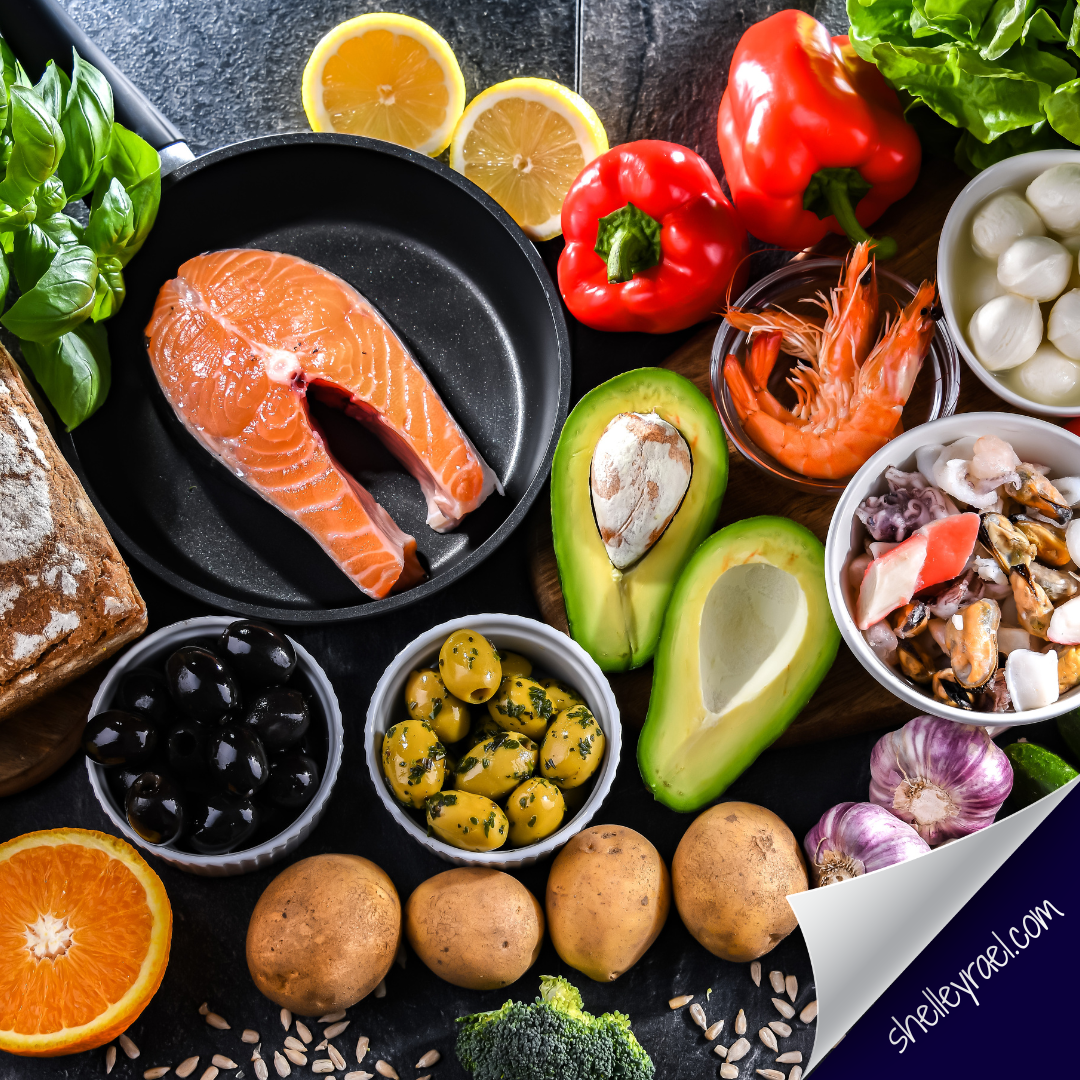
Vegetables, fruits, whole grains, beans, lentils, nuts, and seeds are central. These foods provide fiber, vitamins, minerals, and antioxidants.
2. Healthy Fats
Olive oil is a primary source of fat. It is rich in monounsaturated fats, which are associated with heart health. Nuts and seeds also contribute healthy fats.
3. Moderate Animal Protein
Fish and seafood are included regularly. Poultry, eggs, and dairy are consumed in moderate amounts. Red meat is eaten less frequently. “Carnivore” is not a thing.
4. Flavor from Herbs and Spices
Meals rely less on heavy sauces and more on herbs, spices, garlic, and citrus for flavor.
5. Less Reliance on Highly Processed Foods
Foods are often closer to their original form. There is less emphasis on packaged and ultra-processed items.
6. Balanced Eating Patterns
Meals tend to be more balanced, with a mix of carbohydrates, protein, and fat rather than extremes.
How Is This Different from a Typical American Pattern?
The “typical American diet” is often higher in refined grains, added sugars, and highly processed foods. It can also be higher in saturated fats and lower in fruits, vegetables, and fiber.
Meals are often eaten quickly, sometimes alone, and sometimes while multitasking.
This is not true for everyone, but it is a general pattern that shows up in national data. I often hear people say they don’t have time to eat (in the U.S. go-go-go lifestyle). The Mediterranean approach not only slows down, but they can also even shut down to eat. Close up shop, the office, and business for the entire hour or more.
The Mediterranean approach shifts the focus toward whole foods, more intentional eating, and a broader view of health.
Why Is It Considered One of the “Best” Diets?
It is not because it is restrictive or complicated with a list of rules and dos and don’ts.
In fact, it is often the opposite.
It is flexible. It includes a wide variety of foods. It does not eliminate entire food groups. It supports long-term habits rather than short-term changes.
It also aligns well with what we know about nutrition and chronic disease prevention. Higher intake of fiber, healthy fats, and plant-based foods is associated with better health outcomes.
And importantly, it is sustainable. People can follow this pattern over time because it fits into real life.
What It Is Not
It is not just olive oil and wine.
It is not an excuse to overdo high-calorie foods simply because they are part of the pattern.
It is not a rigid meal plan.
And it is not something that requires you to completely change your culture or your preferences.
Is the Mediterranean Diet Good for Weight Loss?
It’s a fair question. Many people hear the word “diet” and immediately think about weight loss.
The Mediterranean diet can support weight loss for some people, but that is not its primary purpose.
This way of eating is focused on overall health. It emphasizes balanced meals, whole foods, and habits that are realistic to maintain. As a result, some people may experience weight loss by eating more fiber-rich foods, improving meal patterns, and reducing intake of highly processed foods.
But weight loss is not guaranteed.
Portion sizes still matter. Energy intake still matters. Individual needs vary quite a bit.
What makes the Mediterranean approach stand out is its support for long-term habits. Instead of focusing on short-term results, it helps build a way of eating that can improve health markers like cholesterol, blood pressure, and blood sugar over time.
For some people, weight loss may be part of that process. For others, the benefits may show up in different ways.
Either way, the goal is not just a number on the scale but a pattern of eating that supports health sustainably.
Ways to Move in This Direction (If You Want)
You do not need to move to the Mediterranean to benefit from this approach. Small shifts can make a difference.
Add an extra serving of vegetables to one meal each day
Swap butter or other fats for olive oil in cooking when it makes sense
Include beans or lentils a few times each week
Choose fish more often, even once or twice a week is a start
Use herbs and spices to add flavor instead of relying on heavy sauces
Sit down for meals (the car does not count, and neither should being in front of the television or screen) when possible and reduce distractions
Cook at home a little more often
These are not all-or-nothing changes. They are options to consider and build on over time.
A Realistic Perspective
The Mediterranean diet is often highlighted because it reflects a pattern that supports health in a realistic way.
It is not about a single food or a single habit. It is about how everything fits together.
Food choices, eating patterns, movement, and lifestyle all play a role.
And while we cannot replicate another culture exactly, we can take elements that make sense for our lives and apply them in practical, sustainable ways.
Read More:
American Heart Association: What is the Mediterranean Diet?
Harvard Health Publishing, Harvard Medical School Guide to the Mediterranean Diet
Have a Plant, The Foundation for Fresh Produce About The Buzz: The Mediterranean Diet