
All Calories Are Equal… But Not All 2,000-Calorie Days Look the Same
All Calories Are Equal… But Not All 2,000-Calorie Days Look the Same
In my previous blog, I discussed whether it is possible to calculate exactly what our bodies need. The short answer is that we can estimate, but many variables influence what our bodies actually require from day to day. One of the concepts mentioned in that article was bioindividuality.
Bioindividuality simply means that each person responds to food, activity, and lifestyle factors a little differently. Even two people with the same height, weight, age, and activity level can have different metabolic responses, nutrient needs, and health outcomes.
Read More: Can You Calculate Exactly What Your Body Needs? (And Why It’s Not That Simple)
With that idea in mind, let’s look at another topic that often comes up in nutrition discussions.
Calories. And, more specifically, address the question: “Are all calories equal?”
Frequently Asked Questions:
Are all calories equal for weight loss? Yes, and no…a calorie is a calorie, but what else comes with those calories will have a greater impact on whether it is successful.
What does nutrient density mean? Nutrient-dense foods provide vitamins, minerals, fiber, and other beneficial components along with energy.
Why does food quality matter if calories are the same? When we choose higher-quality foods (aka nutrient-dense foods), they often provide both volume and nutrients, making them more satisfying than highly processed foods that are lower in fiber.
Calories In, Calories Out
The concept of calories in and calories out is often used when talking about weight management. The idea is straightforward.
If the calories we consume equal the calories we expend, body weight should remain stable. If someone consistently consumes more calories than they burn, it creates a calorie surplus, which may lead to weight gain. If someone consistently consumes fewer calories than they burn, it creates a calorie deficit, which may lead to weight loss.
This framework is often abbreviated as CICO, which stands for calories in, calories out.
While the concept helps explain the relationship between energy intake and body weight, real life rarely follows a simple formula. Our metabolism, activity level, sleep, stress, and many other factors influence how our bodies use energy.
But before we discuss food quality and other factors, it helps to understand how calories are calculated in the first place.
How Calories Are Calculated
Calories represent the amount of energy provided by food. Different macronutrients provide different amounts of energy per gram.
Carbohydrates provide 4 calories per gram.
Protein also provides 4 calories per gram.
Fat provides 9 calories per gram.
Alcohol provides about 7 calories per gram. Alcohol is not considered a nutrient, but it still contributes calories, which people tend to forget or don’t think about. People wonder: if the carbs aren’t there, where are the calories coming from?
For example, imagine a food that contains:
7 grams of carbohydrates
5 grams of protein
3 grams of fat
We can calculate the calories from each nutrient.
Carbohydrates: 7 grams x 4 calories = 28 calories
Protein: 5 grams x 4 calories = 20 calories
Fat: 3 grams x 9 calories = 27 calories
Add them together, and the total is 75 calories.
This is how calorie totals are estimated on nutrition labels and in nutrient databases.
Energy Equivalence
Now let’s talk about energy equivalence.
Energy equivalence means that calories represent energy regardless of the food source. If someone consumes 2,000 calories in a day, the body receives 2,000 calories of energy.
It does not matter whether those calories come from vegetables, grains, desserts, or snack foods. From an energy standpoint, they are still calories.
Keep in mind that 2,000 calories is often used as a reference value on nutrition labels. It is not necessarily the amount that every person should consume.
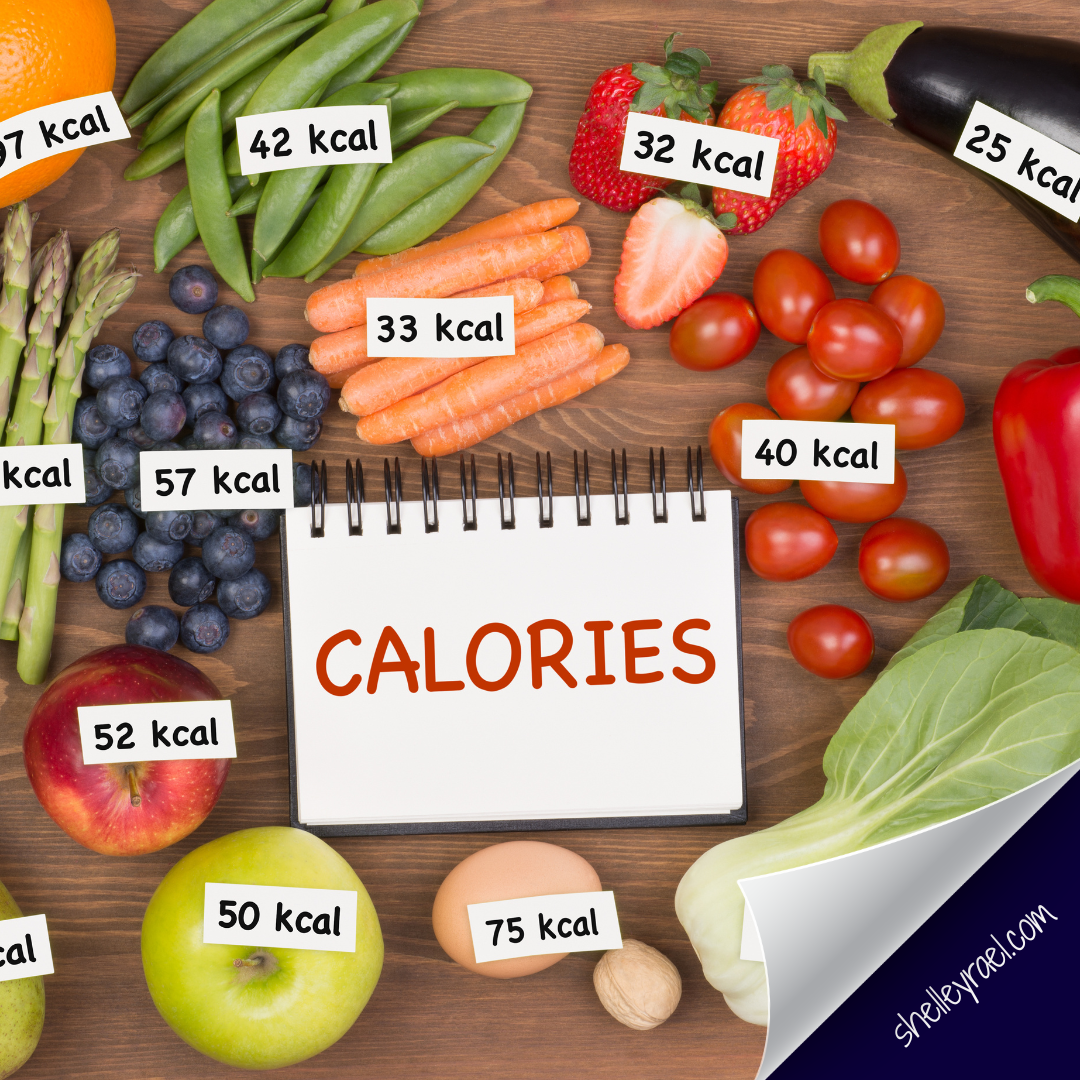
Here are a few examples of foods that can provide a similar amount of calories:
A baked potato with salsa
A handful of nuts
A chocolate candy bar
A slice of pizza
A bowl of oatmeal
Each of these foods may provide roughly the same amount of energy, yet their nutritional contributions can be quite different.
Nutrient Density Versus Low Nutrient Foods
This brings us to an important distinction.
Even though calories measure energy, not all foods provide the same nutrients.
Nutrient-dense foods provide vitamins, minerals, fiber, and other beneficial components along with energy. Examples include fruits, vegetables, whole grains, beans, nuts, dairy foods, and lean proteins.
Low-nutrient foods provide energy but fewer beneficial nutrients. These are sometimes called discretionary foods or what I occasionally refer to as sometimes foods.
To illustrate this idea, imagine two days that both total around 2,000 calories.
A More Nutrient-Dense Day
Breakfast: Oatmeal with berries and yogurt
Lunch: Whole grain sandwich with chicken, lettuce, tomato, and avocado
Snack: Apple with peanut butter
Dinner: Grilled salmon, brown rice, and roasted vegetables
Snack: Plain yogurt with fruit
A Lower Nutrient Day
Breakfast: Sweetened pastry and coffee drink
Lunch: Cheeseburger and fries
Snack: Chips
Dinner: Frozen pizza
Snack: Ice cream
Both days may provide roughly the same number of calories. However, the nutrient content can vary widely. The first day provides more fiber, vitamins, minerals, and protein. The second day provides more added sugar, sodium, and saturated fat with fewer beneficial nutrients.
Food Volume Matters
Another factor to consider is food volume.
Foods that contain more water and fiber tend to take up more space on the plate. Fruits, vegetables, soups, beans, and whole grains are good examples.
Years ago, the Volumetrics approach to eating suggested that people tend to consume a similar volume of food each day. The idea was that choosing foods with more water and fiber could help people feel satisfied while consuming fewer calories.
Research has shown that foods with higher volume and lower energy density can increase feelings of fullness. While the concept is not a universal solution for weight management, it does help explain why meals rich in fruits, vegetables, and whole grains can feel satisfying.
For example, consider the difference between:
A large bowl of vegetable soup
A small bag of chips
Both might have similar calorie counts, but the soup occupies much more volume and often provides more nutrients.
Satiety and Fiber
Fiber plays an important role in satiety.
High-fiber foods tend to slow digestion and help people feel fuller for longer. Foods rich in fiber include:
Fruits
Vegetables
Beans and lentils
Whole grains
Nuts and seeds
These foods often provide both volume and nutrients, making them more satisfying than highly processed foods that are lower in fiber.
Read More: Fiber 101: Soluble, Insoluble, Functional Fiber, and Resistant Starch
A Quick Note About Fat
Fat also deserves mention here.
All fats provide about 9 calories per gram. In that sense, fat is fat when it comes to energy.
However, the type of fat still matters for health. Unsaturated fats found in foods such as olive oil, nuts, seeds, and fish are generally associated with positive health outcomes. Saturated fats and trans fats are typically recommended in more limited amounts.
So while the calories are similar, the types of fat can influence long-term health.
The Bigger Picture
Calories help us understand how food provides energy. From a physics standpoint, a calorie is a calorie.
However, the foods that provide those calories can vary widely in nutrient content, fiber, volume, and overall health impact.
Two people could eat the same number of calories in a day and still have very different dietary patterns.
Rather than focusing only on calorie totals, it is often more useful to look at the overall pattern of foods we eat. Meals that include a variety of fruits, vegetables, whole grains, protein foods, and healthy fats tend to provide a wider range of nutrients and greater satiety.
Calories matter, but the foods that provide those calories matter too.
Read More: Adequacy, Balance, Moderation, and Variety: The Four Pillars of a Nourishing Diet