Food Expiration Dates: What They Really Mean (and When Food Is Still Safe)
Food expiration dates are among the most misunderstood aspects of nutrition and food safety. They are also one of the biggest contributors to unnecessary food waste. People will throw away food that is still safe because of a date on the package. So, when can we keep those foods and ignore the date, and when does the date indicate it's time to move it out?
Let’s start with a key point. Those aren’t really “expiration dates.”
The Only True “Expiration Date”
The only food product in the United States that is required to have a true expiration date is infant formula.
That is because infant formula is often the sole source of nutrition for babies. Over time, nutrient content can degrade, and the formula may no longer meet the required nutrient levels for growth and development. Safety and nutrient adequacy both matter here, which is why the date is strictly regulated.
For most other foods, the dates you see are not about safety.
They are about quality.
What Do These Dates Actually Mean?
Most packaged foods use one of three common date labels: best by, sell by, or use by. These dates generally apply to unopened products.
Once the package is opened, those dates matter much less than how the food is stored and how long it has been open.
Let’s clear this up.
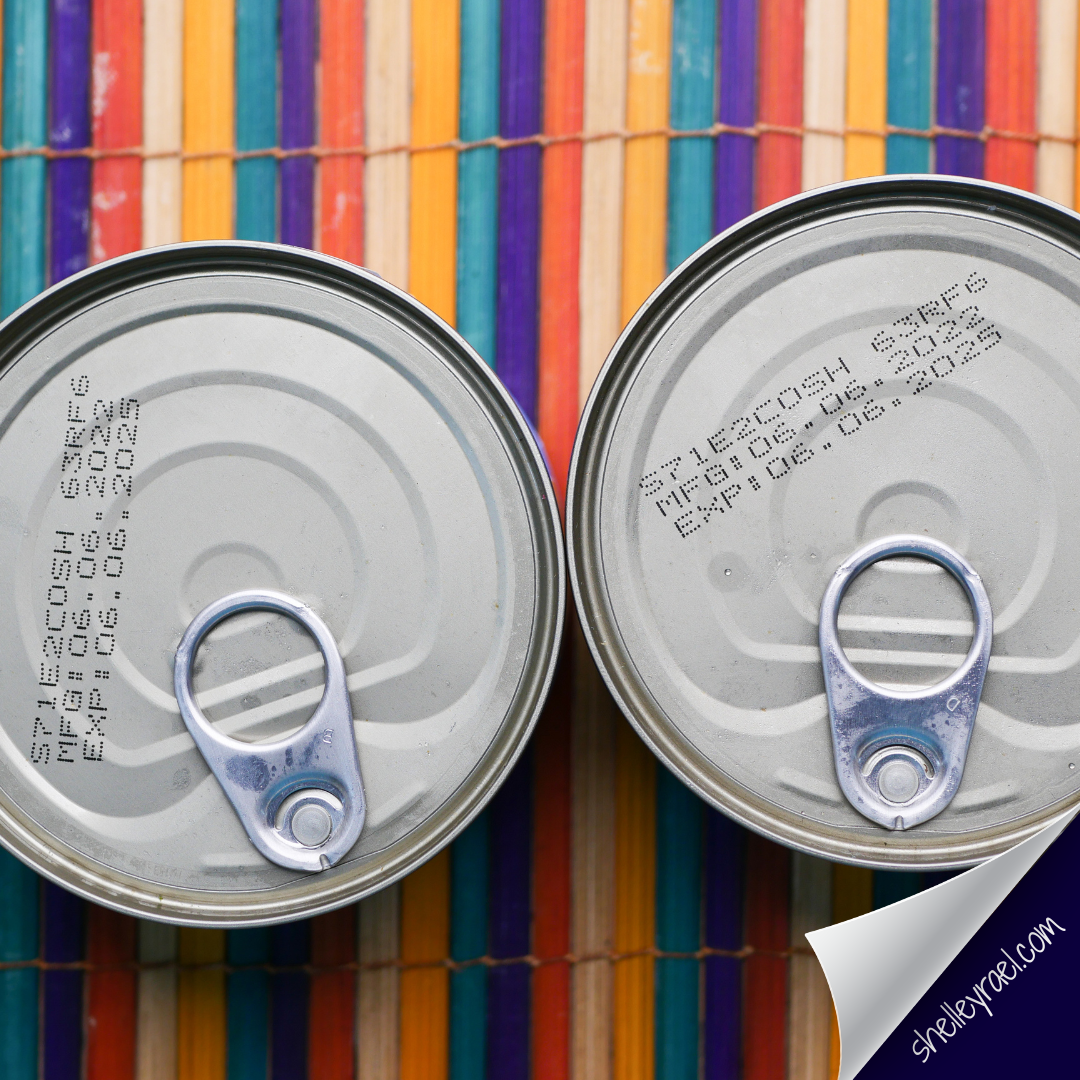
Best By
What it means:
This is about quality, not safety. It indicates when the product is expected to be at its best in terms of flavor, texture, and overall quality.
Common foods:
Canned goods, dry goods, cereals, snacks, and pantry staples.
Is it safe after the date?
Yes, if the item is unopened and properly stored, it is usually safe to consume after the best-by date.
When to let it go:
If the quality has noticeably declined, such as a stale texture, off-flavors, or changes in appearance. Also, if it has been sitting around for years and you realistically are not going to use it. The dried pasta or rice is safe to consume, but after years, really consider why it is still sitting around.
Anecdote:
I tend to use evaporated milk only during the holidays. Once a year, I was optimistic about my baking and bought a few cans. I ended up using only two that season. No problem. The next year, I went to use that third can that had been tucked in the pantry all year without a second thought. Until I opened it, and it was clumpy. In that case, I chose not to use it, not to second-guess, and tuck that information away for future reference. One, not to over-buy evaporated milk, and two, this makes for a great lesson when talking about these dates. It is usually fine, but not always.
Sell By
What it means:
This date is intended for the store, not the consumer. It tells retailers how long to display the product for sale.
Common foods:
Milk, yogurt, eggs, and fresh meat.
Is it safe after the date?
Yes. If you purchase a product on or before the sell-by date and store it properly, it remains safe for a period after that date.
When to let it go:
This depends on the product and storage conditions. For example, milk may last several days beyond the sell-by date if unopened and refrigerated. Fresh meat should be used or frozen within a few days of purchase.
Anecdote:
I go through food jags when it comes to eggs. I can go through a dozen in a couple of weeks, then have a carton that lasts for months. Some people swear I am endangering my life by eating eggs that are sometimes months old. But they are stored in their carton on the bottom shelf of the fridge. Yes, the older eggs have “flatter” yolks. But if I am baking or even just making scrambled eggs, there is no problem with that. They are not bad, or even remotely unsafe. And I have never gotten sick because of an older egg.
Use By
What it means:
This is the manufacturer’s recommendation for when the product will be at peak quality.
Common foods:
Prepared foods, deli items, and some packaged refrigerated foods.
Is it safe after the date?
Sometimes, but this is the date to pay closer attention to. It is still about quality, but it can also be a better indicator of when the product may start to decline more rapidly.
When to let it go:
If the food has been stored properly but is past the use-by date, evaluate it carefully. If there are any signs of spoilage, it is time to discard it.
Anecdote:
This is one of the times when I bring up the past and ask…did you ever? Sometimes you can have some cheese or food where you see the blue-green or white mold, and you have been told or tell yourself to just cut it out, and the rest is fine. Nope. Before there is visible mold, there is invisible mold. That is potentially dangerous. So even if something looks fine after cutting out the visible mold, there is likely still invisible mold left. So let it go. If you want to risk it, okay, but don’t let the kiddos eat it.
What Changes Once Food Is Opened?
Once a food is opened, the date on the package becomes much less useful.
How Long Do Foods Last After Opening?
General guidelines for common foods once opened and properly refrigerated:
Milk: 5–7 days
Yogurt: 5–7 days
Soft cheeses (cream cheese, ricotta): 5–7 days
Hard cheeses (cheddar, Swiss): 2–3 weeks
Deli meats: 3–5 days
Cooked leftovers: 3–4 days
Cooked meat or poultry: 3–4 days
Raw meat or poultry: 1–2 days (refrigerated before cooking)
Eggs (in shell): 3–5 weeks from purchase
Egg dishes or cooked eggs: 3–4 days
Opened canned foods (transferred to container): 3–4 days
Soups and stews: 3–4 days
Keep in mind:
These are general guidelines, not exact rules
Proper storage matters
When in doubt, throw it out
At that point, the clock starts based on:
Exposure to air
Temperature
Handling
Time since opening
For example:
Milk is typically good for about 5 to 7 days after opening
Yogurt may last 5 to 7 days after opening
Leftovers are generally best within 3 to 4 days
Even if the date on the package is still in the future, opening the product changes everything.
Fresh Foods Require More Attention
Some foods have a shorter window for both quality and safety.
Fresh Meat
If the sell-by date is tomorrow and you buy it today, you have options:
Cook it within a day or two
Freeze it right away if you are not going to use it
Freezing can significantly extend the life, but the quality may gradually decline over time.
Fish and Seafood
These are more perishable and should be used quickly, usually within 1 to 2 days.
Eggs
In the United States, eggs are washed and refrigerated, which removes the natural protective coating on the shell. That is why refrigeration is required here.
Eggs can often be used weeks beyond the date on the carton if stored properly. The quality may decline, but they are often still safe. A simple float test can give some indication, but it is not perfect. As I have noted, I eat eggs that may have been in the fridge for a couple of months.
Extending Shelf Life Safely
There are practical ways to get the most out of your food while maintaining safety and quality.
Refrigerate promptly and keep your fridge at or below 40°F
Freeze foods you will not use in time
Store foods properly in airtight containers
Label leftovers with the date they were prepared
Avoid temperature abuse, such as leaving food out for extended periods
For example, if you buy fresh meat and are not sure when you will use it, freezing it the same day can prevent waste.
Quality vs Safety
It is important to separate quality from safety.
Some foods may lose quality over time but remain safe to eat.
Others may look fine but are not safe.
There have been plenty of times when something was likely still safe, but it had been sitting in the pantry for so long that it was not going to be used. That is when it makes sense to let it go.
Anecdote:
I recently threw away a nearly full bottle of corn syrup and a canister of powdered milk. The corn syrup was opened years ago for a single tablespoon, and the powdered milk, which was barely touched, but open, was both far past its date (we were talking two or three years ago). They were technically still usable, but in practice, having only used one tablespoon of corn syrup and maybe a quarter cup of the powdered milk? At that point, it was time to let them go. That was more about clearing space than food safety.
When to Be More Cautious
There are situations where it is better to be more conservative.
Foods with a high moisture content
Perishable items like meat, dairy, and prepared foods
Foods that have been left out too long
Foods with any signs of spoilage, such as off smells, slimy texture, or mold
And when in doubt, it is best to throw it out.
What To Know
Food date labels are not as straightforward as they seem.
Most dates refer to quality, not safety
Infant formula is the exception with a true expiration date
Once opened, storage and time matter more than the printed date
Proper storage can extend shelf life
Some foods are safe past the date, but others are not worth the risk
Understanding these differences can help reduce food waste while also protecting food safety.