
What Happens to Food When You Freeze It?
What Happens to Food When You Freeze It?
Frozen foods are one of the easiest ways to reduce food waste.
They help extend the life of foods, make meal planning more flexible, and allow you to keep a variety of options on hand without needing to use everything right away.
But one of the most common questions I get is whether freezing affects nutrition.
The short answer is no.
But like most things in nutrition, there is more to it than that.
Not All Frozen Foods Are the Same
Before getting into the details, it helps to acknowledge that frozen foods cover a wide range of options. And what you might visualize could be different from what I think of.
There are foods we freeze ourselves, like leftovers or seasonal produce.
There are also store-bought frozen foods, including:
Fruits and vegetables
Meats, poultry, and seafood
Cooked grains
Convenience meals
Desserts
These foods are not all nutritionally the same. Obviously. So, when people ask, Is frozen food healthy? Again, it just depends.
Frozen fruits, vegetables, proteins, and grains can be great options and are often comparable to fresh.
Highly processed frozen meals and desserts can be higher in added sugars, sodium, or saturated fat, so those are more about balance and moderation. Not necessarily to avoid.
Freezing itself does not determine whether a food is “healthy.” It is just a method of preservation.
What Freezing Does to Nutrients
Freezing works by slowing down the processes that cause food to spoil.
When food is frozen, the water inside it forms ice crystals. This slows enzyme activity and microbial growth, which helps preserve the food.
Does freezing food affect nutrition?
When it comes to the nutrients, freezing generally does a very good job of maintaining them.
Store-Bought Frozen Foods
For more helpful information on Meal Planning and Balanced Meals, check out the following:
Meal Planning Basics for a Healthier Week
How to Build a Balanced Plate: Simplifying Nutrition for Every Meal
Frozen fruits and vegetables are often picked at peak ripeness and frozen shortly after harvest, sometimes even in facilities adjacent to the harvesting site. This helps lock in nutrients at a time when the food is at its best. I say it is like being suspended in time.
In some cases, frozen produce can have nutrient levels similar to, or even higher than, those of fresh produce that has been transported long distances or stored for several days.
For example:
Frozen berries can retain vitamin C and antioxidants well
Frozen vegetables like broccoli or spinach maintain many of their vitamins and minerals
Frozen fish retains protein and important nutrients like omega-3 fats
The same general idea applies to frozen meats and grains. Protein, fats, and carbohydrates remain stable during freezing.
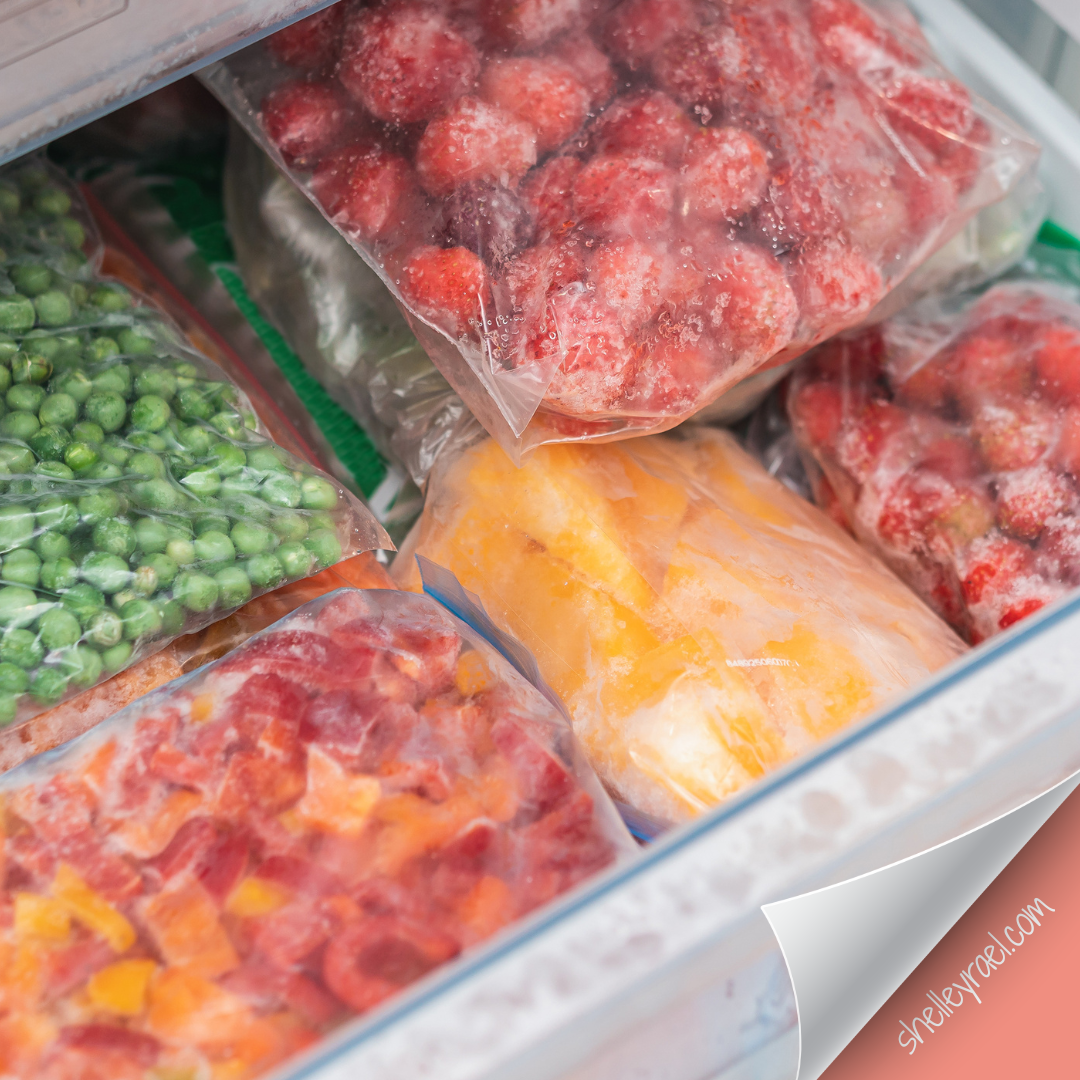
Freezing Foods at Home
Freezing food yourself works similarly.
If you freeze leftovers, extra portions, or seasonal foods like peaches or green chile, you are preserving them close to their original state.
The sooner a food is frozen after preparation or harvest, the better the nutrient retention.
This is one of the reasons freezing is so helpful in minimizing food waste. Instead of losing nutrients over time in the refrigerator, freezing helps pause that process.
Note: If you plan to freeze leftovers, do so right away. Don’t put it in the fridge and then decide a day or two later to freeze it. Even though freezing helps preserve food and slow spoilage, if it has already started, when that food is defrosted, it picks up where it left off.
What About Texture and Quality?
While freezing does a good job of preserving nutrients, it can affect texture.
This is where people often notice the biggest difference.
Why Texture Changes
When water in food freezes, it forms ice crystals. These crystals can disrupt the structure of the food.
When the food is thawed, it may release more moisture, which can change how it feels.
Foods That May Be Affected
Fruits with high water content, like strawberries or cherries, may become softer after thawing
Vegetables like zucchini or lettuce can lose their crisp texture (I have never frozen lettuce, but it will be a super limp, soggy leaf when it is defrosted)
Cooked foods may feel slightly different depending on how they were prepared, like previously cooked pasta
This does not mean the food is less nutritious. It just means it may be better to keep them for certain uses.
For example:
Frozen berries work well in smoothies, oatmeal, or baking
Frozen vegetables are great for cooking rather than eating raw
Thawed proteins can be used in cooked dishes without much difference
Understanding this can help you choose how to use frozen foods in a way that works best for you.
Best Practices for Freezing Food
Freezing is simple, but a few basic steps can help maintain quality.
For Store-Bought Frozen Foods
Keep them frozen until you are ready to use them
Avoid repeated thawing and refreezing
Store them in the coldest part of the freezer – I assume the freezer itself is the coldest part, but some do vary
For Freezing Foods at Home
Use airtight containers or freezer bags
Remove as much air as possible to reduce freezer burn
Label foods with the name and date
Labeling is one of the easiest things to skip and one of the most helpful steps to take. I am often astonished by how often people don’t do it. Yes, it may be chicken, but is it cooked rotisserie chicken, chicken thighs, or chicken breast? Labeling takes away the mystery.
How Long Can You Freeze Food?
A general guideline for best quality is about 3 to 4 months for many foods.
Some foods can be stored longer, but their quality may start to decline.
This might mean there is:
Change in texture
Loss of flavor
Freezer burn
It is important to separate quality from safety.
Frozen foods that have been kept at a consistent temperature are generally safe to eat beyond these time frames. The main difference is that they may not taste or feel as good. We recently had some chicken tenders that had freezer burn. Even after they were cooked, and perfectly safe to eat, they just weren’t as appetizing. The dogs got lucky that day.
Freezing and Food Waste
One of the biggest benefits of freezing is how much it can reduce food waste.
Instead of throwing away extra food, you can:
Freeze leftovers for another meal
Save extra portions for busy days
Preserve seasonal foods to use later
This makes it easier to use what you have and avoid starting from scratch every time you need a meal.
The Truth About Freezing Food
Freezing does not significantly reduce the nutritional value of food.
In many cases, it helps preserve nutrients by slowing down the processes that lead to spoilage.
While texture and quality can change for some foods, these changes do not affect the overall nutritional value.
Frozen foods can be a practical, flexible, and nutrient-rich part of everyday eating.
And when used well, they can make meals easier while also helping reduce food waste.