Nutrition Facts Panel, Part 2: Fats, Cholesterol, Carbohydrates, and Protein
Nutrition Facts Panel, Part 2: Fats, Cholesterol, Carbohydrates, and Protein
As I mentioned in Part 1 of this series, everything on the Nutrition Facts panel is tied to the serving size at the top of the label. That serving size is not a suggestion or a recommendation. It serves as the reference point for the numbers listed below on the rest of that Nutrition Facts panel. When you know that, the rest of the label becomes much easier to understand.
This post is Part 2 in the series:
Part 1 Serving Sizes, Servings Per Container, and Calories
Part 2 Fats, Cholesterol, Carbohydrates, and Protein (this blog)
Part 3 Sodium, Potassium, and Other Vitamins and Minerals – coming soon
Part 4 Percent Daily Value and Other Information – coming soon
Fats
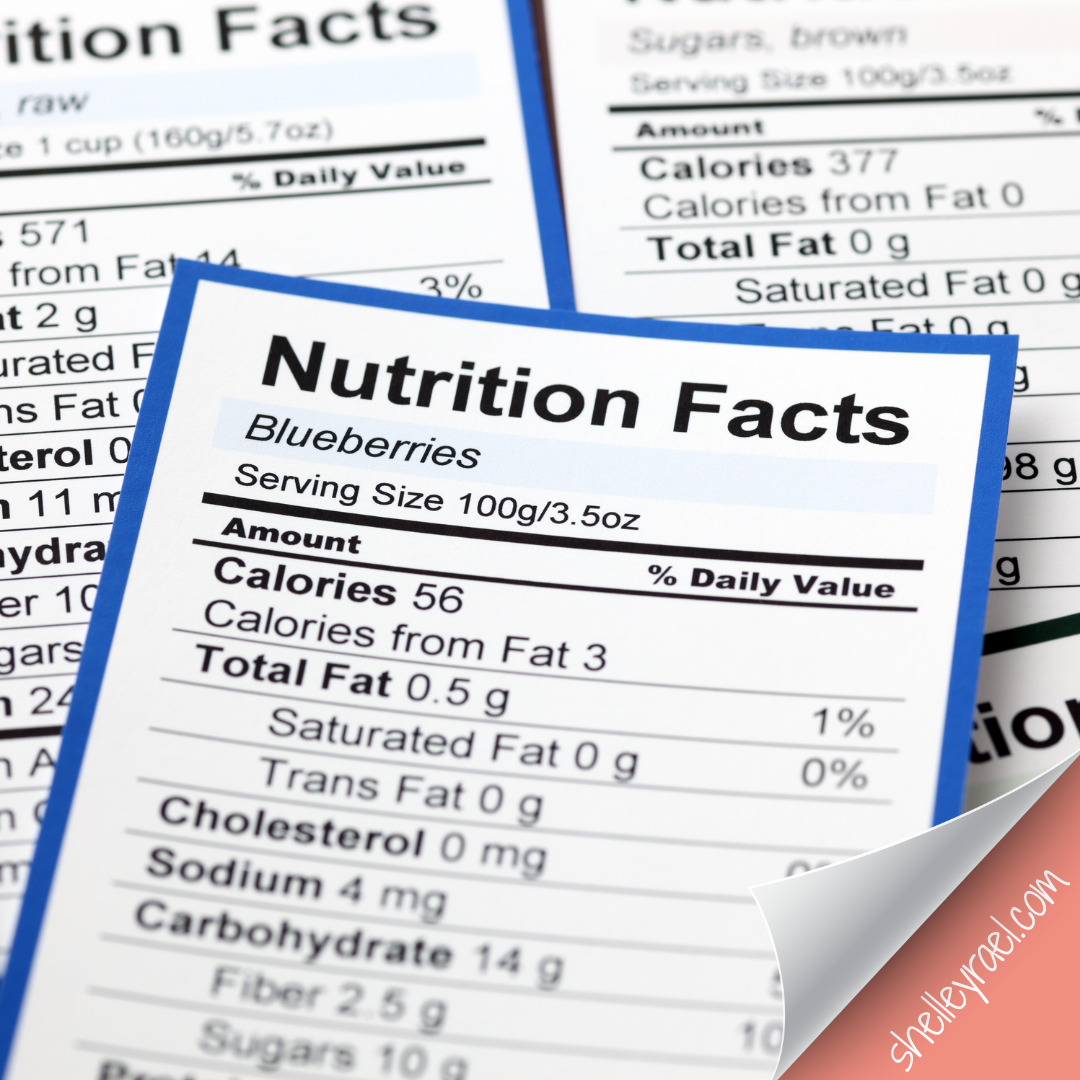
The label must list total fat, saturated fat, and trans fat. Some foods will also show monounsaturated fat and polyunsaturated fat, but those are optional.
All fats have nine calories per gram. Total fat represents the total grams of all types of fat in that serving of food. People often notice that total fat does not equal the sum of saturated fat and trans fat. If a food has 20 grams of total fat, 7 grams of saturated fat, and 1 gram of trans fat, that still leaves 12 grams unaccounted for. Those 12 grams are usually a mix of mono and polyunsaturated fats. The label does not have to show the breakdown of those remaining fats.
Trans fat became required on labels in 2006. Artificial trans fats are the most harmful type of fat for health, and most food manufacturers have removed them. It is rare to see trans-fat listed anymore, but it is not impossible. And the trans-fats listed here are only referring to the artificially or “man-made” trans-fats, not the naturally occurring trans-fats.
Now for rounding. If a food contains less than 0.5 grams of total fat per serving, it can legally list zero grams. This rounding rule applies to saturated fat and trans-fat as well. A label that lists zero might still have a small amount, so it helps to check the ingredient list. Look for the word hydrogenated. This could be partially hydrogenated oil or fully hydrogenated oil. If it is high on the ingredient list, the food may still contain some trans fats even if the label reads zero. Now, some people think this is alarming, this legal rounding, but consider this: if something is 0.4 grams of fat per serving, and someone has four servings, that is 1.6 grams of fat. Seriously, four servings add up to less than 2 grams of fat? If someone is micromanaging their fat grams to the extent that that amount of fat will make or break someone’s diet or health, there are definitely bigger issues to address.
Fat needs vary from person to person, but everyone benefits from keeping saturated fat lower, at less than 10% of their total calories, and avoiding trans fats entirely. This does not mean every food you eat has to be low in saturated fat. The idea is balanced across the whole day. If one food is higher in saturated fat, choose other foods that are naturally lower in saturated fat, such as fruits, vegetables, and whole grains.
Cholesterol
Cholesterol is still listed on labels, though it is not the focus it once was. For most people, dietary cholesterol has less impact on blood cholesterol than the type of fat they eat. Saturated fat and trans-fat influence blood cholesterol more strongly than dietary cholesterol.
Cholesterol appears on the label in milligrams. A general guideline is to stay under 300 milligrams per day from all sources, though this matters more for some people than others. Cholesterol is only found in foods that come from animals. So, if you see peanut butter, olive oil, or coconut products labeled as cholesterol-free, that is true, but it's probably more marketing than necessary. Plants do not contain cholesterol.
Fat-free dairy also contains no cholesterol. Removing the fat removes the cholesterol. As with fats, rounding is allowed here too. If a serving contains less than 5 milligrams, the label can list zero.
Carbohydrates
Carbohydrates include starch, fiber, and sugar. Total carbohydrate is the sum of all types in a serving. Starch usually does not appear as its own line. Occasionally, you might see a line for other carbohydrates, but it is uncommon. I think I have only seen it twice in my entire career. And while I look at a lot of labels, I don’t look at them all – so maybe it is there more than I realize.
Fiber is required on the label, though the type of fiber does not have to be listed. Fiber naturally comes from plant foods. Some manufacturers add fiber to foods that would not normally contain it, such as yogurt or bars with inulin or chicory root added. That would be listed in the ingredients as well as under fiber.
Sugar is listed in two parts. Total sugar includes both naturally occurring sugar and added sugar. The added sugars line underneath it shows how much of that total was added by the manufacturer. This is helpful because before the label update, it was impossible to know how much sugar in yogurt, smoothies, or other foods was natural or added, or, more commonly, a combination of the two.
If a food has 12 grams of total sugar and 4 grams of added sugar, the other 8 grams are naturally occurring sugars. When you add sugar and fiber together, they usually will not equal the total carbohydrate. The difference is starch. For example, if a food has 15 grams of total carbohydrate, 2 grams of fiber, and 8 grams of sugar, about 5 grams come from starch (15 g – [2 g + 8 g] = 5 g).
Sugar alcohols may appear in some foods. These usually end in -itol, such as erythritol, xylitol, mannitol, or sorbitol. They provide fewer calories than sugar, do not raise blood sugar the same way, and do not contribute to dental cavities. They can cause digestive issues (aka a “laxative effect”) for some people, so they are worth being aware of.
Protein
Compared to fats and carbohydrates, protein is simple on the label. There is no requirement to list amino acids or types of protein. If you eat a variety of foods from both plant and animal sources, you will get the amino acids you need. Protein is essential for health, but the label does not need to be complicated here.
What Is Next
Next up is Part 3 Sodium, Potassium, and Other Vitamins and Minerals - this has changed over the years. Why are these vitamins and minerals included, which are required, and which are optional?
Real World Nutrition Refreshed: I am revitalizing and updating my blog archive and re-publishing it. Stay tuned as I review, update, refresh, and re-share these posts to provide you with even more valuable information on nutrition, health, and overall wellness—and keep things timely. A portion of this blog was initially posted in January 2022 and has been updated here.