
Restaurant Menu Labeling: What Those Numbers Really Mean
Restaurant Menu Labeling: What Those Numbers Really Mean
Something that still surprises me is how many people either do not notice the numbers on restaurant menus or are unsure what they actually mean.
Have you noticed them?
Those calorie numbers next to menu items at restaurants, coffee shops, fast food places, and even some movie theaters?
If not, you are definitely not alone.
And if you have noticed them, you may still wonder how useful they really are.
What Are Those Numbers?
Those numbers are the calorie values for the standard version of a menu item.
That is important.
The standard version.
Not the modified version with extra cheese, no bun, added avocado, light sauce, oat milk, no whipped cream, or whatever customizations people may make.
The calorie number reflects the menu item as it is normally prepared according to that restaurant’s standard recipe.
Why Are Calories Listed on Menus?
Restaurant menu labeling became a federal requirement under the Affordable Care Act.
Restaurants and similar food establishments with 20 or more locations nationwide are required to provide calorie information at the point of sale.
This includes:
Fast food restaurants
Coffee chains
Sit-down chain restaurants
Convenience store chains with prepared foods
Some entertainment venues
The idea behind menu labeling was to provide nutrition information so consumers could make more informed choices if they wanted to.
And that last part matters.
If they wanted to.
The purpose was not to force people to count calories or judge what someone orders.
It was to provide information.
Not Everyone Notices or Uses the Information
One of the biggest misconceptions is that menu labeling dramatically changes behavior for everyone.
It does not.
Some people never notice the calorie numbers.
Some notice but do not care.
Some find the information helpful.
And some people find it stressful or overwhelming.
There is also a large group somewhere in the middle that notices the numbers but may not fully understand what they mean in the context of their own needs.
Do Calorie Labels Help People Eat Healthier?
Sometimes. But not always.
Research on menu labeling shows mixed results.
Some people notice the calorie information and use it to compare options or make different choices. Others ignore it completely. And some people may not fully understand what the numbers mean in the context of their own needs.
For example, someone may choose a smaller side dish or a lower-calorie drink after seeing the numbers. Another person may order exactly what they planned regardless of the calorie information.
Menu labeling can increase awareness and transparency, but information alone does not automatically change behavior.
Food choices are influenced by many factors, including:
Hunger
Taste preferences
Cost
Convenience
Habits
Social situations
Emotions
Nutrition knowledge
Calorie labels are a tool. Whether they are useful depends on the individual and how they choose to use the information.
Calories Add Up Quickly
This is where menu labeling can sometimes be eye-opening.
People may focus on the entrée but overlook the sides, drinks, sauces, or appetizers.
For example, someone may see the calorie value for a burger but not fully register:
Fries
Sugary beverages
Milkshakes
Alcohol
Desserts
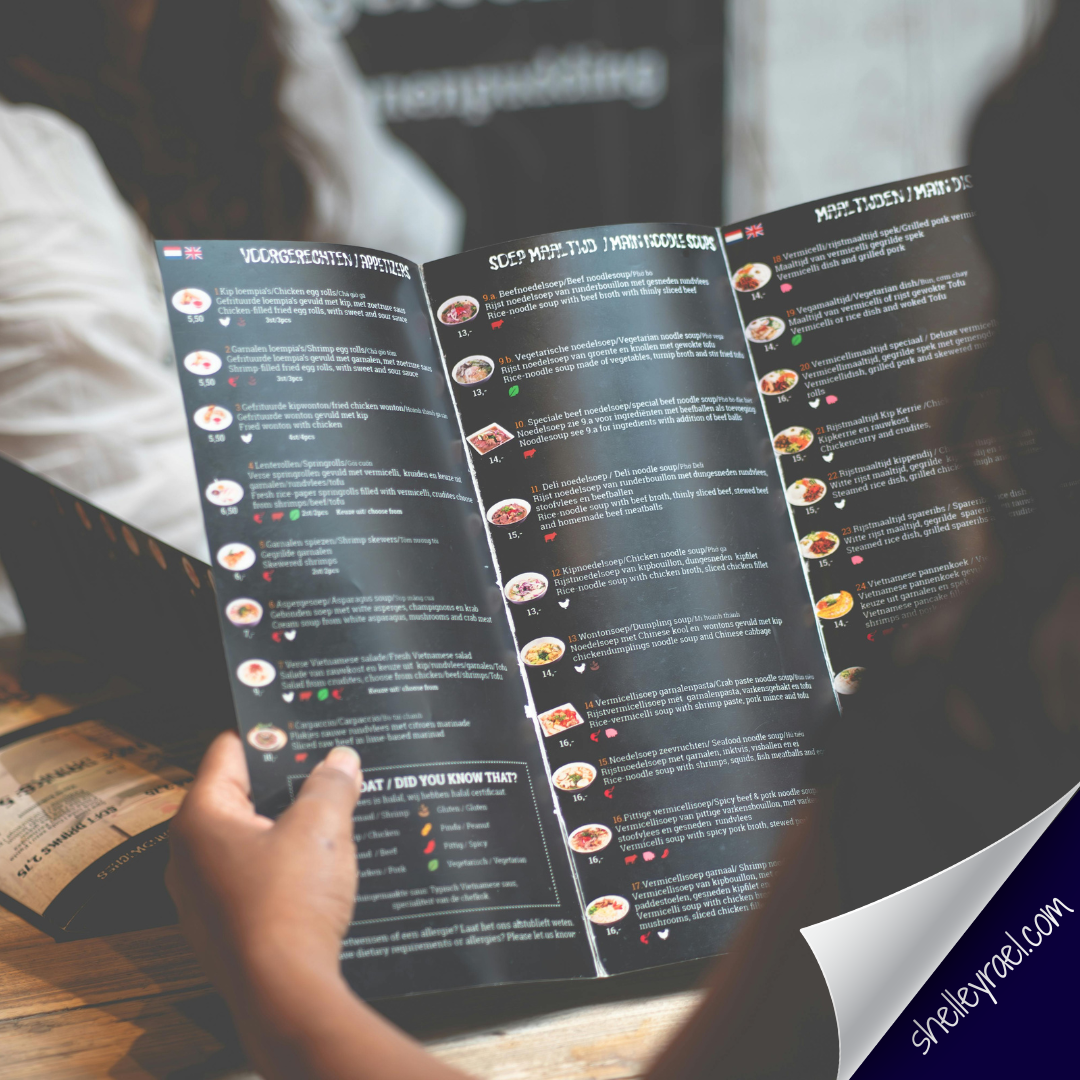
Sometimes the extras contribute as many or more calories than the entrée itself.
And honestly, some restaurant meals are enormous.
When I occasionally see a burger listed at over 2,000 calories on its own, that definitely gets my attention.
What About Customized Orders?
This is where things get more complicated.
Restaurants are only required to provide calorie information for standard menu items.
But many people modify their orders.
Take coffee drinks as an example.
Changing:
Milk type
Syrup pumps
Whipped cream
Foam
Toppings
can significantly change the calorie content.
Apps and online ordering systems have made this easier because people can now see calorie changes in real time when making modifications.
That was not nearly as accessible years ago.
Does Menu Labeling Help People Eat “Healthier”?
That depends on the individual.
For some people, seeing the information helps them make choices they feel better about.
For others, it changes nothing.
And honestly, that is okay.
The goal of menu labeling was never to make everyone order salads.
It was to increase transparency.
As I often say:
The restaurant provides the information.
Nutrition professionals provide the education.
Restaurants are not expected to teach nutrition science.
They are providing data.
How that information fits into someone’s overall eating pattern is where nutrition education becomes important.
Calories Are Only One Piece of the Puzzle
This is also important to remember.
Calories are not the only factor that matters.
A lower-calorie option is not automatically more nutritious.
And a higher-calorie option is not automatically “bad.”
Nutrition includes:
Protein
Fiber
Sodium
Fat quality
Added sugars
Portion size
Overall dietary patterns
Calories are simply one piece of information.
Menu Labeling and Mental Health
This conversation has also evolved over time.
Some people appreciate having the information available.
Others find calorie labeling triggering or stressful, especially individuals with a history of disordered eating or eating disorders.
That concern is valid too.
Nutrition information can be helpful without becoming obsessive.
The presence of calorie information does not mean someone must count every calorie or base every decision entirely on numbers.
Restaurant Meals Can Fit Into a Healthy Pattern
Eating at restaurants is part of life.
People celebrate birthdays, anniversaries, vacations, graduations, and holidays around food all the time.
The goal is not to avoid restaurants.
It is learning how restaurant meals fit into an overall pattern.
Sometimes someone may choose a lighter meal.
Other times, they may order exactly what sounds good and move on with life.
Both can exist within a balanced approach.
What Menu Labeling Can Do Well
Menu labeling can:
Increase awareness
Improve transparency
Help people compare options
Encourage restaurants to reformulate some menu items
Over the years, some chains have reduced portion sizes, sodium, or calories in response to public awareness and demand.
That does not mean every menu item suddenly became “healthy.”
But transparency does influence the conversation.
Key Takeaways
Restaurant menu labeling provides calorie information for standard menu items at chain restaurants and similar establishments with 20 or more locations.
The purpose is to provide information, not dictate choices.
Some people find menu labeling helpful, while others may ignore it or find it stressful.
Calorie values apply to standard menu items and may change significantly with modifications or add-ons.
Calories are only one aspect of nutrition and should be viewed within the context of overall eating patterns.
Restaurant meals can absolutely fit into a healthy lifestyle without requiring rigid tracking or restriction.
Like most aspects of nutrition, balance and context matter more than any single meal or menu choice.
Read More:
Healthy Eating vs. Perfect Eating: Why Consistency Matters More
US Food and Drug Administration (FDA) Menu Labeling Requirements
US Food and Drug Administration (FDA) Menu and Vending Machine Labeling
National Restaurant Association Menu Labeling
Real World Nutrition Refreshed As nutrition science and perspectives evolve over time, older blog posts are occasionally updated and republished. This post was originally written in September 2022 and has been refreshed and expanded here.