
Healthy Grilling: Tips Beyond Just Choosing Lean Meat
When people think about healthy grilling, the conversation often starts and ends with one piece of advice:
Choose lean meat.
While that's certainly one consideration, it's far from the whole story.
Grilling can be a healthy way to prepare meals because it often requires little added fat while bringing out flavors in a variety of foods. And those foods go well beyond burgers and steaks.
Fish, poultry, vegetables, fruits, pizza, and even bread can all find a place on the grill.
From grilling a solo meal to a full-on backyard event, here are a few simple strategies to make your grilled meals more nutritious, flavorful, and safe.
Grilling FAQ
What foods can you grill besides meat?
Grilling isn't limited to burgers and steaks. Fish, poultry, vegetables, fruits, pizza, flatbreads, tofu, and even some desserts can all be prepared on the grill.
Is grilling healthier than frying?
It can be. Grilling often requires little or no added fat, but how healthy a meal is depends on the foods you choose, how they're prepared, and what you serve with them.
Is charcoal or gas grilling healthier?
Neither is clearly healthier than the other. The biggest differences are convenience, flavor, and cooking style. From a nutrition standpoint, avoiding excessive charring and preparing a balanced meal are more important than the type of grill you use.
How can you reduce charring when grilling?
Trim excess fat to reduce flare-ups, use marinades, cook over moderate heat when possible, turn foods frequently, and remove heavily blackened portions before eating.
What temperature should grilled meat be cooked to?
Use a food thermometer to check for doneness. Poultry should reach 165°F, ground meats 160°F, fish 145°F, and whole cuts of beef, pork, lamb, and veal 145°F, followed by a three-minute rest.
Grilling Is About More Than Meat
Grilling is often associated with beef burgers, steaks, hot dogs, and sausages.
Those foods certainly have their place, but don't overlook everything else your grill can do.
Protein Options
Grilling works well for a variety of protein foods, including:
Chicken breasts and thighs
Turkey burgers
Pork tenderloin
Fish such as salmon, tuna, halibut, or mahi-mahi
Shrimp
Lean cuts of beef
Tofu or tempeh
Kabobs with a mixture of meat and vegetables
Rotating your protein choices throughout the week, grilled or not, adds variety and helps you benefit from the different nutrients each food provides.
Vegetables
Some of the best grilled foods don't come from the meat department.
Try grilling:
Bell peppers
Zucchini
Yellow squash
Eggplant
Asparagus
Mushrooms
Corn on the cob
Onions
Tomatoes
Brussels sprouts in a grill basket
Vegetables caramelize well on the grill, and most of the time they need nothing more than a light coating of oil and your favorite seasonings.
Fruit
Grilling fruit concentrates its natural sweetness, and heating fruit makes it even more flavorful. Just don’t overdo it to the point where it becomes too dry.
Consider trying:
Peaches or nectarines
Pineapple
Watermelon
Pears
Apples
Mango
Grilled fruit pairs well with yogurt, cottage cheese, or even a scoop of vanilla ice cream for dessert.
Pizza and Bread
Pizza isn't the first thing most people think about when they fire up the grill, but grilled pizza develops a crisp crust with a slightly smoky flavor. You can start with the dough and don’t need a pizza stone to do it.
If you want to do this, you must be prepared with everything. First, prepare the dough into a rectangle just smaller than your grill. If you don’t want the large one, you can do smaller personal pizzas. Brush the dough with a bit of oil, and slide it directly onto the grate, oil side down. I take mine from the backside of a baking pan or cookie sheet. Close the lid and cook for 1 – 2 minutes. Open, flip, top with toppings (this is where you need to be ready – sometimes it helps if two people are doing this). Close the lid and cook for 3-5 minutes. Done!
Flatbreads and whole grain bread also grill well and make excellent accompaniments to salads or grilled vegetables.
Marinades Do More Than Add Flavor
Marinades are often thought of simply as a way to improve flavor.
They certainly do that, but they can offer additional benefits.
Acidic ingredients such as vinegar, citrus juice, or yogurt help tenderize tougher cuts of meat.
Oil helps distribute seasonings and keeps foods from drying out.
Herbs, spices, garlic, onions, and citrus zest contribute flavor without relying entirely on salt.
Some research also suggests that marinades containing herbs, spices, vinegar, or citrus may reduce the formation of certain compounds that develop during high-temperature cooking.
Simple Marinade Ideas
For beef or pork:
Olive oil
Balsamic vinegar
Garlic
Rosemary
Black pepper
For chicken:
Olive oil
Lemon juice
Dijon mustard
Garlic
Thyme
For fish:
Olive oil
Lemon or lime juice
Dill
Parsley
Garlic
Marinate fish for about 15 to 30 minutes, chicken for one to four hours, and beef or pork for several hours or overnight, depending on the cut.
Always discard leftover marinade that has been in contact with raw meat, poultry, or seafood unless it has been brought to a full boil before using it as a sauce.
Let's Talk About Char
Many people enjoy the smoky flavor that develops when food browns on the grill.
A little browning is normal.
Heavy charring is something different.
When meat is cooked at very high temperatures or becomes heavily blackened, compounds called heterocyclic amines (HCAs) and polycyclic aromatic hydrocarbons (PAHs) can form.
Research suggests these compounds may increase cancer risk when consumed in large amounts over time.
This doesn't mean you should avoid grilling.
It does mean there are simple ways to reduce their formation.
Trim excess fat that may drip onto the flames.
Avoid flare-ups whenever possible.
Turn foods frequently instead of allowing one side to become heavily charred.
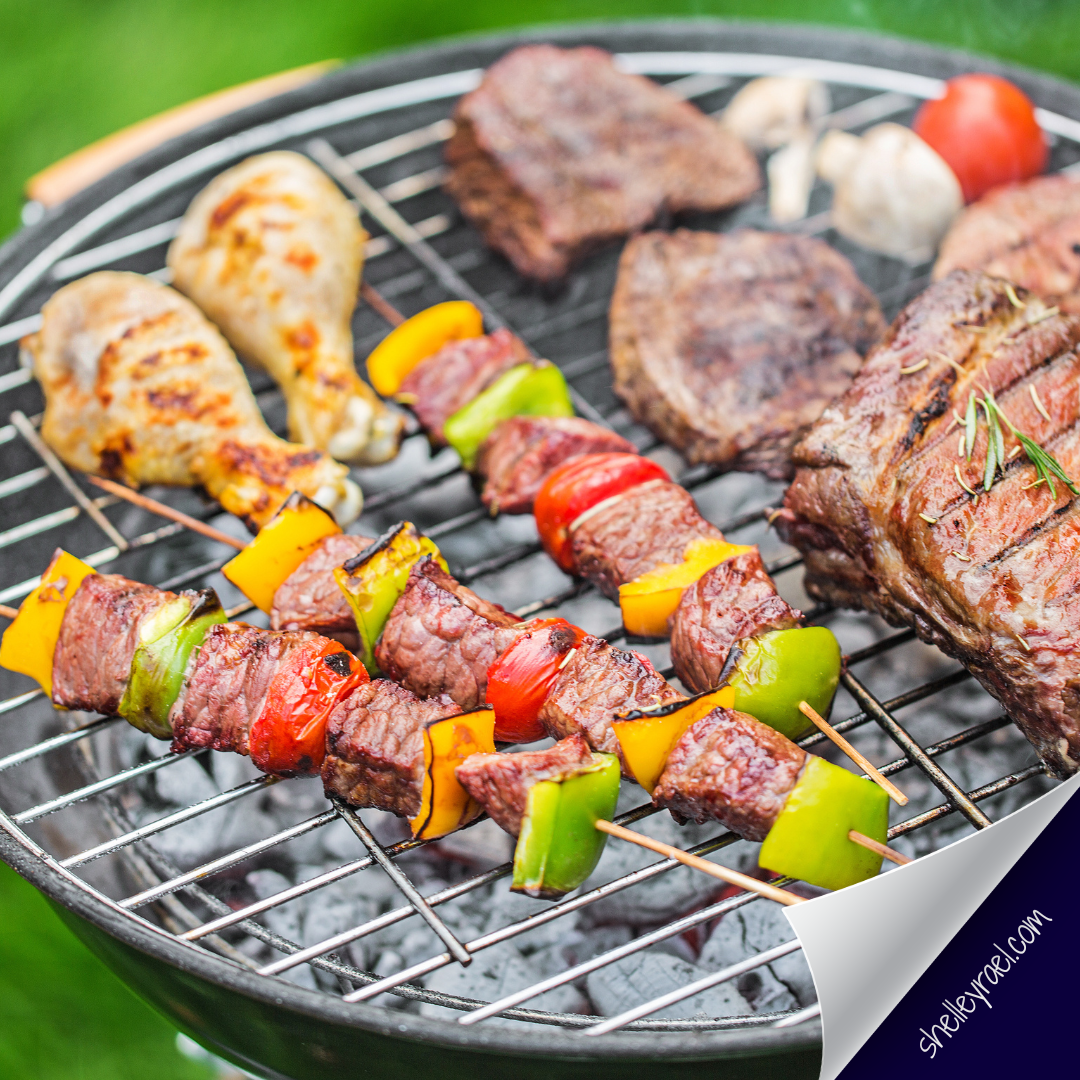
Remove heavily blackened portions before eating.
Including vegetables, fruits, and other grilled foods alongside meat also helps create a more balanced meal.
Charcoal or Gas?
One question I hear occasionally is whether charcoal or gas grilling is healthier.
Both have advantages.
Charcoal
Pros:
Distinct smoky flavor
Often reaches higher temperatures
Popular for traditional barbecue
Cons:
Longer preparation time
More cleanup
Greater potential for flare-ups if fat drips onto the coals
Gas
Pros:
Quick to heat
Easy temperature control
Convenient for weeknight meals
Less cleanup
Cons:
Doesn't produce quite the same smoky flavor
Requires propane or natural gas
From a nutrition standpoint, the choice between charcoal and gas is probably less important than how the food is prepared and how often heavily charred foods are consumed.
Choose the grill that best fits your cooking style and helps you prepare meals at home more often.
Don't Forget Food Safety
Grilling outdoors doesn't change basic food safety principles.
Keep raw meat, poultry, and seafood separate from ready-to-eat foods.
Use separate plates and utensils for raw and cooked foods.
Wash your hands after handling raw meat.
Cook foods to safe internal temperatures using a food thermometer.
General guidelines include:
Poultry: 165°F
Ground meats: 160°F
Fish: 145°F or until it flakes easily
Whole cuts of beef, pork, lamb, and veal: At least 145°F followed by a three-minute rest
Never rely solely on color to determine doneness.
A thermometer is the best way to know your food has reached a safe temperature.
Build a Balanced Grilled Meal
The healthiest grilled meal isn't just about what's on the grill.
Think about the entire plate.
Instead of making meat the focus, consider balancing your meal with:
Grilled vegetables
Fresh fruit
A green salad
Beans or bean salad
Corn on the cob
Whole grain rolls
Brown rice or quinoa
Baked potatoes or sweet potatoes
Including a variety of foods, including fruits, vegetables, and whole grains, naturally increases fiber, vitamins, minerals, and variety.
Stay Hydrated
Grilling often goes hand in hand with spending time outdoors.
Warm weather and physical activity can increase fluid needs.
Water is an excellent and preferred choice for most people.
Unsweetened tea and sparkling water are also great options.
If alcohol is part of the occasion, alternating alcoholic beverages with water can help with hydration since alcohol is a diuretic and increases fluid losses
The Bottom Line
Grills can be used to prepare fish, poultry, vegetables, fruits, pizza, and many other foods that contribute to a balanced eating pattern.
Simple marinades add flavor and may offer additional benefits during cooking.
Avoiding excessive charring, practicing good food safety, and building balanced meals with plenty of vegetables and other nutrient-rich foods can help you get the most from your grill.
And whether you are a purist who only uses charcoal or prefer the convenience of gas, the healthiest grill is often one you do yourself so you can enjoy more meals at home.